




You have seen the signs. A parent who is struggling to keep up with the house, missing medications, spending more time alone than is healthy. You have looked into home care. You know it makes sense. And when you bring it up, the answer is no.
This is one of the most common situations families in St. Petersburg face. It is frustrating, and the worry underneath it is real. But most families do eventually find a way through, and it almost never happens by pushing harder or winning the argument.
This guide covers what actually works, what makes things worse, and how to keep moving forward without damaging the relationship in the process.
Watch: How to Talk to a Parent Who Refuses Home Care
Why do older adults refuse home care?
The reason behind the refusal matters more than having the right argument. Most older adults refuse home care for one of a small number of reasons, and the approach that works depends almost entirely on which one applies to your parent.
There are five common reasons older adults in St. Petersburg refuse home care:
- Loss of independence: accepting help feels like admitting they can no longer manage on their own, which is a significant psychological shift for someone who has been self-sufficient their entire adult life
- Privacy: having a stranger in the home feels intrusive, and many older adults are intensely private about their living space and daily routines
- Denial: your parent may genuinely not recognize the level of difficulty they are experiencing, particularly if decline has been gradual
- Fear of what it means: accepting home care can feel like the first step toward losing independence entirely, moving to a facility, or acknowledging serious illness
- Cost concerns: your parent may be worried about the financial impact even if funds are available, particularly if they grew up in a generation that prioritized financial caution
Identifying which of these is driving the resistance changes how you approach the conversation.
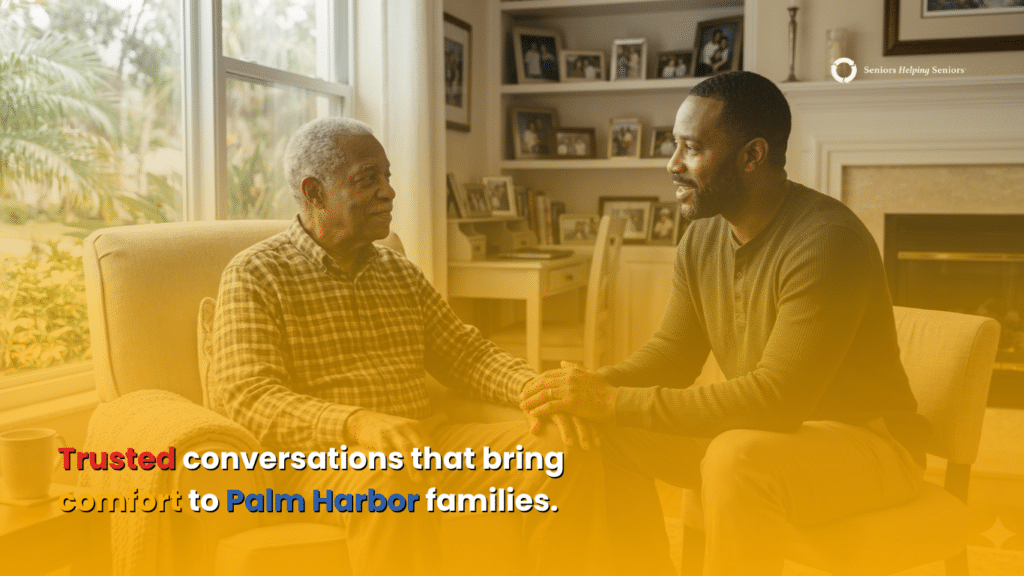
What approaches actually work?
There is no single script that works for every parent. But there are approaches that consistently help families make progress, and approaches that consistently make things worse.
There are six strategies families in St. Petersburg have found effective:
- Start with observation, not argument: rather than telling your parent what they need, describe specifically what you have observed. “I noticed the refrigerator was empty when I visited” lands differently than “you are not taking care of yourself”
- Ask questions before making proposals: find out what your parent is most worried about before presenting a solution. Their real concern may be different from what you assume
- Frame it as help for you, not for them: some parents respond better to “it would give me peace of mind” than to any argument about their own needs
- Start smaller than you think you need to: proposing a few hours of companionship or help with errands is a much easier yes than proposing personal care. Starting small builds familiarity and trust
- Involve their doctor: a recommendation from a physician carries different weight than one from an adult child. If your parent’s doctor can reinforce the message, that conversation often moves faster
- Give it time and return to it: a single conversation rarely changes a long-held position. Planting the idea, letting it rest, and returning to it calmly over several weeks is often more effective than pushing for an immediate decision
What Families Should Know
The goal of the first conversation is not to get a yes. The goal is to open a door. Most families who successfully arrange home care for a resistant parent describe a gradual process, not a single breakthrough moment. Patience is not passivity. It is strategy.
Watch: 13 Million Americans Care for Loved Ones with Dementia
What makes the conversation harder?
Some approaches that feel natural in the moment consistently backfire. Knowing what to avoid is as useful as knowing what works.
There are four approaches that tend to increase resistance:
- Framing it as an emergency or ultimatum: pressure tactics tend to harden resistance rather than soften it, particularly with older adults who have spent decades making their own decisions
- Having the conversation in front of others: being confronted by multiple family members at once often feels like an ambush and produces defensiveness rather than openness
- Focusing on what your parent cannot do: leading with their limitations rather than their preferences puts them on the defensive immediately
- Presenting it as already decided: telling a parent what is going to happen rather than involving them in the decision removes their sense of control, which is often the core of the resistance in the first place
What if they still refuse after multiple conversations?
There are situations where a parent continues to refuse help even when the need is clear and the risk is real. This is one of the harder realities of caring for an aging parent.
There are three options worth considering when conversations have not produced movement:
- Reframe what you are asking for: if personal care has been refused, propose something with less emotional weight, such as help with grocery shopping, a ride to a medical appointment, or regular companionship visits. A foot in the door often leads to acceptance of more over time
- Bring in a neutral third party: sometimes a conversation with a home care coordinator, a social worker, or your parent’s physician moves things forward in a way that family conversations cannot
- Accept that you cannot force it: if your parent has cognitive capacity and is making an informed choice, their right to refuse is real. Your role shifts to staying connected, watching closely, and being ready to act when circumstances change
If cognitive decline is affecting your parent’s ability to make safe decisions, that is a different situation and may require a conversation with their physician about next steps.
What Families Should Know
Refusing help is not the same as being unreachable. Most parents who initially refuse home care do eventually accept some level of support, often after a health event or a gradual shift in their own awareness of what they need. Staying in the conversation without forcing it keeps that door open.
How does Seniors Helping Seniors® in-home care approach resistant clients?
One of the reasons the peer-to-peer caregiving model works well for resistant seniors is that it lowers the social barrier to accepting help. When a caregiver is a fellow mature adult rather than a young professional, the dynamic feels less clinical and more like a neighbor helping out.
Seniors Helping Seniors® Pinellas County provides non-medical home care throughout St. Petersburg and Pinellas County. Most caregivers are experienced adults between the ages of 50 and 70. Many clients who were initially resistant became comfortable quickly once they met their caregiver and realized the visits felt natural rather than intrusive.
Services range from companionship and light household help to personal care and transportation. Care is available to private pay families, VA-funded families, and those using Medicare Advantage or PACE program benefits.
Home Care Services in St. Petersburg and Pinellas County
Seniors Helping Seniors® Pinellas County provides home care throughout St. Petersburg and all of Pinellas County, including Clearwater, Palm Harbor, Largo, Seminole, Pinellas Park, Dunedin, and Safety Harbor. If you are unsure whether your address is within our service area, call and we will confirm quickly.
Ready to Talk? Here Is the Next Step.
If you are navigating a situation where a parent is resistant to home care, we are happy to talk through it. Sometimes a conversation with a coordinator who has seen this many times before helps families figure out the right approach.
Call Seniors Helping Seniors® Pinellas County. We will listen first and give you an honest assessment of what options make sense.
Seniors Helping Seniors® Pinellas County
2536 Countryside Blvd. Suite 400-425
Clearwater, FL 33763
727-401-4700