




Estimated reading time: 9 minutes
Introduction: When Something Feels Different
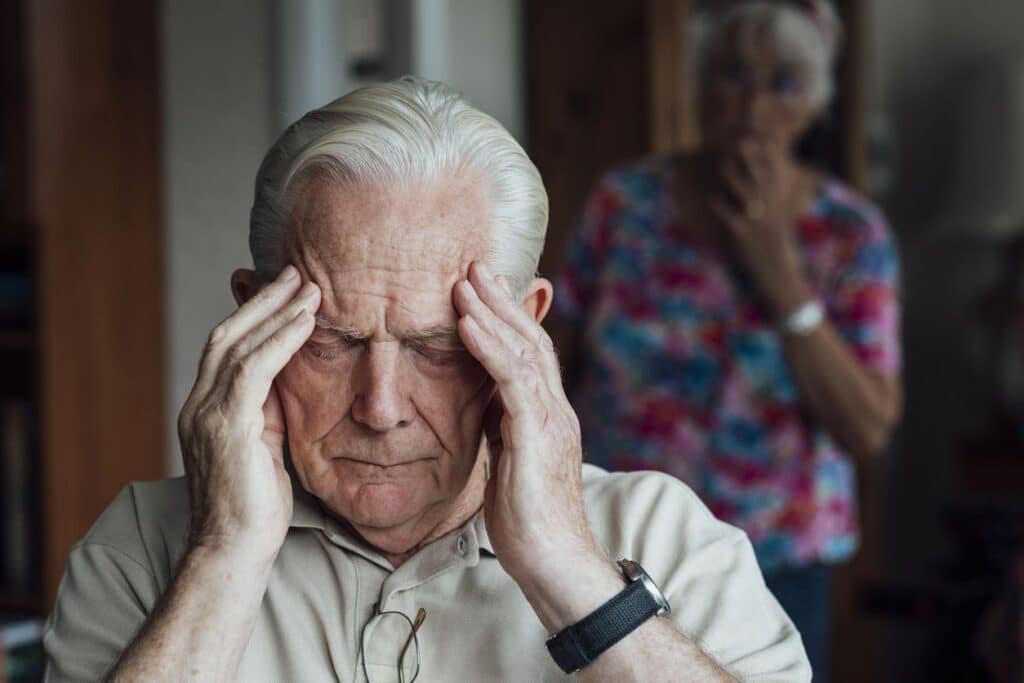
You’ve noticed it for a while now: Mom repeated the same story at dinner three times last Sunday. Dad got confused driving home from a place he’s visited for 30 years. Or maybe your spouse started forgetting names, appointments, or words that used to come so easily. If you’re wondering what dementia is and how it affects people in Cincinnati, Ohio, something feels different, and that feeling is unsettling in a way you can’t quite put into words.
You’re not alone. If you’re an adult child balancing a career, your own kids, and an aging parent, or a spouse watching your partner change before your eyes, the word “dementia” may have already crossed your mind. And if it has, you probably have more questions than answers right now.
At Seniors Helping Seniors® Warren Clermont, we serve families throughout Greater Cincinnati and the Dayton, Ohio area, from Milford and Loveland to Lebanon, Morrow, Springboro, Centerville, Beavercreek, and beyond. Every day, we sit across the table from families just like yours who are trying to understand what is happening to someone they love. This guide is our answer to the most fundamental question we hear: “What exactly is dementia?”
What Is Dementia? The Medical Definition in Plain Language
Dementia is not a single disease. It is an umbrella term, like the word “cancer,” that describes a group of symptoms affecting memory, thinking, behavior, and the ability to perform everyday tasks. These symptoms are severe enough to interfere with daily life and functioning.
The World Health Organization estimates that over 55 million people worldwide are currently living with dementia, with nearly 10 million new cases diagnosed each year. In the United States, the Alzheimer’s Association reports that 6.9 million Americans age 65 and older are living with Alzheimer’s dementia alone, the most common form, as of 2024.
| 55M+ | People worldwide are living with dementia. Nearly 10 million new cases are diagnosed every year. (World Health Organization, 2023) |
Dementia occurs when brain cells are damaged and can no longer communicate normally with each other. Different diseases cause different types of cell damage in different regions of the brain, which is why dementia can look very different from person to person.
Contrary to what many families believe, dementia is NOT a normal part of aging. While the risk of dementia increases with age, it is caused by specific diseases and conditions; it is not an inevitable consequence of getting older.
The Difference Between Normal Aging and Dementia
One of the first questions families ask is whether what they’re seeing is just “normal aging” or something more serious. Here’s a helpful comparison:
| Normal Aging | Possible Sign of Dementia |
| Occasionally forgetting a name but remembering it later | Forgetting names of close family members entirely |
| Making a bad decision once in a while | Making consistently poor judgments regularly |
| Missing a monthly payment | Inability to manage bills, checkbooks, finances |
| Occasionally forgetting the day of the week | Getting lost in familiar places or losing track of dates/seasons |
| Sometimes losing glasses or keys | Putting objects in unusual places and unable to retrace steps |
| Needing help with a new device | Difficulty with once-familiar tasks like using the stove |
| Becoming irritable when a routine is broken | Significant changes in personality, mood, or behavior |
What Causes Dementia?
Dementia is caused by damage to brain cells. That damage can come from many sources:
- Alzheimer’s disease (accounts for 60–80% of all dementia cases)
- Vascular disease (strokes, narrowed blood vessels reducing blood flow to the brain)
- Lewy body protein deposits in the brain
- Frontotemporal degeneration (damage to the frontal and temporal lobes)
- Traumatic brain injury
- Parkinson’s disease
- Certain infections, nutritional deficiencies, and medication interactions (some of which are reversible)
The Alzheimer’s Association’s 2024 Alzheimer’s Disease Facts and Figures report confirms that Alzheimer’s disease is the most common cause of dementia among older adults. However, many people, particularly those over 75, have mixed dementia, meaning more than one type of brain disease is present simultaneously.
How Does Dementia Progress?
Dementia is generally progressive, meaning symptoms start gradually and worsen over time. The rate of progression varies significantly depending on the type of dementia, the individual’s overall health, and access to proper care and support.
Early-stage dementia may look like simple forgetfulness. Mid-stage dementia often brings more significant memory loss, confusion, and behavioral changes. Late-stage dementia typically requires full-time support with all activities of daily living.
This is why early recognition and planning are so critical, and why families throughout Clermont County, Warren County, and the surrounding Cincinnati and Dayton, Ohio metro areas reach out to Senior Helpers as soon as they begin to notice changes.
Is Dementia the Same as Alzheimer’s Disease?
No, though many people use the terms interchangeably. Here’s the simplest way to think about it: Alzheimer’s is a type of dementia. Dementia is the category; Alzheimer’s is the most common specific cause within that category. Other types include vascular dementia, Lewy body dementia, and frontotemporal dementia. We’ll cover all of these in detail in Blog Post 11 of this series.
How Dementia Affects the Whole Family, Not Just Your Loved One
Dementia doesn’t just happen to one person. It happens to a family. According to the Alzheimer’s Association, more than 11 million Americans provide unpaid care to people with Alzheimer’s or other dementias, and the majority of those caregivers are adult children.
| 11M+ | Americans provide unpaid care to people with Alzheimer’s or other dementias. 83% of help provided comes from family members, friends, or other unpaid caregivers. (Alzheimer’s Association, 2024) |
If you’re part of what’s often called the “Sandwich Generation”, caring for an aging parent while raising your own children and maintaining a career, you already know how heavy this can feel. The stress, guilt, exhaustion, and uncertainty are real. And they are reasons why in-home professional dementia care is not a luxury. For many families, it becomes a lifeline.
What Does In-Home Dementia Care Look Like in the Greater Cincinnati Area?
At Senior Helpers of Warren and Clermont Counties, we provide non-medical in-home care specifically designed to support seniors with dementia and their families throughout our service area, including Milford, Loveland, Lebanon, Morrow, Maineville, Waynesville, Springboro, Franklin, Bethel, Batavia, Amelia, Withamsville, Eastgate, Goshen, New Richmond, Mt. Orab, Fayetteville, Blanchester, Wilmington, Oakwood, Centerville, Kettering, Bellbrook, Beavercreek, and surrounding communities.
Our Senior Gems® dementia care program is built around a person’s remaining abilities, not their deficits. Rather than focusing on what your loved one can no longer do, we focus on what they can still do, celebrating and engaging those strengths to maintain dignity, purpose, and quality of life.
Our trained caregivers can assist with:
- Personal care and hygiene (bathing, dressing, grooming)
- Meal preparation and nutrition support
- Medication reminders
- Companionship and cognitive engagement activities
- Light housekeeping and laundry
- Accompanying to medical appointments
- Respite care for family caregivers who need a break
- Safe transportation in the local area
When Should You Call for Help?
If you’re reading this blog post, the answer may be: now. The earlier families engage with a professional care partner, the better the outcomes, for the senior and for the family.
Many families wait until a crisis, a fall, a wandering incident, a medication error, or complete caregiver burnout, before seeking help. We understand why. Accepting outside help can feel like an admission that things are getting worse, or that you’ve somehow failed your loved one. But the truth is that the most loving thing you can do is to make sure your parent or spouse is safe, engaged, and supported, and that you are too.
| “The most loving thing you can do is make sure your loved one is safe, engaged, and supported, and that you are too.” – Senior Helping Seniors Warren Clermont |
Local Resources for Cincinnati & Dayton Area Families
In addition to in-home care, Warren County and Clermont County families have access to several valuable community resources:
- Alzheimer’s Association Greater Cincinnati Chapter: alz.org/cincinnati
- Council on Aging of Southwestern Ohio (CAOSWOH): help4seniors.org
- Ohio Department of Aging: aging.ohio.gov
- Warren County Board of Developmental Disabilities
- Clermont Senior Services
Our care coordinators are happy to help you navigate these resources and connect you with support groups, financial planning guidance, and legal resources as well.
Frequently Asked Questions About Dementia
Q: Is dementia the same as Alzheimer’s disease?
A: No. Dementia is an umbrella term for a group of symptoms affecting memory, thinking, and daily functioning. Alzheimer’s disease is the most common type of dementia, accounting for 60–80% of cases. Other types include vascular dementia, Lewy body dementia, and frontotemporal dementia.
Q: Is dementia a normal part of aging?
A: No. While the risk of dementia increases with age, it is not a normal or inevitable part of getting older. Dementia is caused by specific diseases that damage brain cells.
Q: Can someone with dementia live at home?
A: Yes, especially in earlier and middle stages. Research consistently shows that people with dementia do better in familiar environments, their own homes, with appropriate support. Professional in-home care can make it possible for seniors to remain safely at home for longer.
Q: Are there dementia care services near me in the Cincinnati or Dayton area?
A: Yes. Seniors Helping Seniors® Warren Clermont serves families throughout the Greater Cincinnati and Dayton, Ohio, and surrounding areas, including Milford, Loveland, Lebanon, Centerville, Beavercreek, Kettering, Springboro, and many more communities.
Key Takeaways
- Dementia is not a single disease but an umbrella term for symptoms affecting memory and daily functioning.
- Common causes include Alzheimer’s disease, vascular conditions, and traumatic brain injuries, among others.
- Dementia progresses gradually, requiring increasing support, while early recognition is crucial for better outcomes.
- Families of those with dementia often face emotional and logistical challenges, highlighting the need for professional in-home care.
- Local resources and support services are available for families in the Greater Cincinnati and Dayton areas.
Take the First Step Today
You don’t have to have all the answers to take the first step. Our team at Seniors Helping Seniors® Warren Clermont is ready to listen, answer your questions, and help you develop a plan that honors your loved one and gives your family some peace of mind.
Visit us at https://www.shswarrenclermont.com or call our team to schedule a free in-home consultation. We serve families throughout Milford, Loveland, Lebanon, Morrow, Maineville, Waynesville, Springboro, Franklin, Bethel, Batavia, Amelia, Withamsville, Eastgate, Goshen, New Richmond, Mt. Orab, Fayetteville, Blanchester, Wilmington, Oakwood, Centerville, Kettering, Bellbrook, Beavercreek, and the surrounding Greater Cincinnati and Dayton, Ohio areas.
Sources: Alzheimer’s Association 2024 Alzheimer’s Disease Facts and Figures; World Health Organization Global Status Report on the Public Health Response to Dementia, 2023.