




When families in Southern Utah search online for in-home care for an aging parent, they’re not just looking for a list of services. They’re looking for someone they can trust. And in today’s digital landscape, that trust has to be earned not just in person, but online, too.
That’s where a concept called E-E-A-T comes in. And it turns out, the peer-to-peer caregiving model at the heart of Seniors Helping Seniors® in-home care Southern Utah may be one of the most powerful E-E-A-T signals in the entire senior care industry.
What Is E-E-A-T, and Why Does It Matter for Senior Care?
E-E-A-T stands for Experience, Expertise, Authoritativeness, and Trustworthiness a framework Google uses to evaluate the quality and credibility of online content. [1] Google uses E-E-A-T to evaluate the overall quality of a page, with emphasis on a page’s credibility, its author, and the website behind it. [2]
Here’s how each element breaks down:
- Experience means the content creator has actually done the thing they’re writing about used a product, visited a place, or lived through the situation. [3]
- Expertise is demonstrable knowledge through credentials, education, or a proven track record in the subject matter. [4]
- Authoritativeness comes from external recognition other credible sources cite you, link to you, or mention you as a go-to source. [5]
- Trustworthiness is the most critical pillar of all. According to Google’s own Search Quality Rater Guidelines, trust is the most important member of the E-E-A-T family, because untrustworthy pages score low on E-E-A-T no matter how experienced, expert, or authoritative they may appear. [6]
In December 2022, Google added that extra “E” for Experience to its quality guidelines, signaling an increased focus on whether content creators have real, first-hand, or real-life experience with the topics they cover. [7] This update was especially significant for industries like senior care a field that Google classifies as a “Your Money or Your Life” (YMYL) topic, meaning content that could significantly impact a person’s health, financial stability, or safety. [8] For YMYL content, Google gives even more weight to strong E-E-A-T signals. [9]
So what does this mean for a senior care provider in St. George or Cedar City, Utah? It means that the families searching for help online are being guided by Google itself toward sources that demonstrate genuine, lived experience. Generic, impersonal content simply won’t cut it anymore.
The Peer-to-Peer Model: E-E-A-T in Action
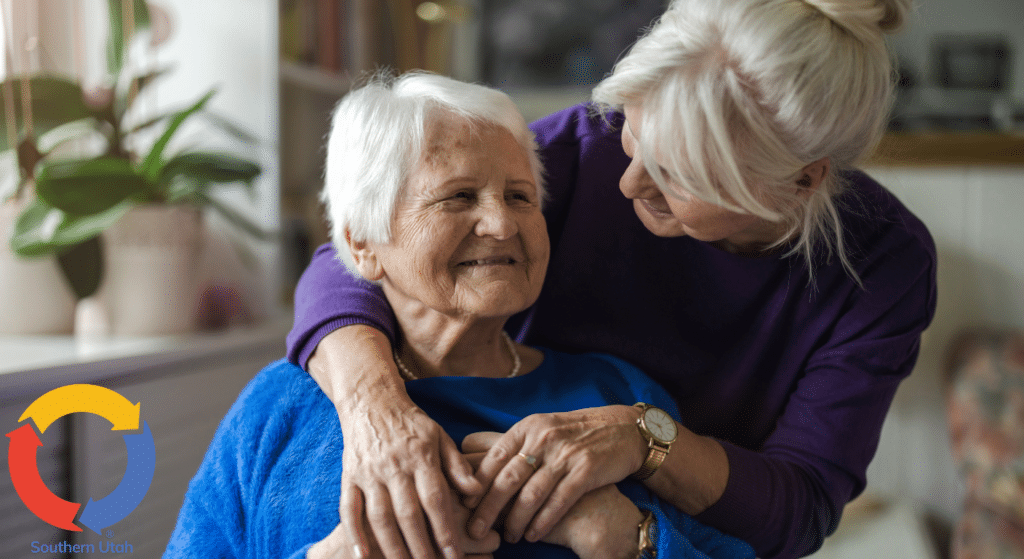
Here’s where the story gets interesting. The peer-to-peer caregiving model where active, experienced seniors provide care and companionship to fellow seniors isn’t just a compassionate approach to in-home care. It’s a living, breathing embodiment of everything E-E-A-T stands for.
Research published in BMC Geriatrics found that shared lived experiences are key elements in building trust and rapport within peer support relationships, and that these shared experiences are significant contributors to positive outcomes in care. [10] When a caregiver has navigated the same life stage, the same physical challenges, and the same emotional terrain as the person they’re caring for, something powerful happens: trust forms naturally, quickly, and deeply.
Peer-to-peer support for seniors offers significant advantages by fostering a vibrant community and shared experiences, essential for maintaining independence. [11] As older adults connect with each other, they enhance their confidence in managing their health and well-being. [12] This isn’t just feel-good philosophy it’s backed by research showing that peer support can significantly improve the health outcomes of older adults. [13]
One study found a striking 50% decrease in symptoms of depression within just 90 days among seniors who participated in peer support interventions. [14] Another study found that online peer social support decreased caregivers’ burdens while increasing their emotional and informational well-being. [15]
When you spotlight a peer caregiver sharing their story, their background, their specific experience with aging, and the genuine relationships they’ve built with the people they serve you’re not just creating content. You’re demonstrating E-E-A-T in its most authentic form.
What a “Peer-to-Peer Professional Spotlight” Looks Like
A Peer-to-Peer Professional Spotlight is a content format built around featuring real caregivers and their lived experiences. Think of it as a profile series short, human, and deeply personal that answers the questions families are actually asking:
- Who will be coming into my parent’s home?
- Do they understand what my mom is going through?
- Can I trust this person?
Each spotlight might include:
- The caregiver’s personal story their own experience with aging, health, or caregiving that makes them uniquely qualified to connect with the person they serve.
- Their specific expertise whether that’s decades of experience as a nurse, a retired teacher who understands patience and communication, or a grandparent who knows firsthand what it means to need a little help.
- A real relationship story a moment or memory from their caregiving work that illustrates the depth of connection the peer-to-peer model creates.
- Community ties how they’re rooted in Southern Utah, whether in St. George, Cedar City, Washington County, or beyond.
This kind of content does something that no keyword-stuffed service page can do: it makes Google’s quality raters and real human families feel that the information is accurate, transparent, and genuinely helpful. [16] It presents information in a way that makes you want to trust it, with clear evidence of the expertise involved and background about the people behind the care. [17]
The National Council on Aging (NCOA) has recognized the value of peer networking and knowledge-sharing among senior care professionals, noting that pooling collective wisdom can elevate the services provided to communities. [18] A Peer-to-Peer Professional Spotlight takes that same principle and applies it to content letting the wisdom of experienced caregivers speak for itself.
Why This Approach Is an E-E-A-T Overhaul
Many senior care providers rely on generic, templated content that could have been written by anyone, about anyone, anywhere. It checks boxes but builds no real trust. An E-E-A-T overhaul means replacing that generic content with something that only you can produce: the authentic voices, faces, and stories of your actual caregivers.
Here’s how the Peer-to-Peer Professional Spotlight maps directly to each E-E-A-T signal:
| E-E-A-T Signal | How the Spotlight Delivers It |
|—|—|
| Experience | Caregiver has first-hand, life experience with aging and caregiving |
| Expertise | Caregiver’s background, skills, and knowledge are clearly documented |
| Authoritativeness | Real names, real faces, real community ties recognized by neighbors and families |
| Trustworthiness | Transparent, personal, and verifiable not anonymous or generic |
Content that demonstrates strong experience, expertise, authoritativeness, and trustworthiness naturally becomes more credible in the eyes of both users and search engines. [19] And in a field as personal as senior care, that credibility is everything.
It’s also worth noting that E-E-A-T is a long-term strategy. Building genuine authority and trust signals typically takes months, not weeks. [20] But the investment pays off not just in search rankings, but in the real-world trust that families place in the caregivers who show up at their parents’ doors.
Seniors Helping Seniors® in-home care Southern Utah: Where E-E-A-T Is the Care Model
As your team from Seniors Helping Seniors® in-home care Southern Utah, the peer-to-peer model isn’t a marketing strategy it’s the foundation of everything they do. Serving a vast 13-county region across Southern Utah, from the growing retirement corridors of St. George and Washington County to the communities of Cedar City and Iron County, Seniors Helping Seniors® in-home care Southern Utah was built on a simple but profound belief: the best care comes from someone who truly understands the journey of aging.
Their caregivers relate to the people they serve as peers, not clients. They’ve navigated similar life challenges, understand the importance of maintaining routines and independence, and approach care with the respect and dignity they would want for themselves. This peer-to-peer model creates natural conversations, shared experiences, and often lifelong friendships that enrich both the caregiver’s and care receiver’s lives. [21]
This is exactly the kind of first-hand, life experience that Google’s updated E-E-A-T guidelines are designed to surface and reward. [22] When Seniors Helping Seniors® in-home care Southern Utah spotlights a caregiver sharing their story, their Southern Utah roots, and the real relationships they’ve built they’re not just building a content library. They’re building a body of evidence that says: these are real people, with real experience, doing real good in this community.
For families in St. George, Cedar City, and across Southern Utah who are searching online for trustworthy in-home care, that evidence matters. It’s the difference between a name on a list and a neighbor you can trust.
If you’re an adult child trying to find the right care for a parent, or a senior who wants to maintain independence while staying connected to your community, Seniors Helping Seniors® in-home care Southern Utah invites you to get to know the people behind the care. Because here, the tagline says it all: Like getting a little help from your friends.
Citations
[1] https://www.seo.com/basics/glossary/e-e-a-t/
[2] https://www.seo.com/basics/glossary/e-e-a-t/
[3] https://mailchimp.com/resources/google-eeat/
[4] https://blog.clickpointsoftware.com/google-e-e-a-t
[5] https://blog.clickpointsoftware.com/google-e-e-a-t
[6] https://yoast.com/what-is-e-e-a-t/
[7] https://yoast.com/what-is-e-e-a-t/
[8] https://yoast.com/what-is-e-e-a-t/
[9] https://www.seo.com/basics/glossary/e-e-a-t/
[10] https://bmcgeriatr.biomedcentral.com/articles/10.1186/s12877-022-03121-4
[11] https://www.thehighpointresidence.com/blog/the-role-of-peer-support-in-senior-living-communities
[12] https://www.thehighpointresidence.com/blog/the-role-of-peer-support-in-senior-living-communities
[13] https://www.themckendree.com/blog/the-role-of-peer-support-in-senior-living-adjustment
[14] https://www.thehighpointresidence.com/blog/the-role-of-peer-support-in-assisted-living-communities
[15] https://aging.jmir.org/2024/1/e55169
[16] https://mailchimp.com/resources/google-eeat/
[17] https://developers.google.com/search/docs/fundamentals/creating-helpful-content
[18] https://www.ncoa.org/article/online-peer-networking-groups-for-senior-center-professionals/
[19] https://mailchimp.com/resources/google-eeat/
[20] https://blog.clickpointsoftware.com/google-e-e-a-t
[21] https://spotlightseniorservices.com/provider/seniors-helping-seniors/
[22] https://developers.google.com/search/blog/2022/12/google-raters-guidelines-e-e-a-t