




Why the Peer-to-Peer Professional Spotlight Is a Powerful E-E-A-T Strategy for Senior Care Providers
If you’re a senior care provider trying to build trust online — with families, with Google, and with your community — there’s one content strategy that does more heavy lifting than almost anything else: the Peer-to-Peer Professional Spotlight.
It sounds simple. Feature a real caregiver. Let them share their story in their own words. Highlight what they bring to the families they serve. But when done well, this format is one of the most sophisticated and effective tools available for strengthening your website’s E-E-A-T signals — and in senior care, that matters more than in almost any other industry.
Here’s why.
What Is E-E-A-T, and Why Does It Matter for Senior Care?
E-E-A-T stands for Experience, Expertise, Authoritativeness, and Trustworthiness [1]. It’s a framework drawn from Google’s Search Quality Rater Guidelines — a document Google uses to evaluate whether the content appearing in search results is genuinely helpful, accurate, and credible [2].
The acronym originally started as E-A-T (Expertise, Authoritativeness, Trustworthiness), but in December 2022, Google added a second “E” for Experience [3]. This addition was significant: Google recognized that first-hand, real-world experience with a topic is a critical dimension of content quality — not just credentials on paper [4]. The goal was to emphasize the value of personal, hands-on familiarity with a subject [5].
Here’s how each pillar breaks down in plain terms:
- Experience: You’ve actually done the thing you’re writing about — lived it, worked in it, navigated it firsthand [6].
- Expertise: You have demonstrable knowledge through credentials, education, or a proven track record in the subject matter [7].
- Authoritativeness: Others recognize you as a credible source — through citations, mentions, reviews, and links from reputable sites [8].
- Trustworthiness: Your content and your organization are transparent, accurate, and honest. According to Google’s own Search Quality Rater Guidelines, trust is the most important member of the E-E-A-T family — because untrustworthy pages score low on E-E-A-T no matter how experienced or expert they appear [9].
Now, here’s where senior care becomes especially important in this conversation.
Senior care is what Google classifies as a “Your Money or Your Life” (YMYL) topic — content that can significantly impact a person’s health, financial stability, safety, or well-being [10]. For YMYL topics, Google applies its E-E-A-T standards most stringently [11]. Incorrect or untrustworthy information in this space can have real, harmful consequences for real people [12].
In other words: if you’re a senior care provider publishing content online, Google is holding your content to a higher standard than it holds a recipe blog or a travel site. The bar for demonstrating genuine experience, expertise, authority, and trust is higher — and the stakes for families reading your content are higher too.
The Problem Most Senior Care Providers Face
Most senior care websites publish content that looks credible on the surface — service pages, blog posts about aging in place, FAQ sections — but lacks the one thing Google (and families) are increasingly looking for: proof of genuine, lived experience.
Families searching for in-home care for an aging parent aren’t just looking for information. They’re looking for certainty and trust [13]. They want to know: Who are these people? Have they actually done this? Do they understand what my family is going through?
Research shows that 96% of Americans read reviews when considering local services, including senior living and in-home care, and 74% look at multiple review websites [14]. Families are doing deep research before they ever pick up the phone. And when they land on your website, they’re asking the same question Google’s quality raters are asking: Does this content demonstrate real experience?
This is the gap that the Peer-to-Peer Professional Spotlight is designed to fill.
What Is a Peer-to-Peer Professional Spotlight?
A Peer-to-Peer Professional Spotlight is a structured content format — typically a blog post, video, or interview-style feature — that puts a real caregiver at the center of the story. It’s not a generic staff bio. It’s not a marketing blurb. It’s a genuine, first-person narrative that captures:
- Who this caregiver is — their background, their life experience, and what brought them to caregiving
- What they’ve learned from working directly with seniors in the community
- How they approach their work — the specific ways they build trust, maintain dignity, and support independence
- What families and clients have experienced with them — ideally in the form of direct quotes or testimonials
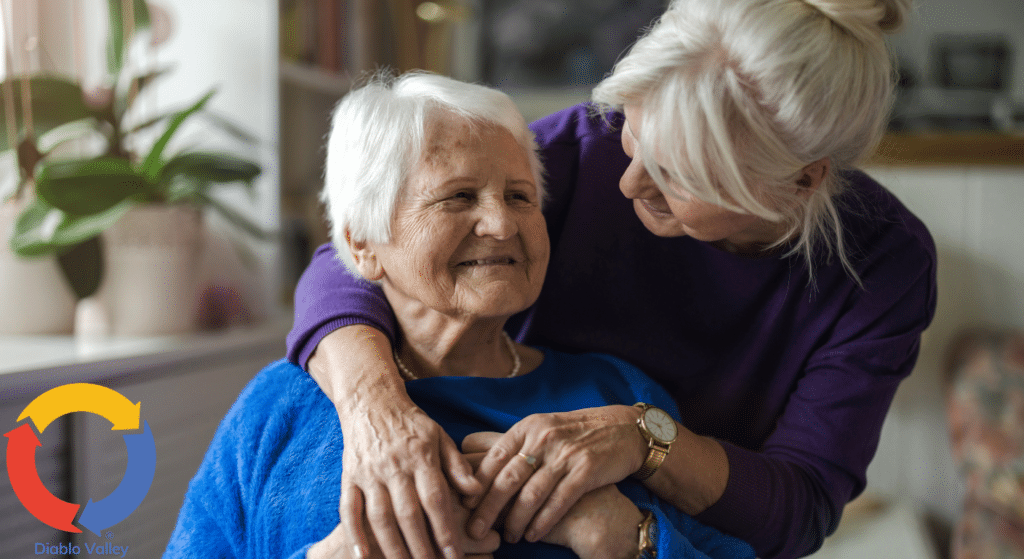
The “peer-to-peer” element is especially powerful in senior care. When a caregiver is themselves a senior — someone who has navigated the same life stage as the people they serve — their perspective carries a different kind of authority. It’s not clinical expertise alone. It’s the authority of shared experience.
As the Seniors Helping Seniors® in-home care model demonstrates, senior caregivers relate to care receivers as peers, not clients — they’ve navigated similar life challenges and approach care with the respect and dignity they would want for themselves [15]. That peer-to-peer dynamic creates natural conversations, shared experiences, and often lifelong friendships that enrich both the caregiver’s and care receiver’s lives [16].
When you translate that dynamic into content — when you let that caregiver tell their own story — you’re not just creating a blog post. You’re creating a living demonstration of E-E-A-T.
How the Professional Spotlight Addresses Each E-E-A-T Pillar
Experience
Google’s addition of “Experience” to the E-E-A-T framework was specifically designed to reward content produced by people with direct, real-world involvement in the subject matter [17]. A caregiver who has spent years helping seniors in Walnut Creek, Danville, or San Ramon navigate daily life at home has a depth of experience that no amount of generic content can replicate.
When that caregiver describes — in their own words — what it’s like to help a client regain confidence after a fall, or how they’ve learned to read the subtle signs that a senior is feeling isolated, that’s first-hand experience on the page. A Professional Spotlight delivers exactly that [18].
Expertise
Expertise in senior care isn’t just about certifications, though those matter. It’s about demonstrated knowledge — the kind that comes from years of working directly with older adults, understanding their needs, and adapting care to fit each individual [19].
A well-crafted spotlight can highlight a caregiver’s specific skills: their approach to companion care, their experience supporting seniors with mobility challenges, and their understanding of how to help a client maintain independence while accepting assistance. This depth of knowledge, presented clearly and specifically, signals expertise to both readers and search engines.
Authoritativeness
Authoritativeness comes from external recognition — other credible sources citing you, linking to you, or mentioning you as a go-to source [20]. But it also comes from the reputation you build within your community.
When a Professional Spotlight includes a testimonial from a family member — a real person describing how a specific caregiver changed their loved one’s life — that’s peer validation. It’s the digital equivalent of a trusted neighbor recommending a service. Showcasing credibility through testimonials and reviews helps establish the trust that families are looking for [21]. Over time, a library of Professional Spotlights becomes a body of evidence that your organization is recognized and trusted by real people in your community.
Trustworthiness
Trust is the foundation of any caregiving relationship, and it often grows fastest when people feel understood [22]. In the digital space, trust is built through transparency — letting families see exactly who will be coming into their loved one’s home.
A Professional Spotlight is one of the most transparent things a senior care provider can publish. It puts a real face, a real name, and a real story behind the service. It answers the question families are really asking: Can I trust this person with my parent?
According to Google’s guidelines, trustworthiness is the decisive factor in E-E-A-T, while the other three elements contribute to building that trust [23]. Sites that are considered trustworthy typically demonstrate expertise, hold authority in their field, and offer clear evidence of real-world experience [24]. A Professional Spotlight, done well, delivers all three.
What Makes a Great Peer-to-Peer Professional Spotlight?
Not all caregiver spotlights are created equal. Here’s what separates a truly effective E-E-A-T-building spotlight from a generic staff feature:
- Specificity over generality. Vague statements like “I love helping people” don’t demonstrate experience. Specific stories do — the client who started going on daily walks again, the family who finally felt they could take a breath, or the moment a senior laughed for the first time in months.
- First-person voice. Let the caregiver speak in their own words. Authenticity is what Google’s “Experience” pillar is designed to reward [25]. Polished marketing copy doesn’t demonstrate lived experience — genuine voice does.
- Community connection. For local providers, grounding the spotlight in the specific community matters. A caregiver who mentions the neighborhoods they serve, the local resources they connect clients with, or the specific challenges of aging in the Diablo Valley area signals local relevance and authority.
- Family or client perspective. Including a quote or reflection from a family member adds a layer of peer validation that strengthens the authoritativeness and trustworthiness signals of the piece.
- Clear author attribution. Make sure the spotlight is clearly attributed — with the caregiver’s name, their role, and ideally a photo. Comprehensive author attribution with verifiable credentials is a key trust signal [26].
Why This Strategy Is Especially Powerful Right Now
Several factors make E-E-A-T more important than ever. With AI-generated content flooding the internet, Google has doubled down on identifying content that demonstrates genuine human experience and expertise [27]. Growing public concern about misinformation has pushed Google to prioritize trustworthy sources, especially for YMYL topics like senior care [28].
Some reports suggest that pages with strong E-E-A-T signals have a higher chance of ranking in top search positions compared to those with weak signals [29]. As more websites optimize technical SEO elements, E-E-A-T has become a key differentiator for ranking success [30].
For senior care providers, this is both a challenge and an opportunity. The challenge: generic, impersonal content won’t cut it anymore. The opportunity: providers who invest in authentic, experience-driven content — like the Peer-to-Peer Professional Spotlight — may gain a meaningful competitive advantage.
The demand for in-home care is only growing. The U.S. Department of Health and Human Services reports that nearly 70% of retirees will require some form of long-term care [31]. In Walnut Creek alone, projections suggest that 37% of residents will be senior citizens by 2040 [32]. The families who will be searching for care for their loved ones in the coming years will be doing that research online — and they’ll be looking for providers they can trust.
How Seniors Helping Seniors® in-home care Diablo Valley Embodies This Model
For Seniors Helping Seniors® in-home care Diablo Valley, the Peer-to-Peer Professional Spotlight isn’t just a content strategy — it’s a natural expression of who they are.
The Seniors Helping Seniors® in-home care model is built on a simple but profound idea: the best care comes from someone who truly understands the journey of aging [33]. The Diablo Valley team specializes in non-medical home care that pairs active, independent mature adults with older adults who need extra help at home — caregivers who share similar life experiences with the seniors they support, so that relationships feel natural, respectful, and genuinely comforting [34].
This peer-to-peer approach builds trust more quickly, fosters genuine companionship, and turns in-home care into a relationship rather than a transaction [35]. Seniors who receive care from someone in a similar stage of life frequently report feeling more at ease from the very beginning [36]. When caregivers truly understand what it means to navigate this stage of life, seniors are more likely to accept help without feeling a loss of dignity [37].
For Dave and Gina Schneider, the owners of Seniors Helping Seniors® in-home care Diablo Valley, this mission is deeply personal. Having both cared for loved ones in their later years, they saw firsthand the importance of compassionate, consistent caregiving — and they’re bringing that same dedication to the Walnut Creek, Danville, San Ramon, Alamo, Lafayette, and Pleasant Hill communities [38].
When Seniors Helping Seniors® in-home care Diablo Valley publishes a Professional Spotlight featuring one of their caregivers — a real person, a real senior, with real stories from the neighborhoods of Contra Costa County — they’re not just creating content. They’re demonstrating, in the most authentic way possible, that their care is grounded in genuine experience, deep expertise, community authority, and unwavering trust.
That’s not just good E-E-A-T strategy. That’s the Seniors Helping Seniors® in-home care difference.
If you’re a family in the Diablo Valley area looking for in-home care for an aging parent, or a senior who wants to remain independent in the home and community you love, we invite you to get to know our caregivers — not just as professionals, but as neighbors, peers, and friends. Reach out to Seniors Helping Seniors® in-home care Diablo Valley today to learn more about our approach and how we can support your family.
Getting Started: Building Your Own Spotlight Library
If you’re a senior care provider looking to implement this strategy, here’s a simple framework to get started:
- Identify your most experienced caregivers — those with compelling personal stories and strong relationships with clients.
- Conduct a structured interview — ask about their background, what drew them to caregiving, a memorable moment with a client, and what they wish families knew.
- Gather a family or client perspective — even a brief quote adds powerful peer validation.
- Write in first-person or close third-person — preserve the caregiver’s authentic voice.
- Include a photo and full attribution — name, role, and community served.
- Publish consistently — a library of spotlights builds authority over time. E-E-A-T is a long-term strategy; building genuine authority and trust signals typically takes months, not weeks [39].
The families searching for care in your community are looking for someone they can trust. The Peer-to-Peer Professional Spotlight gives them exactly that — and gives Google exactly what it needs to recognize your organization as the credible, experienced, trustworthy provider you are.
Seniors Helping Seniors® in-home care Diablo Valley provides trusted, relationship-driven in-home senior care to families across Walnut Creek, Danville, San Ramon, Alamo, Lafayette, Pleasant Hill, and the surrounding Contra Costa County communities. To learn more about our caregivers and our peer-to-peer approach to senior care, visit locations.seniorshelpingseniors.com/ca/walnutcreek or give us a call. Like getting a little help from your friends®.
References
[1] https://www.searchenginejournal.com/google-e-e-a-t-how-to-demonstrate-first-hand-experience/474446/
[2] https://mailchimp.com/resources/google-eeat/
[3] https://developers.google.com/search/blog/2022/12/google-raters-guidelines-e-e-a-t
[4] https://www.searchenginejournal.com/google-e-e-a-t-how-to-demonstrate-first-hand-experience/474446/
[5] https://www.moccu.com/en/insights/content-marketing/e-e-a-t-google-seo/
[6] https://blog.clickpointsoftware.com/google-e-e-a-t
[7] https://blog.clickpointsoftware.com/google-e-e-a-t
[8] https://blog.clickpointsoftware.com/google-e-e-a-t
[9] https://blog.clickpointsoftware.com/google-e-e-a-t
[10] https://www.searchenginejournal.com/google-e-e-a-t-how-to-demonstrate-first-hand-experience/474446/
[11] https://www.boostability.com/resources/google-e-e-a-t-guide/
[12] https://www.seozoom.com/eeat-google/
[13] https://seniorcareclicks.com/content-marketing-for-elder-care-agencies/
[14] https://partners.caring.com/
[15] https://spotlightseniorservices.com/provider/seniors-helping-seniors/
[16] https://spotlightseniorservices.com/provider/seniors-helping-seniors/
[17] https://developers.google.com/search/blog/2022/12/google-raters-guidelines-e-e-a-t
[18] https://blog.clickpointsoftware.com/google-e-e-a-t
[19] https://www.searchenginejournal.com/google-e-e-a-t-how-to-demonstrate-first-hand-experience/474446/
[20] https://blog.clickpointsoftware.com/google-e-e-a-t
[21] https://www.curisdigital.com/senior-care-marketing-crafting-the-perfect-message-for-your-target-audience/
[22] https://seniorsbluebook.com/articles/why-seniors-caring-for-seniors-creates-trust-comfort-and-companionship
[23] https://www.moccu.com/en/insights/content-marketing/e-e-a-t-google-seo/
[24] https://www.moccu.com/en/insights/content-marketing/e-e-a-t-google-seo/
[25] https://developers.google.com/search/blog/2022/12/google-raters-guidelines-e-e-a-t
[26] https://blog.clickpointsoftware.com/google-e-e-a-t
[27] https://www.singlegrain.com/seo/e-e-a-t-strategies-that-guarantee-googles-trust-in-2025/
[28] https://www.singlegrain.com/seo/e-e-a-t-strategies-that-guarantee-googles-trust-in-2025/
[29] https://www.singlegrain.com/seo/e-e-a-t-strategies-that-guarantee-googles-trust-in-2025/
[30] https://www.singlegrain.com/seo/e-e-a-t-strategies-that-guarantee-googles-trust-in-2025/
[31] https://www.homecaremag.com/news/seniors-helping-seniors-expands-california-diablo-valley-opening
[32] https://www.diablomag.com/health-wellness/exploring-life-in-its-later-stages-among-east-bay-seniors/article_8b1e573b-8368-4fe5-b1d3-d5b1b0bd085b.html
[33] https://spotlightseniorservices.com/provider/seniors-helping-seniors/
[34] https://locations.seniorshelpingseniors.com/ca/walnutcreek/215.html
[35] https://seniorsbluebook.com/articles/why-seniors-caring-for-seniors-creates-trust-comfort-and-companionship
[36] https://seniorsbluebook.com/articles/why-seniors-caring-for-seniors-creates-trust-comfort-and-companionship
[37] https://seniorsbluebook.com/articles/why-seniors-caring-for-seniors-creates-trust-comfort-and-companionship
[38] https://www.franchising.com/news/20250220_seniors_helping_seniors_inhome_care_services_expands_in_california_with_dia.html
[39] https://blog.clickpointsoftware.com/google-e-e-a-t