




Every Saturday morning, Michael stopped by his mother’s house in Franklin.
At first glance, everything looked exactly the way it always had.
The flower beds were watered. The dishes were done. Her favorite chair sat in the same place by the window.
She smiled when he walked through the door.
“I’m doing just fine,” she said.
And in many ways, she was.
She was paying her bills.
Making her own breakfast.
Taking her medications.
Living independently.
Then, almost by accident, Michael asked a simple question.
“So…how’s book club?”
She paused.
“Oh, I haven’t gone in a while.”
“What about lunch with Nancy?”
“We haven’t gotten together recently.”
“Are you still going to the library on Wednesdays?”
“I guess it’s been a few months.”
It wasn’t one big change.
It was dozens of tiny ones.
None of them felt important on their own.
Together, they told a very different story.
Her home hadn’t gotten smaller.
Her world had.
Independence Isn’t Just Living Alone
When families think about independence, they often ask questions like:
- Can Mom still cook?
- Can Dad still shower?
- Can they manage their medications?
Those are important questions.
But they’re only part of the picture.
Real independence also includes having somewhere to go.
People to see.
Conversations to enjoy.
Reasons to leave the house.
Purpose.
Joy.
Connection.
A person can be completely independent inside their home while becoming increasingly isolated from the life they once loved.
Isolation Doesn’t Arrive Overnight
One of the things we’ve noticed while working with families throughout Belle Meade is that isolation rarely happens all at once.
It usually arrives quietly.
The Tuesday coffee group ends because driving feels stressful.
The monthly card game gets skipped because hearing conversations has become harder.
Church feels overwhelming after losing a spouse.
Dinner invitations become easier to decline than accept.
Over time, routines disappear.
Then friendships become harder to maintain.
Eventually, staying home feels normal.
Not because it’s what someone truly wants.
Because it’s become easier.
The Things Families Often Notice Too Late
Rarely does someone tell us,
“My parent is lonely.”
Instead, we hear things like:
“She watches a lot more television.”
“He never wants to go anywhere.”
“She used to love gardening.”
“He doesn’t answer the phone much anymore.”
“They’re sleeping a lot.”
“They seem less interested in everything.”
None of these observations automatically mean someone needs care.
But together, they often tell us that a person’s world is shrinking.
Why This Matters
Human beings are built for connection.
Conversation.
Routine.
Purpose.
Even brief interactions can brighten someone’s day.
A cashier who remembers their name. Coffee with a neighbor. Lunch after church. Walking through the farmers market.
These moments don’t just fill time.
They help people continue feeling like themselves.
That’s something no medication can replace.
Independence and Connection Can Exist Together
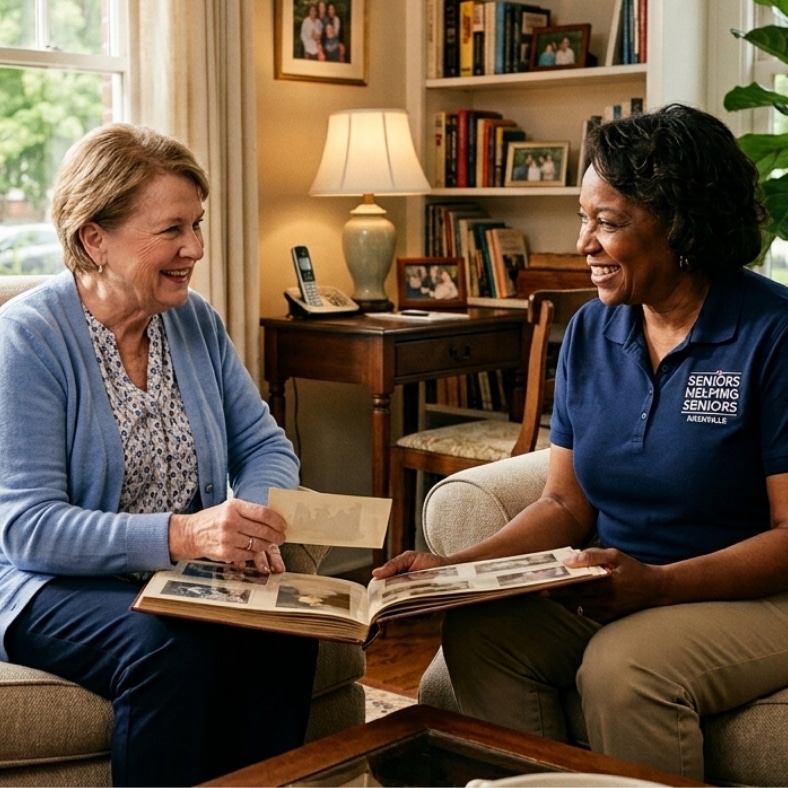
Sometimes families worry that accepting help means giving up independence.
We see the opposite.
The right support often protects independence.
A ride to lunch.
Someone to walk beside them through Centennial Park.
A companion for a doctor’s appointment.
Coffee together before running errands.
Those aren’t signs of losing independence.
They’re ways of preserving it.
Questions Worth Asking
Instead of asking,
“Can Mom still live alone?”
Try asking:
- Who did she spend time with this week?
- When was the last time she laughed with a friend?
- What does she look forward to tomorrow?
If those questions become difficult to answer, it’s worth paying attention.
Living at Home Should Still Feel Like Living
One of the things we believe at Seniors Helping Seniors® Nashville is that home should never become a place where life simply gets smaller.
Our goal isn’t just helping older adults stay in their homes.
It’s helping them continue living the lives they’ve worked so hard to build.
Sometimes that starts with a ride.
Sometimes with a conversation.
Sometimes with someone simply showing up.
Because independence isn’t measured only by what someone can do alone.
It’s measured by whether they’re still able to enjoy the life they love.
How We Can Help
If you’ve noticed that your parents are spending more time at home and less time living the life they once enjoyed, we’d love to talk. Sometimes a conversation is all it takes to identify small changes that can help someone stay connected, engaged, and independent.