




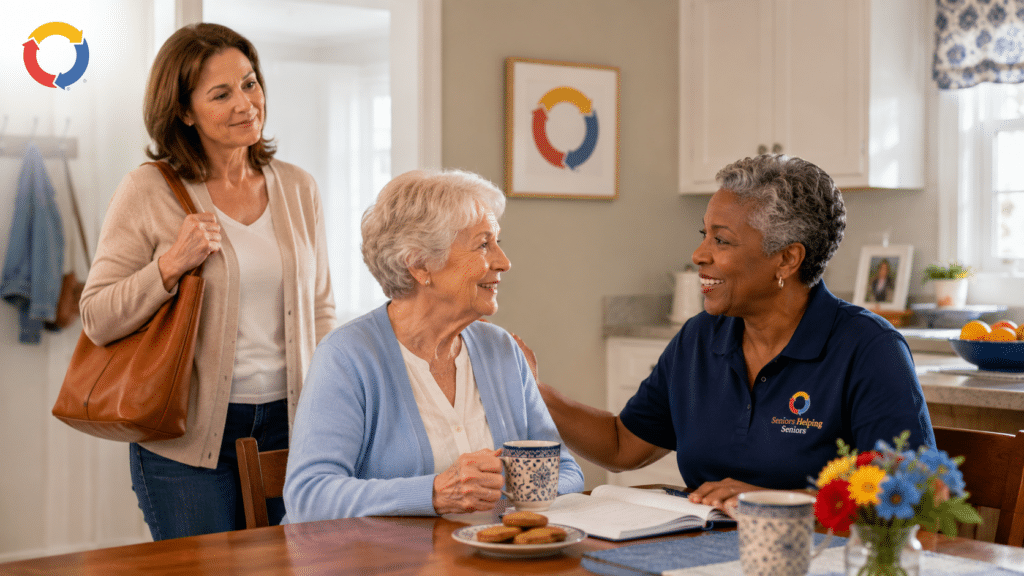
A free practical emergency preparedness guide for families helping an older adult remain safe and independent at home
Most families do not think much about emergency preparedness until something happens.
The power goes out for several hours. A storm knocks down trees. Mom cannot find the flashlight. Dad realizes his prescription will run out tomorrow. A family member who normally checks in cannot get across town.
None of these situations sounds especially serious on its own. For an older adult living at home, though, a small disruption can quickly become a much bigger problem.
September is National Preparedness Month, making it a good time for families to ask a simple question:
If an unexpected emergency happened tomorrow, would my loved one be ready?
Preparedness Is About More Than Severe Weather
When we hear “emergency preparedness,” it is easy to picture bottled water, batteries and flashlights.
Those things matter, but preparing an older adult to remain safely at home involves much more.
Think about your loved one’s normal day. They may take several medications, use a walker or cane, rely on someone else for transportation, need help preparing meals, or simply feel more comfortable when someone checks in regularly.
Now imagine that routine being interrupted.
That is where a little planning can make a meaningful difference.
Start With the Basics
You do not need to create an elaborate emergency plan in one afternoon. Start with a few important areas.
1. Medications
Make sure your loved one has an up-to-date medication list that includes the medication name, dosage and prescribing provider.
Keep the list somewhere easy to find and make sure at least one trusted family member has a copy.
It is also worth asking what would happen if your loved one could not get to the pharmacy as planned.
2. Emergency Contacts
A printed contact list can be surprisingly valuable, especially if a cell phone is lost, damaged or out of power.
Include family members, physicians, pharmacy information, trusted neighbors and other important contacts.
Place a copy somewhere visible and keep another with your loved one’s important documents.
3. Food and Water
Does your loved one have enough easy-to-prepare food and water available if they cannot leave home for a few days?
Consider what they can realistically prepare on their own. A pantry full of food is not particularly helpful if everything requires cooking and the power is out.
4. A Safer Home Environment
Take a walk through the home with fresh eyes.
Are pathways clear? Are flashlights easy to reach? Is there adequate lighting between the bedroom and bathroom? Could loose rugs or electrical cords become a fall hazard in the dark?
Small changes around the home can reduce unnecessary risks.
5. Transportation
Many older adults no longer drive or prefer not to drive in bad weather.
Families should know who can provide transportation if an appointment cannot be postponed, medication needs to be picked up, or the senior needs to leave the home.
Do not wait until transportation is needed to figure this out.
Ask the Question Families Sometimes Miss
Who is actually going to check on them?
This may be the most important part of the plan.
Adult children often have jobs, children, appointments and responsibilities of their own. Some live nearby but cannot always leave work. Others may live hours away.
A good emergency plan should not depend entirely on one person being available.
Identify at least two or three people who can check on your loved one if normal routines are disrupted. Make sure everyone understands who will call, who can physically get to the home and who has access if your loved one cannot answer the door.
For families who live farther away, this planning becomes even more important.
Pay Attention to the Little Things
Sometimes preparedness has less to do with a major emergency and more to do with noticing that an older adult is having difficulty managing everyday life.
Maybe the refrigerator is nearly empty.
Perhaps medications are becoming confusing.
Appointments are being missed.
The house is becoming harder to maintain.
Or Mom seems to be spending more time alone and less time doing the things she enjoys.
These changes do not necessarily mean that someone can no longer live independently. They may simply mean that a little additional support could make living at home safer and easier.
Where In-Home Support Can Help
Non-medical home care can be one part of a family’s overall plan.
A caregiver can help with everyday needs such as meal preparation, light housekeeping, errands, transportation, medication reminders and companionship. Caregivers can also provide another dependable presence in the home when family members cannot always be there.
For many families, the goal is not to take away an older adult’s independence.
It is to support that independence.
Sometimes a few hours of help during the week can make everyday routines easier while giving family members greater peace of mind.
If you are beginning to wonder whether your loved one could benefit from a little extra support, contact us to start a conversation about their needs by calling (404)793-0677 or visit us at www.shsatlantasouthwest.com to learn more about our services.
Have the Conversation Before You Need the Plan
Emergency planning does not have to be frightening or uncomfortable.
Try approaching the conversation from a place of independence:
“We want to make sure you have what you need if something unexpected happens.”
Then make the plan together.
Ask your loved one what concerns them. Find out what they would want to happen during an extended power outage or severe weather event. Talk about who they feel comfortable calling and who they trust to enter their home.
Most importantly, write the plan down.
Because when something actually happens, everyone should know what to do.
A Little Preparation Can Go a Long Way
Helping an older adult remain at home is rarely about one big decision. More often, it is a series of small decisions that make daily life safer, easier and more manageable.
Emergency preparedness is one of them.
This September, take an hour to walk through your loved one’s home, review medications and emergency contacts, talk about transportation, and decide who will check in when normal routines are interrupted.
Download our free Emergency Preparedness Checklist to help make sure you do not miss anything.
You may discover that everything is already in good shape.
You may also discover a few things worth addressing now rather than during an emergency.
Seniors Helping Seniors® Atlanta Southwest provides non-medical in-home care designed to help older adults remain safe, comfortable and connected at home. If you are beginning to wonder whether your loved one could benefit from a little extra support, contact us to start a conversation about their needs by calling (404)793-0677 or visit us at www.shsatlantasouthwest.com to learn more about our services