




By Shanticleer Graham, Seniors Helping Seniors® Atlanta Southwest
Fall prevention for seniors at home often begins with small changes: moving a loose rug, adding brighter lighting or asking a healthcare provider to review medications. Those steps may seem simple, but together they can help an older adult feel safer and more confident at home.
Falls are not an inevitable part of aging. During Falls Prevention Awareness Week, September 21–25, 2026, families have a timely reason to look at the home, daily routines and health factors that may increase an older adult’s risk.
For families across South Fulton, Union City, Fairburn, College Park, Palmetto and surrounding communities, the goal is not to make a parent afraid of moving around. The goal is to remove avoidable hazards and support the independence they want to keep.
Why Fall Prevention for Seniors at Home Matters
According to the Centers for Disease Control and Prevention, about one in four Americans age 65 and older falls each year. A fall can lead to injury, reduced confidence and difficulty continuing normal routines.
Still, the conversation should not focus only on statistics or worst-case scenarios. Fall prevention is really about helping an older adult continue moving through the home, preparing meals, bathing, visiting friends and participating in the community with greater confidence.
Families can begin with seven practical steps.
1. Clear the Paths Used Every Day
Walk through the home using the routes your loved one uses most often: bedroom to bathroom, living room to kitchen, front door to driveway and any path to the laundry area.
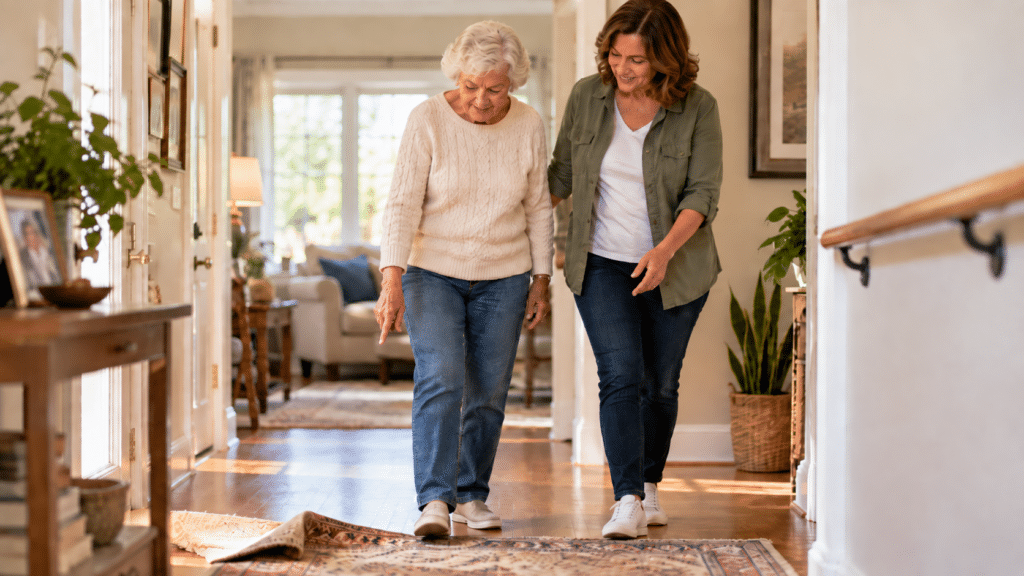
Look for loose rugs, electrical cords, low furniture, pet items, stacks of magazines and other objects that narrow the walkway. Rearrange furniture so there is enough room to use a cane or walker safely.
Do not change everything at once without involving the older adult. Familiar surroundings matter. Explain what you noticed and decide together which changes feel useful.
2. Improve Lighting Indoors and Outside
A room may appear well lit during the day and still be difficult to navigate at night. Check hallways, stairways, bathrooms, bedrooms and entrances after dark.
Replace burned-out bulbs, add brighter lighting where needed and place light switches or lamps within easy reach. Night-lights can help illuminate the route between the bedroom and bathroom. Outdoor steps and walkways should also be visible when arriving home after sunset.
3. Make the Bathroom Easier to Use
Bathrooms combine water, hard surfaces and transfers in a small space, so they deserve special attention.
Consider professionally installed grab bars near the toilet and inside and outside the tub or shower. Add a nonslip surface and keep frequently used items within easy reach. If stepping over the side of a tub is difficult, ask an appropriate professional whether a shower chair or other equipment may help.
A towel bar is not designed to serve as a grab bar. Safety equipment should be properly selected and securely installed.
4. Check Stairs and Entryways
Every staircase should have clear steps, good lighting and secure handrails. The CDC recommends railings on both sides of stairs. Repair uneven steps, loose boards and damaged flooring.
At the front door, look for cracked pavement, raised thresholds, leaves and other outdoor hazards. A small table or shelf near the entrance may also give someone a safe place to set down bags before unlocking the door.
5. Review Medications, Vision and Hearing
Some prescriptions and over-the-counter medicines may contribute to dizziness or sleepiness. Families should not stop or change medications on their own. Instead, ask a physician or pharmacist to review the complete medication list and discuss any side effects or concerns.
The CDC also recommends regular eye care, and the National Council on Aging includes annual eye and hearing exams among practical fall-prevention steps. If your loved one reports dizziness, weakness, fainting or a recent fall, encourage a timely conversation with a qualified healthcare professional.
6. Support Strength, Balance and Safe Movement
Strength and balance can affect how steady someone feels while walking, turning, rising from a chair or stepping over a threshold.
Ask a healthcare provider which activities are appropriate for your loved one. Depending on the person’s health and abilities, a provider may recommend walking, strength and balance exercises, tai chi or an evaluation by a physical therapist.
Non-medical caregivers can encourage routines and accompany an older adult on approved activities, but they do not diagnose balance problems or prescribe exercise programs.
7. Create a Plan for Daily Support
Sometimes the risk is not one loose rug. It is a pattern: Mom is rushing because getting dressed takes longer, Dad skips meals and feels weak, or someone avoids using a mobility aid because it is stored in another room.
A practical support plan may include help with light housekeeping, meal preparation, transportation, errands, personal care, companionship or reminders. The right amount of assistance can make daily routines more manageable without taking control away from the older adult.
At Seniors Helping Seniors® Atlanta Southwest, our non-medical caregivers help older adults with everyday activities based on the individual care plan. We serve families throughout South Fulton County and surrounding communities, with a focus on dignity, reliability and maintaining independence at home.
How to Talk About Fall Prevention Without Taking Over
A parent may resist a home-safety conversation if it sounds like a list of things they can no longer do.
Start with a shared goal. You might say, “I want to make the house easier to move around in. Can we walk through it together and see whether anything feels inconvenient or unsafe?”
Ask where your loved one feels unsteady. Find out whether they are avoiding the stairs, holding onto furniture, limiting trips outside or worrying about bathing. Listen before proposing a solution.
Whenever possible, make decisions with the older adult. Fall prevention should support autonomy, not quietly remove it.
What to Do After a Fall
A fall deserves attention even when there is no obvious injury. Encourage your loved one to tell their healthcare provider what happened and whether they experienced dizziness, weakness, pain or a loss of consciousness.
Seek emergency help when there may be a serious injury or urgent medical concern. Do not attempt to lift someone if doing so could cause further harm to them or to you.
After the immediate concern is addressed, review what happened. Was the area dark? Was the person rushing? Did footwear, clutter, medication effects or a change in health contribute? The purpose is not to assign blame. It is to reduce the chance of another fall.
A 20-Minute Home Safety Walk-Through
Choose one day this week and walk through the home together. Focus on the places your loved one uses most.
Use this quick review:
- Clear the main walkways and remove tripping hazards.
- Check lighting from the bedroom to the bathroom at night.
- Inspect the bathroom for secure supports and nonslip surfaces.
- Confirm stairs and entryways have good lighting and stable handrails.
- Ask whether your loved one has felt dizzy, unsteady or afraid of falling.
- Make a list of medications and questions for the physician or pharmacist.
- Decide whether additional day-to-day support would make routines safer.
You may find that only one or two small changes are needed. You may also discover that a professional assessment or additional support would be helpful. Either way, the walk-through turns a general concern into specific next steps.
Frequently Asked Questions About Fall Prevention for Seniors at Home
Are falls a normal part of aging?
No. Aging may bring changes that affect fall risk, but falls are not inevitable. Home modifications, medication review, vision care, appropriate exercise and other steps can reduce risk.
What are common fall hazards in the home?
Common concerns include loose rugs, cluttered walkways, poor lighting, unsecured bathroom surfaces, missing handrails, uneven steps and frequently used items stored out of easy reach.
Should we remove every rug and rearrange the whole house?
Not automatically. Focus on actual hazards and involve the older adult in decisions. Large, unexpected changes can make a familiar home harder to navigate.
Can a non-medical caregiver prevent falls?
No caregiver can guarantee that a fall will not happen. A non-medical caregiver can support safer routines, light housekeeping, meal preparation, personal care, transportation, companionship and reminders according to the care plan.
When should a healthcare provider be involved?
Talk with a healthcare provider after a fall or when you notice dizziness, weakness, new balance problems, medication side effects, vision changes or increasing difficulty with walking and transfers.
Free Loved One Home Safety Checklist
Seniors Helping Seniors® Atlanta Southwest created a Loved One Home Safety Checklist to help families review the home, daily routines, memory, mood and safety with care.
View the Loved One Home Safety Checklist
Use the checklist as a conversation starter, not a test. The goal is to notice where a small change or a little support could make life easier and safer.
Seniors Helping Seniors® Atlanta Southwest provides non-medical in-home care for older adults throughout South Fulton County and surrounding communities. We help families find practical ways to support safety, connection and independence at home. Call us at (404) 793-0677 or visit SHSAtlantaSouthwest.com