




Choosing El Paso, TX home care services can help families provide an older loved one with practical support while respecting the routines and independence that make home comfortable. A skilled caregiver does more than complete everyday tasks. We believe good care begins by understanding the person, noticing preferences, communicating clearly, and offering the right amount of assistance without taking over.
Families should also expect care to feel personal rather than standardized. At Seniors Helping Seniors® El Paso, TX, we focus on matching mature, compassionate caregivers with seniors based on needs, interests, personalities, and routines. Caregivers are screened, background-checked, trained, and thoughtfully matched so relationships can develop naturally. The result is support designed around the individual rather than expecting the individual to adjust to an unfamiliar caregiving routine.
Care Begins with Understanding the Individual
A skilled caregiver first needs to understand how an older adult prefers to live. That includes familiar routines, favorite activities, household habits, mobility needs, personal boundaries, and the areas where a little extra assistance could make daily life easier. Instead of assuming every senior needs the same support, we believe caregivers should pay attention to what matters to each person.
Respecting Established Daily Routines
Consistency can be particularly reassuring for someone who has spent years following familiar routines. A caregiver might assist with getting ready for the day, preparing meals, organizing household activities, or providing reminders while allowing the senior to remain involved.
Families can expect caregivers to observe, listen, and adjust. This approach helps preserve dignity because assistance supports existing abilities rather than replacing them. As needs change, communication between seniors, caregivers, and family members can also help keep everyday support appropriate.
Practical Assistance Supports Independence
Many families seek caregiving because routine responsibilities have gradually become more difficult. Skilled caregivers can offer practical assistance with personal routines and household activities while encouraging seniors to continue doing what they comfortably can.
Depending on individual needs, personal care and daily living support for older adults may include assistance with bathing, dressing, grooming, and other everyday activities.
Helpful support may also involve:
- Preparing meals and assisting with shopping
- Helping with light housekeeping and laundry
- Providing medication reminders
- Accompanying seniors on errands or outings
- Supporting safer movement around the home
The goal is not simply to finish a checklist. We want everyday assistance to help seniors remain involved in their routines, choices, and household life as much as possible.
Companionship Makes Care More Personal
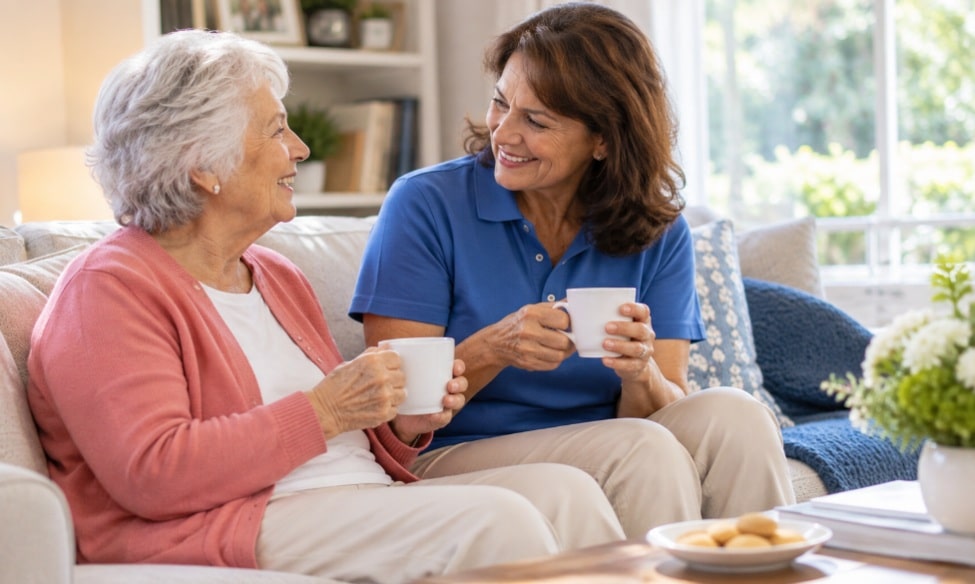
Practical assistance is important, but meaningful interaction can make caregiving feel warmer and more comfortable. Conversation, shared hobbies, games, walks, meals, and ordinary moments together can provide valuable social engagement.
Shared Experiences Can Build Connection
Mature caregivers can bring life experience that helps them relate naturally to older adults. Similar perspectives may make conversations easier and allow companionship to develop without feeling forced. Our approach recognizes that a compatible caregiver can become a familiar presence who understands not only what needs to be done, but also how a senior prefers to spend the day.
This relationship-centered philosophy is reflected in how peer companionship can strengthen everyday senior support. When seniors feel heard and respected, accepting assistance may become easier and everyday visits can feel more like time spent with someone they know.
Communication Helps Families Stay Informed
Families should expect caregivers to communicate thoughtfully about everyday routines and relevant changes. This can be especially meaningful when relatives cannot always be present themselves. Clear communication helps everyone understand how the senior is responding to assistance and whether routines may need to be adjusted.
Caregivers also spend meaningful time with seniors, which can help them notice changes in everyday behavior, preferences, or abilities. While non-medical caregivers do not replace healthcare professionals, careful observation can help families stay better informed about a loved one’s day-to-day experience.
Good communication works both ways. Families can share preferences, concerns, and information that helps caregivers understand the senior more fully. That cooperation creates a stronger foundation for consistent, respectful support.
The Right Match Can Make a Difference
Caregiving is deeply personal, so compatibility matters. Skills and experience are important, but personality, interests, communication style, and mutual comfort can also influence how well a caregiving relationship works.
Care Should Adjust as Needs Change
An older adult who initially wants companionship or help with errands may later benefit from assistance with additional daily activities. Flexible support allows care to evolve without unnecessarily disrupting familiar routines.
We believe families should feel comfortable discussing changing circumstances and asking how different forms of assistance may fit their loved one’s needs. Understanding how personalized senior care can adapt to changing needs can make planning feel more manageable and give families a clearer sense of what appropriate support could look like.
When the caregiver relationship combines practical ability, patience, and genuine compatibility, support can become a natural part of everyday life rather than an intrusion into it.
Support That Feels Right at Home
The best caregiving experience respects the senior as an individual. We want families to expect attentive communication, practical assistance, companionship, flexibility, and a caregiver relationship built around dignity and personal preferences. Seniors Helping Seniors® El Paso, TX brings a peer-focused approach to care by connecting older adults with mature caregivers who understand many of the experiences that come with aging. For families considering El Paso, TX home care services, call (915) 200-1199 to discuss your loved one’s routines and needs and see how we can help create a personalized approach to support at home.