




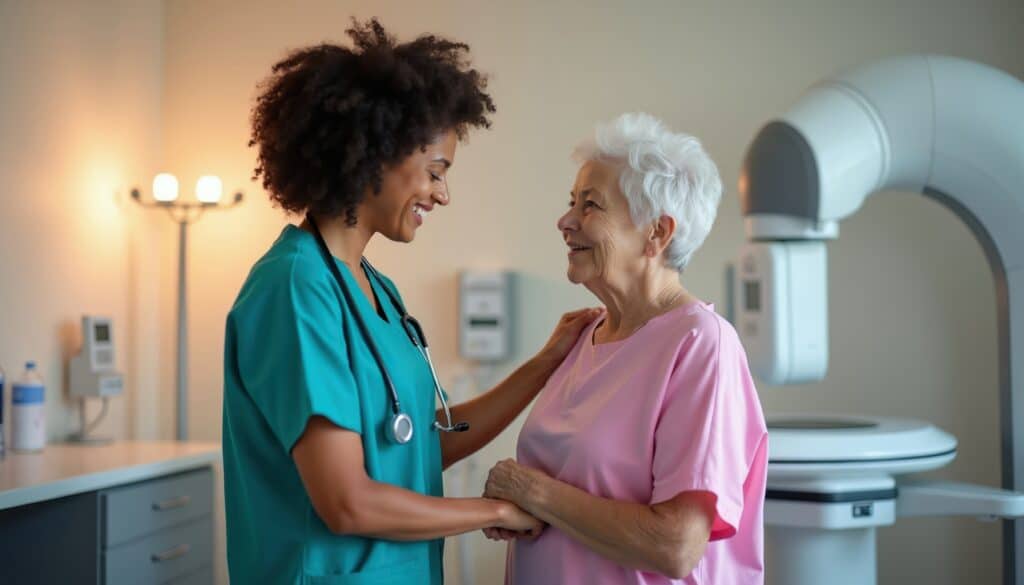
Breast Cancer Screening Can Save Lives: What to Know and How to Support Someone You Love
October is Breast Cancer Awareness Month: a meaningful reminder to pay attention to our health and encourage the people we love to do the same.
Breast cancer is a health concern that touches families around the world. Approximately 99% of breast cancer cases occur in women, and the risk increases with age. The World Health Organization (WHO) estimates that 2.4 million women worldwide were diagnosed with breast cancer in 2024. While those numbers may sound daunting, there is an important reason for hope: early detection matters.
As we get older, staying on top of doctor visits and recommended screenings becomes increasingly important, not only for breast cancer, but for our overall health. At the same time, appointments can become more difficult to manage. There may be transportation to arrange, calendars to coordinate, or simply a desire to have someone there for support. A Seniors Helping Seniors® caregiver can help with appointment reminders, transportation, companionship, and other everyday needs that make staying proactive about your health a little easier.
Why Breast Cancer Awareness Matters
Breast Cancer Awareness Month is recognized each October to educate people about breast cancer and emphasize the importance of early detection and screening. The goal isn’t to frighten anyone. It’s to give people the information and encouragement they need to take an active role in their health.
|
While several factors can increase risk, including age and family history, having no family history doesn’t mean someone is free from risk. According to WHO, approximately half of breast cancers develop in women who have no identifiable risk factor other than being female and over age 40.
Breast cancer doesn’t always cause noticeable symptoms, either. When symptoms do occur, they can include a new lump in the breast or underarm, changes in the size or shape of the breast, breast pain, or unusual nipple discharge. Any concerning changes should be discussed with a healthcare provider. That’s one reason regular screening can be so valuable.
What Does Breast Cancer Screening Look Like?
For most women of screening age, a mammogram is the primary screening tool for breast cancer. A mammogram is an X-ray image of the breast that doctors use to look for early signs of cancer, sometimes before a lump can be felt.
For women at average risk, the U.S. Preventive Services Task Force recommends mammograms every two years from ages 40 through 74. Screening decisions may be different for adults over 74 or people with certain risk factors, so it’s important to talk with your healthcare provider about what’s appropriate for you.
Helping Someone You Love Get Screened
Sometimes knowing a screening is important isn’t the same as feeling ready to schedule it.
If someone you love has been putting off a mammogram, approach the conversation with understanding. Ask what’s holding them back. Are they nervous? Do they need help making the appointment? Are they worried about transportation? Would they feel more comfortable having someone come along?
Often, practical support and a familiar face can make an appointment feel much more manageable.
A Seniors Helping Seniors® caregiver may be able to provide transportation, help keep track of appointments, accompany a senior to a visit, or simply offer reassuring companionship before and afterward.
And if you’re the one who’s been putting off a screening, give yourself the same encouragement you’d offer someone you love. Make the call, put the appointment on your calendar, and ask someone you trust to come along if you’d like the company.
Make Your Health a Priority
Breast Cancer Awareness Month is an important reminder, but caring for our health is a year-round commitment. Screening can help doctors find breast cancer earlier, when treatment may be more effective.
This October, ask yourself: Am I up to date on my recommended screenings? Is there an appointment I’ve been meaning to schedule? Is there someone I love who might need a ride, a reminder, or a little encouragement?
Talk with your doctor or healthcare provider about your individual breast cancer risk and the screening schedule that’s right for you. And if getting to appointments or managing everyday responsibilities has become more challenging, your local Seniors Helping Seniors® team may be able to lend a helping hand.
Sometimes, taking care of ourselves starts with something as simple as putting that next appointment on the calendar.