



June is Alzheimer’s and Brain Awareness Month. Andy Malivuk, owner of Seniors Helping Seniors® Tampa, joined Tampa Bay’s Morning Blend to discuss what families actually need to know about Alzheimer’s, from recognizing the earliest warning signs to taking the right steps when something seems off.
The full segment is above. Below is a summary of the key points for families in Tampa and Northwest Hillsborough County navigating this situation.
Watch: June Is Alzheimer’s & Brain Awareness Month | Andy Malivuk on Tampa Bay’s Morning Blend
How common is Alzheimer’s disease?
According to the Alzheimer’s Association, an estimated 6.7 million Americans aged 65 and older are living with Alzheimer’s disease. That number is projected to nearly double to 13.8 million by 2060. For families in Tampa and the surrounding region, where a significant older adult population continues to grow, the likelihood of being directly affected is substantial.
What are the early warning signs of Alzheimer’s?
The most common early sign is forgetfulness, but not ordinary forgetfulness. Normal aging brings occasional memory lapses. Forgetting one item on a grocery list is not a red flag. The warning signs that deserve attention are different in character.
There are three early warning signs families should watch for,
- Memory issues that affect daily life, such as misplacing keys in unusual places like the freezer, or not recognizing familiar people rather than simply forgetting a name
- Changes in hygiene and self-care, including neglecting to change clothes, avoiding showers, or skipping routines that were previously consistent
- Personality changes that are out of character, such as becoming frustrated by activities or situations that never caused frustration before
The distinction between normal aging frustration and a genuine warning sign comes down to frequency and impact. If the incidents are isolated and not affecting daily routine or safety, that is different from a pattern that is escalating and starting to disrupt daily life.
What Families Should Know
When safety starts to become an issue, or when a parent becomes uncomfortable or disoriented in familiar settings including their own home, that is the point at which the conversation cannot be delayed any further.
What should families do when they start noticing signs?
One of the most practical first steps is keeping a log. Early signs of Alzheimer’s can be easy to dismiss in the moment because the person may seem completely fine an hour later, or the next day. Families tend to notice something concerning, then watch the rest of the evening go well, and talk themselves out of taking it seriously.
Keeping a written log of incidents serves two purposes. It helps families have a more honest internal conversation about what is actually happening. And it becomes a powerful tool when the time comes to talk to a doctor, because physicians rely heavily on the account that families provide.
There are three steps families should take when early signs appear,
- Start a log using a checklist available from the Alzheimer’s Association or other reputable sources, tracking the type of incident, frequency, and severity
- Have the conversation with your loved one when the log shows a consistent pattern, using the documented observations rather than impressions
- Get to a doctor, which is the primary goal. The log makes that appointment far more productive and gives the physician the information they need to assess accurately
What difference does the right caregiver make?
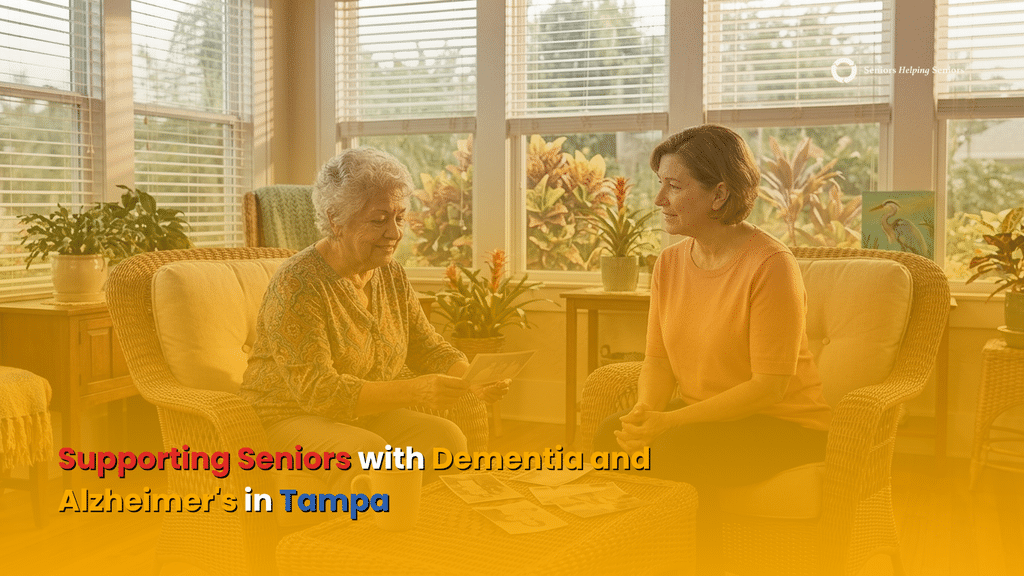
During the Morning Blend segment, Andy shared the experience that led him to Seniors Helping Seniors® in-home care. His mother was diagnosed with a serious illness and the family went through multiple caregivers before finding someone who truly worked. That person was a 55-year-old woman who over time became part of the family, providing the kind of consistent, patient presence that made a real difference for Andy’s mother and gave the rest of the family genuine relief.
That experience is the foundation of the peer caregiving model at Seniors Helping Seniors® Tampa. Most caregivers are experienced mature adults, typically between the ages of 50 and 70. In dementia care specifically, consistency and familiarity matter more than almost anything else. A caregiver who shows up on a regular schedule and builds a genuine relationship with a client reduces confusion and anxiety in ways that rotating staff simply cannot.
How does Seniors Helping Seniors® in-home care support families dealing with Alzheimer’s in Tampa?
Seniors Helping Seniors® Tampa provides dementia support services throughout Tampa and Northwest Hillsborough County. The same caregiver is assigned to each client on a consistent schedule. Services include personal care, companionship, homemaker services, transportation, and dementia support. Care is available to private pay families, VA-funded families, and those using Medicare Advantage or PACE program benefits.
Home Care Services in Tampa and Northwest Hillsborough County
Seniors Helping Seniors® Tampa provides home care throughout Northwest Hillsborough County, including Lutz, Land O’ Lakes, Odessa, Carrollwood, Citrus Park, and surrounding Tampa communities. If you are unsure whether your address is within our service area, call and we will confirm quickly.
Ready to Talk? Here Is the Next Step.
If you are seeing early signs in a parent and are not sure what to do next, give us a call. We can talk through what you are observing and what level of support would actually help.
Seniors Helping Seniors® Tampa
18948 N Dale Mabry Hwy Suite 102B
Lutz, FL 33558
727-401-4700