



When Caring for Mom Starts Changing Your Relationship
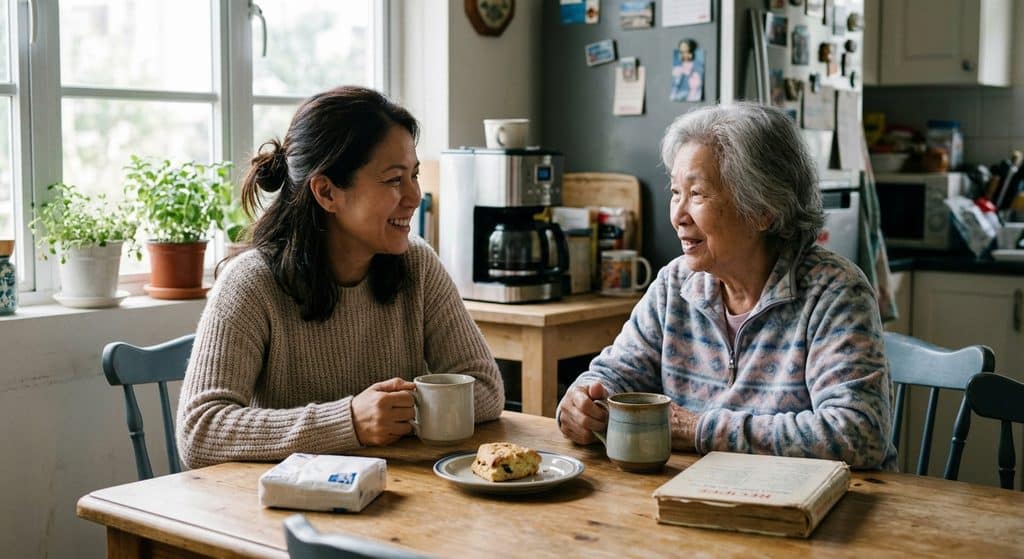
She used to stop by her mom’s house just to visit. They’d sit at the kitchen table. Have coffee. Talk about the kids. Sometimes they’d spend an hour talking about absolutely nothing important.
Her mom would ask about work. She’d tell her about something funny her grandson said. They’d talk about a neighbor, a recipe, or what was happening at church.
It was ordinary. And she loved it.
Now she walks through the door carrying groceries.
Before she even sits down, she’s checking the refrigerator.
Then the medications.
The laundry.
Then the stack of mail on the counter.
She needs to make sure Mom has eaten.
There’s a doctor’s appointment to schedule.
The pharmacy called about a prescription.
And someone needs to figure out why the television remote isn’t working.
By the time everything is finished, she has to leave.
Last Sunday, Mom asked if she could stay a little longer.
She couldn’t.
She had three more things to do before dinner.
Driving home, she realized something that made her cry.
She couldn’t remember the last time she’d simply been her mother’s daughter.
When Every Visit Becomes Work
One of the things I’ve noticed about family caregiving is how gradually it happens.
Most people don’t wake up one morning and decide to become their parent’s caregiver.
It starts with something small.
Mom needs a ride to the doctor.
Dad asks for help changing a lightbulb.
Someone needs to pick up a prescription.
You start checking in more often.
Then the responsibilities grow.
You begin managing appointments.
Keeping track of medications.
Helping with meals.
Handling bills.
Making sure the house is safe.
Eventually, you realize that almost every interaction with your parent has a purpose.
You’re not necessarily visiting anymore.
You’re managing.
And because you love your parent, you keep doing it.
But something about the relationship starts to feel different.
You Can Love Caring for Mom and Still Miss Being Her Daughter
I think this is one of the hardest feelings for family caregivers to explain.
You love your mom.
You’re grateful she’s still here.
You want to help.
You don’t resent making sure she has what she needs.
But you miss her.
Not because she’s gone.
Because the relationship you used to have has changed.
You miss being able to call her just to tell her something funny.
Or sitting on the porch without thinking about what needs to get done.
You miss going to lunch without discussing medications or appointments.
You miss being her daughter instead of the person responsible for making sure everything gets handled.
And sometimes that feeling comes with guilt.
Because how can you miss someone you’re spending so much time with?
But those feelings can exist together.
You can love taking care of someone and still grieve the ordinary relationship you had before caregiving became part of it.
The Roles Start Changing
Think about the person your mom has been throughout your life.
Maybe she was the one who reminded you about appointments.
The one who asked whether you’d eaten.
And made sure you had everything before leaving the house.
The one who remembered birthdays.
The one who told you to slow down and take care of yourself.
Now you’re asking her those questions.
“Did you eat lunch?”
“Did you take your medicine?”
“Do you have clean clothes?”
“Did you remember your appointment?”
“Are you sure you should be doing that?”
Those conversations may be necessary.
But they can feel strange for both of you.
Mom may feel like she’s losing independence.
You may feel uncomfortable having to remind or correct someone who spent decades taking care of you.
Neither of you asked for the relationship to change.
You’re both trying to adjust.
Sometimes the Ordinary Moments Are What We Miss Most
When families talk about aging, we naturally focus on the big things.
Health.
Safety.
Independence.
Where someone will live.
What kind of help they need.
Those are important conversations.
But when I think about what makes family relationships meaningful, it’s often the smaller things.
Mom telling the same story she’s told a hundred times.
Dad insisting he knows a shortcut through town that hasn’t been faster in thirty years.
Your mother asking whether you want something to eat even though you just finished lunch.
Watching a Titans game together.
Going through old photographs.
Sitting outside on a beautiful afternoon.
Those moments don’t accomplish anything.
And that’s exactly why they matter.
Not every minute you spend with someone you love should have to be productive.
When the To-Do List Takes Over
Imagine you have three hours to spend with Mom on Saturday.
Here’s what needs to happen:
Pick up groceries.
Change the sheets.
Do two loads of laundry.
Prepare a few meals.
Organize medications.
Take out the trash.
Look through the mail.
By the time you’ve finished, your three hours are gone.
You accomplished everything.
Mom has what she needs.
But you didn’t really spend time together.
Now imagine something different.
Someone else handles the laundry.
The groceries are already taken care of.
Lunch is prepared.
The house is in good shape.
You walk in on Saturday, sit down at the kitchen table, and ask Mom how her week has been.
And you actually have time to listen.
That’s the kind of difference support can make.
Accepting Help Doesn’t Mean You’re Doing Less for Mom
This is where I think families sometimes get stuck.
They feel like accepting outside help means they’re stepping away from their responsibilities.
But bringing in support doesn’t mean you’re abandoning your parent.
It doesn’t mean you love them less.
And it doesn’t mean you aren’t willing to help.
Sometimes it simply means recognizing that you don’t personally have to complete every task.
Someone else can help with laundry.
Prepare lunch.
Someone else can provide transportation.
Someone else can spend a few hours with Mom while you’re at work.
And that may allow you to spend your time together doing something other than working through a checklist.
You don’t have to outsource love to accept help.
What Would You Do With Two Hours That Belonged to Your Relationship?
Here’s a question I’d encourage families to consider.
If someone else could handle the practical responsibilities for a couple of hours, what would you want to do with your parent?
Maybe you’d go to lunch.
Sit on the porch with them.
Maybe you’d look through old family photographs.
Maybe you’d drive around the neighborhood where you grew up.
And make one of Mom’s favorite recipes together.
Maybe you’d take Dad to a Sounds game.
Or maybe you’d simply sit at the kitchen table and talk.
It doesn’t have to be elaborate.
Sometimes the most meaningful thing you can give someone is your undivided attention.
Protect One Visit That Isn’t About Caregiving
Here’s something practical you can try.
Look at the next week or two.
Find one opportunity to spend time with your parent without making the visit primarily about responsibilities.
Maybe it’s Sunday afternoon.
Or lunch after church.
Maybe it’s a phone call.
Maybe it’s thirty minutes after work.
If possible, handle the necessary tasks another time or ask someone else to help.
Then make a little space for the relationship.
Don’t start by asking about medications.
Or immediately check the refrigerator.
Don’t make the entire conversation about what needs to happen next.
Ask Mom what she’s been thinking about.
Tell her something funny.
Ask about a family memory.
Let her tell you a story.
You may be surprised how much you both needed it.
Sometimes Mom Misses Being Your Mom, Too
There’s another side of this conversation worth remembering.
Your parent may miss the old relationship just as much as you do.
Mom may appreciate everything you’re doing.
She may know how much time you’re giving her.
But she might also miss the days when you came over simply because you wanted to see her.
She may miss hearing about your life without feeling like every conversation needs to revolve around her needs.
She may miss being the person you came to for advice.
The person who listened.
The person who took care of you.
That’s one reason I believe preserving family relationships matters so much.
Caregiving changes responsibilities.
But it shouldn’t have to erase the relationship underneath them.
Let Family Be Family Again
One of the things I appreciate about the Seniors Helping Seniors® model is the opportunity to build genuine relationships between older adults.
Our caregivers are seniors themselves.
They bring life experience, shared interests, and an understanding of what it means to grow older.
Sometimes their role involves helping with practical needs.
Other times it’s companionship.
A trip to the grocery store.
Preparing lunch.
A walk.
Conversation.
Helping someone get ready for the day.
And sometimes that support creates something equally important for the family.
It gives a daughter time to be a daughter.
A son time to be a son.
A spouse time to be a spouse.
Not because those relationships matter less than caregiving.
Because they matter so much.
One More Cup of Coffee
I keep thinking about the daughter who realized she couldn’t remember the last time she’d simply visited her mom.
I hope she gets another Saturday afternoon at that kitchen table.
Not because all the responsibilities have disappeared.
They probably haven’t.
But because someone helped make room for something else.
Coffee.
Conversation.
A familiar story.
A little laughter.
An afternoon that doesn’t need to accomplish anything.
Just a mother and daughter enjoying each other’s company.
You shouldn’t have to choose between taking care of Mom and getting to be her daughter.
A Gentle Invitation
If caring for your parent has started taking over the time you spend together, we’d be happy to talk.
At Seniors Helping Seniors® Nashville, we help families with everyday responsibilities like companionship, transportation, meal preparation, light housekeeping, personal care, and respite.
Sometimes a few hours of support can make a meaningful difference.
Not simply because something gets checked off the list.
But because it creates room for the moments that make family relationships special.
Let’s make room for the moments that matter.