



More Than Just Fun and Games: Why Puzzles and Games Are Good for Senior Brain Health
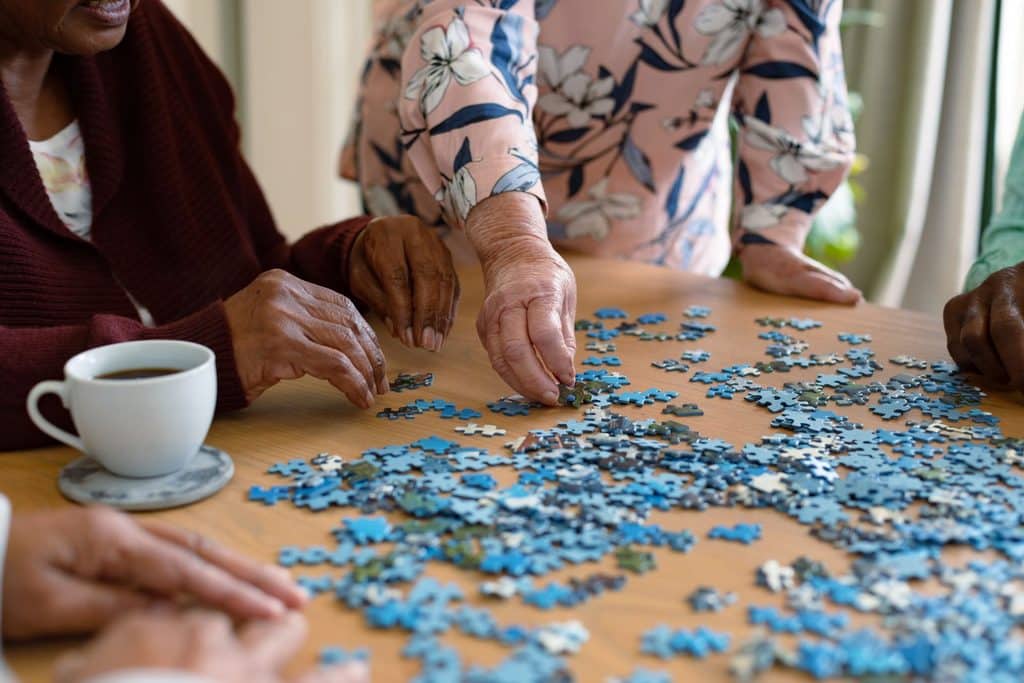
There’s something about a good game that brings people together. Whether it’s a competitive round of cards, a half-finished puzzle spread across the dining room table, or a board game that’s been in the family for decades, these simple activities have a way of creating some of our favorite memories. And with the holiday season upon us, there’s no better time to pull those old favorites out of the closet!
November 24th through 30th marks National Game & Puzzle Week, a fun little celebration tha happens to fall right around Thanksgiving. While most of us probably don’t need much convincing to enjoy a good game night, there’s actually more to these activities than a little friendly competition. For older adults especially, games and puzzles can offer some meaningful benefits for brain health, emotional well-being, and social connection. So, in honor of National Game & Puzzle Week, we’re taking a closer look at why a little playtime is something we should all be making room for, no matter our age.
Keeping Your Mind in the Game
We hear a lot about the importance of staying physically active as we get older, but what about keeping our minds active, too? Just like our bodies, our brains benefit from being challenged and engaged. As we age, it’s natural to experience changes in certain thinking and memory abilities. But that doesn’t mean we stop learning, solving problems, or finding new ways to challenge ourselves. According to the National Institute on Aging, research suggests that mentally stimulating activities, including games and hobbies, may support cognitive health as we get older. While there’s no guarantee that a daily crossword or game of Scrabble will prevent memory loss or dementia, these activities encourage us to use important thinking skills.
Think about it. A game of cards might require remembering which cards have already been played, while a jigsaw puzzle challenges us to recognize patterns, colors, and shapes. Even a simple word search gets us thinking, concentrating, and looking for solutions. And the best part? It doesn’t necessarily feel like work. You’re simply enjoying yourself while giving your brain something interesting to do.
A Little Friendly Competition Goes a Long Way
Of course, the benefits of games and puzzles go beyond keeping our minds busy. For many older adults, one of the challenges of aging can be finding regular opportunities for social Of course, the benefits of games and puzzles go beyond keeping our minds busy. For many older adults, one of the challenges of aging can be finding regular opportunities for social connection. Families may live farther away, longtime friends may no longer be nearby, and getting out of the house isn’t always as easy as it once was. That’s where something as simple as a game can make a real difference. Sitting down for a round of checkers or working on a puzzle together creates an opportunity for conversation, laughter, and companionship. It gives people something to look forward to and something to share. And sometimes, a little friendly competition is just what the afternoon needed!
Maybe it’s reminiscing about childhood board games, teaching someone a favorite card game, or laughing together when nobody can remember whose turn it is. Those moments matter, and they’re often what makes an ordinary afternoon feel a little more special.
Finding the Right Game for Everyone
One of the wonderful things about games and puzzles is that there’s something for just about everyone. You don’t need to be a chess champion or a crossword expert to enjoy the benefits! Here are a few favorites worth trying:
- Jigsaw puzzles: Great for practicing concentration, visual recognition, and problem-solving. They’re also wonderful to work on together.
- Card games: Whether it’s Go Fish, Rummy, or Solitaire, cards can encourage memory, strategy, and conversation.
- Crosswords and word searches: Perfect for anyone who loves words! These activities encourage language skills, recall, and attention.
- Board games: Classics like Scrabble, checkers, and dominoes offer a mix of strategy, decision-making, and social interaction.
- Trivia games: A fun way to revisit old memories, share stories, and maybe even learn something new
Remember, the goal isn’t necessarily to win or finish the fastest. Some older adults may prefer larger puzzle pieces, bigger playing cards, or games with simpler instructions. What’s most important is that the activity feels more fun than frustrating. After all, it’s called playing a game for a reason!
Making Time for Games & Companionship
At Seniors Helping Seniors® Northwest Atlanta in-home senior care services, we know that some of the most meaningful moments in a day come from the simplest activities. We focus on more than helping with daily routines. They’re also about bringing friendship, companionship, and genuine connection into the lives of older adults.
For some, that might mean sitting down with a caregiver to work on a favorite puzzle. For others, it’s a weekly card game, an afternoon of trivia, or learning a new board game together. And because our senior caregivers share many of the same life experiences and interests as those they help, these activities can become something both people genuinely look forward to. It’s not just about keeping busy. It’s about enjoying time together, sharing a few laughs, and having someone there who appreciates the little things.
Especially during the holiday season, when schedules get busy and some older adults may find themselves spending more time alone, having someone to share these moments with can make all the difference. If you have a loved one who could use a little extra companionship, Seniors Helping Seniors® Northwest Atlanta in-home senior care services is here to help make those everyday moments a little brighter.
A New Holiday Tradition Worth Starting
With Thanksgiving right around the corner, National Game & Puzzle Week couldn’t come at a better time. Between preparing meals, decorating, shopping, and getting ready for family gatherings, it’s easy to become wrapped up in everything that needs to get done. But sometimes, the best holiday memories happen when we put those to-do lists aside and simply enjoy each other’s company. So, this year, consider starting a new tradition. Bring out a deck of cards after Thanksgiving dinner, set up a puzzle for everyone to work on throughout the weekend, or challenge the family to a little holiday trivia.
And if you have an older loved one who can’t make it to the family gathering, think about setting aside some time to play a game together during a visit. It doesn’t have to be elaborate. A familiar favorite and a little good company are often all you need. Because at the end of the day, games and puzzles are about so much more than keeping our minds active. They’re about connection, laughter, and making memories with the people around us. Here’s to keeping our minds engaged, our spirits bright, and maybe winning a game or two along the way!