



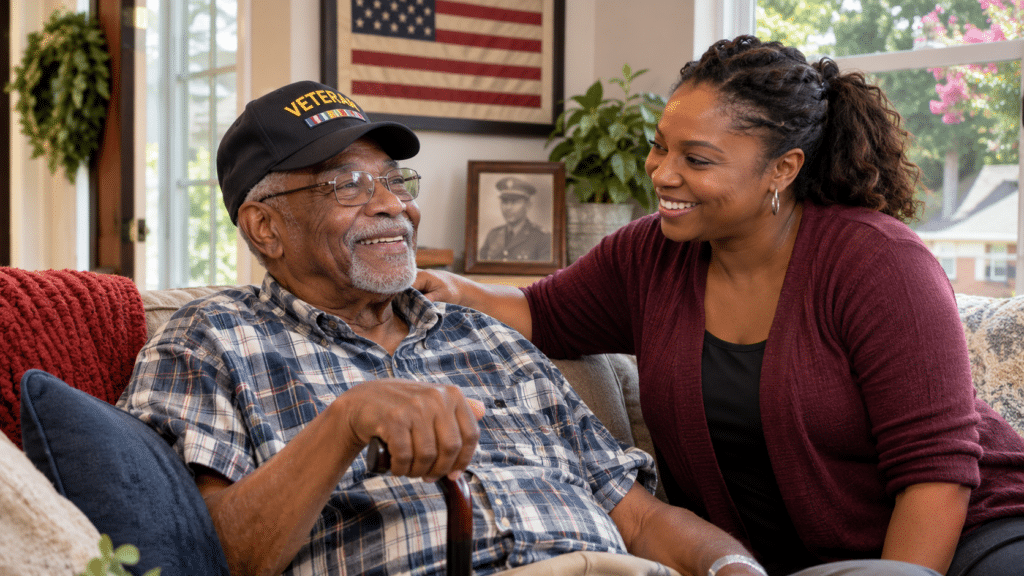
By Shanticleer Graham, Seniors Helping Seniors® Atlanta Southwest
Home care for veterans is about more than helping with a list of tasks. For many older veterans, it is about protecting the routines, choices and independence they worked hard to build.
Veterans Day is personal to me. I served in the U.S. Army, so when I meet an older veteran who wants to remain in the home they know, I understand why independence matters.
The challenge is that independence can start to look different with age.
A veteran may still be able to live at home, but driving at night may be harder. Preparing meals may take more energy. A spouse may be doing more and more of the daily work. An adult child may be calling several times a day just to make sure everything is okay.
That does not mean the veteran has lost control of their life. It may simply mean the family needs a better support plan.
What Can Home Care For Veterans Help With?
Non-medical home care focuses on everyday life.
Depending on the person’s needs and care plan, a caregiver may help with companionship, meal preparation, light housekeeping, transportation, errands, personal care, respite and medication reminders.
That support can be especially useful when an older veteran wants to remain at home but some parts of the day have become harder to manage alone.
Maybe Dad still enjoys making breakfast, but carrying groceries into the house is becoming difficult.
Maybe Mom served in the military years ago and still manages her household well, but no longer feels comfortable driving to appointments.
Maybe a veteran and spouse are doing fine together, but the spouse needs a few hours each week to rest or handle errands.
Home care does not have to replace independence. It can help make independence more realistic.
Start With The Veteran, Not The Task List
Veterans are not one type of person.
Some are private. Some are direct. Some do not like asking for help. Others are used to handling problems without much discussion.
That is why a good care conversation should start with the individual.
Ask what is becoming difficult. Ask what they still want to do themselves. Ask what they do not want someone else taking over.
Those answers matter.
A person may welcome help with laundry but want to keep cooking. They may want transportation but no help with personal care. They may be comfortable with a caregiver in the afternoon but want mornings to remain private.
Good home care should fit around the person whenever possible.
Why Caregiver Matching Matters
Inviting someone into your home is personal.
For older veterans, trust may take time.
A caregiver who understands the importance of routine, respect and personal space can make the transition easier. Shared interests and life experience may also help.
At Seniors Helping Seniors® Atlanta Southwest, we place a strong value on matching caregivers and clients thoughtfully. The right fit is not only about availability. Personality, interests, comfort and care needs matter too.
A caregiver should not make the home feel less like home.
The goal is for support to feel natural enough that the older adult can continue living their own life.
How Can Family Members Tell When More Help May Be Needed?
Look for changes, not perfection.
A veteran who has always kept a neat house may suddenly have clutter piling up.
Someone who never missed appointments may start forgetting them.
The refrigerator may be nearly empty.
Driving may become more limited.
A spouse may seem exhausted.
An adult child may realize that nearly every free hour is being spent managing errands, meals, appointments or personal care.
One change may not mean much. Several changes together may be a reason to talk about support.
Home Care Is Not The Same As Home Health
Families often hear the terms “home care” and “home health” and assume they mean the same thing.
They do not.
Non-medical home care supports everyday routines such as companionship, personal care, meal preparation, transportation, errands, light housekeeping and medication reminders.
Home health generally involves skilled medical services provided by licensed healthcare professionals under an appropriate medical plan.
Some older veterans may need one. Some may need both at different times.
The important thing is understanding which kind of support solves the problem your family is facing.
What About Veterans Benefits?
Veterans and their families may hear about programs that could help with care costs or support services.
Eligibility can vary based on the individual, service history, care needs and current program rules.
A home care agency can explain the services it provides, but families should confirm benefit eligibility directly with the U.S. Department of Veterans Affairs or an appropriate accredited veterans benefits resource.
Do not wait until care is urgently needed to start asking questions. Knowing what resources may be available gives families more time to plan.
Honoring Veterans Can Also Mean Helping Them Keep Their Routine
Veterans Day is a time to say thank you.
For families caring for an aging veteran, it can also be a good time to ask what support would help that person continue living the way they want.
Maybe the answer is transportation.
Maybe it is companionship.
Maybe it is help with meals, household tasks or personal care.
Maybe the family simply needs a dependable backup plan.
Respecting someone’s service also means respecting the person they are today.
Sometimes the most practical way to do that is to help them remain safe, connected and in control of everyday life at home.
Frequently Asked Questions About Home Care For Veterans
Can a veteran receive non-medical home care at home?
Yes. Older veterans can use non-medical home care when they need support with everyday activities and routines. Payment sources and benefits vary by individual situation.
Does home care for veterans include medical services?
Non-medical home care does not provide skilled nursing or medical treatment. It focuses on daily living support based on the person’s care plan.
Can a caregiver provide transportation to appointments?
Transportation and escort services may be available depending on the agency, caregiver qualifications and the client’s care plan.
What if the veteran does not want help?
Start with the specific task that has become difficult. Asking what would make life easier often works better than telling someone they need a caregiver.
Where should families ask about veterans benefits?
Families should contact the U.S. Department of Veterans Affairs or an appropriate accredited veterans benefits resource to confirm current eligibility and available programs.
Seniors Helping Seniors® Atlanta Southwest provides non-medical in-home care for older adults throughout South Fulton County and surrounding communities. We help families find practical ways to support safety, connection and independence at home. Call us at (404)793-0677 or visit SHSAtlantaSouthwest.com