




Why E-E-A-T Matters in Senior Care Content
When families in the East Bay begin searching online for in-home senior care, they aren’t just looking for a list of services. They’re looking for proof — proof that the people who will enter their parent’s home are trustworthy, experienced, and genuinely understand what it means to age with dignity. In the world of digital content, that proof has a name: E-E-A-T.
If you’ve been paying attention to SEO and content marketing over the past few years, you’ve likely heard the term. But for senior care providers and the families they serve, E-E-A-T isn’t just a marketing acronym — it’s a framework that mirrors the very values that make great caregiving possible.
What Is E-E-A-T, and Why Does It Matter for Senior Care?
E-E-A-T stands for Experience, Expertise, Authoritativeness, and Trustworthiness. [1] It is a set of guidelines that Google’s quality raters use to assess the overall quality and credibility of web content. [2] While it is not a direct ranking factor in the traditional sense, content that demonstrates strong E-E-A-T signals consistently performs better in search results. [3]
The framework originally began as E-A-T (Expertise, Authoritativeness, Trustworthiness), but in December 2022, Google added a critical second “E” for Experience. [4] This addition was significant: Google recognized that first-hand, real-world experience with a topic is critical to credibility — especially for content that can meaningfully impact a person’s life. [5]
That last point is especially important for senior care. Google classifies health, safety, and well-being topics under what it calls “Your Money or Your Life” (YMYL) content — areas where inaccurate or untrustworthy information can have real, harmful consequences. [6] For senior care providers, this means the bar for demonstrating E-E-A-T is higher than it is for, say, a recipe blog or a travel site.
According to a 2024 SEMrush study, pages with strong E-E-A-T signals had a 30% higher chance of ranking in the top 3 search positions compared to those with weak signals. [7] In a competitive market like the East Bay, where families are actively researching care options online, that visibility can make all the difference.
Breaking Down the Four Pillars Through a Caregiving Lens
Let’s look at each component of E-E-A-T and what it means specifically for senior care content:
Experience refers to whether the content creator has direct, first-hand involvement with the subject matter. [8] In caregiving, this is the difference between a generic article about “tips for aging in place” and a story told by someone who has actually walked alongside a senior through that journey — someone who has helped a client navigate a difficult morning, shared a meal, or simply sat and listened.
Expertise is the demonstrable depth of knowledge in a specific field — shown through credentials, education, or a proven track record. [9] For senior care, this includes professional training, certifications, and the accumulated wisdom that comes from years of hands-on caregiving.
Authoritativeness comes from external recognition — being cited, referenced, or recommended by other credible sources. [10] In the senior care world, this might look like positive reviews on trusted platforms, mentions in local community resources, or referrals from healthcare professionals.
Trustworthiness is the most important pillar of all. Google’s own Search Quality Rater Guidelines state that trust is “the most important member of the E-E-A-T family” because untrustworthy pages score low on E-E-A-T regardless of how experienced, expert, or authoritative they may appear. [11] For families choosing a caregiver, trust isn’t just a ranking signal — it’s the entire foundation of the relationship.
The Peer-to-Peer Spotlight: Where E-E-A-T Meets Real Human Connection
Here’s where things get genuinely exciting for a care model like Seniors Helping Seniors® in-home care.
Most senior care providers struggle to demonstrate the “Experience” pillar of E-E-A-T because their content is written from a clinical or administrative perspective. It’s informative, but it lacks the lived, first-person texture that Google — and more importantly, families — are looking for.
The solution? The Peer-to-Peer Professional Spotlight — a content strategy built around featuring the real stories, voices, and wisdom of caregivers who are seniors themselves.
Data shows that 77% of adults age 50 and older want to remain in their homes for the long term. [12] The families searching for care solutions online are looking for providers who truly understand that desire — not just as a policy statement, but as a lived reality. When a caregiver who is 68 years old writes or speaks about what it means to help a peer maintain independence, that content carries a weight and authenticity that no amount of keyword optimization can replicate.
This is the essence of the peer-to-peer spotlight: putting real caregivers — people with genuine experience navigating the aging journey — at the center of your content strategy. It’s an E-E-A-T overhaul that doesn’t require a technical audit. It requires storytelling.
What a Peer-to-Peer Spotlight Looks Like in Practice
Implementing this strategy is more straightforward than it might seem. Here are a few formats that work especially well for senior care providers:
1. Caregiver Story Features
Introduce a caregiver by name, share their background, what drew them to caregiving, and a specific moment that reminded them why they do this work. These posts demonstrate Experience and Trustworthiness simultaneously — and they humanize your brand in a way that resonates deeply with families who are making an emotionally charged decision.
2. A Day in the Life Narratives
Walk readers through a typical visit from a caregiver’s perspective. What does it feel like to arrive at a client’s home? What small moments matter most? This type of content signals first-hand experience in a way that generic service descriptions simply cannot.
3. Client and Family Testimonials With Context
Testimonials are powerful, but they’re even more effective when paired with context. Rather than a standalone quote, build a short narrative around the testimonial: who the client is, what their situation was, and how the caregiver relationship developed over time. Incorporating testimonials from seniors and their families adds a meaningful layer of trust and relatability — seeing peers discuss their positive experiences can be a strong motivator for others considering similar options. [13]
4. Caregiver Q&A Interviews
Ask your caregivers questions that only someone with real experience could answer: “What’s the most important thing you’ve learned about helping someone accept care gracefully?” or “How do you build trust with a new client in the first few weeks?” These interviews are rich with authentic, experience-driven content that scores high on every E-E-A-T dimension.
5. Community-Specific Content
For local providers, grounding content in specific communities — Walnut Creek, Concord, Danville, Pleasant Hill, San Ramon — adds a layer of local authority that national content simply can’t match. Mentioning local landmarks, community resources, or neighborhood-specific considerations signals to both Google and readers that you are genuinely embedded in the community you serve.
Why This Strategy Works: The Trust Signal That Can’t Be Faked
The reason the peer-to-peer spotlight is such a powerful E-E-A-T strategy comes down to one simple truth: authenticity cannot be manufactured.
In 2025 and beyond, with AI-generated content flooding the internet, Google has doubled down on identifying content that demonstrates genuine human experience and expertise. [14] The peer-to-peer spotlight is, by definition, human. It is grounded in real relationships, real moments, and real lives.
For senior care specifically, this matters enormously. Families aren’t just evaluating a service — they’re evaluating whether they can trust a stranger to enter their parent’s home and treat them with dignity. Content that features real caregivers, real stories, and real community connections answers that question in a way that a list of service offerings never could.
Building genuine authority and trust signals is a long-term strategy — it typically takes months, not weeks. [15] But the investment pays dividends not just in search rankings, but in the quality of relationships you build with prospective clients before they ever pick up the phone.
Seniors Helping Seniors® in-home care East Bay: Where Peer-to-Peer Is More Than a Strategy — It’s the Model
As your team from Seniors Helping Seniors® in-home care East Bay, the peer-to-peer approach isn’t a content marketing tactic. It’s the foundation of everything we do.
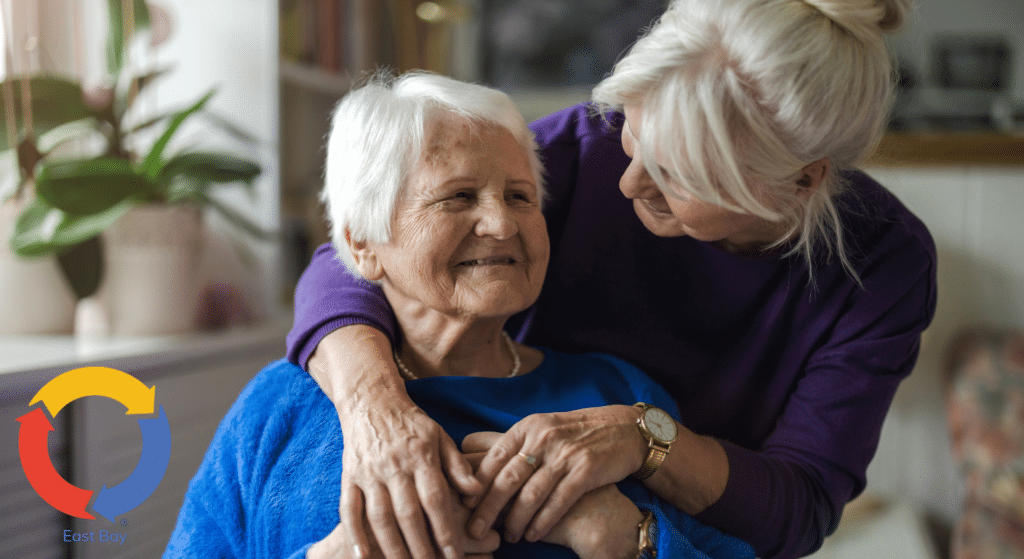
Our caregivers are seniors themselves — active, compassionate individuals who relate to the people they care for as peers, not clients. [16] They’ve navigated similar life challenges, understand the importance of maintaining routines and independence, and approach care with the respect and dignity they would want for themselves. [17] This peer-to-peer model creates natural conversations, shared experiences, and often lifelong friendships that enrich both the caregiver’s and care receiver’s lives. [18]
Founded on the principle that life experience is invaluable, Seniors Helping Seniors® in-home care matches clients with caregivers who share similar backgrounds, interests, and life perspectives — fostering genuine companionship alongside practical support. [19] This peer-to-peer care model has resonated deeply with families who prefer that their loved ones receive assistance from someone who truly understands the challenges of aging. [20]
For families throughout Walnut Creek, Concord, Pleasant Hill, Danville, San Ramon, and the broader East Bay, this means your loved one isn’t just receiving help — they’re gaining a trusted companion who genuinely gets it. Our services include companionship, light housekeeping, meal preparation, medication reminders, transportation to appointments, and assistance with activities of daily living — all delivered by caregivers who bring wisdom, patience, and lived understanding to every visit. [21]
If you’re looking for in-home senior care in the East Bay that is built on real relationships, lived experience, and deep community roots, we’d love to connect. Reach out to Seniors Helping Seniors® in-home care East Bay to learn more about how our peer-to-peer care model can support your family.
Citations
[1] https://mailchimp.com/resources/google-eeat/
[2] https://mailchimp.com/resources/google-eeat/
[3] https://blog.clickpointsoftware.com/google-e-e-a-t
[4] https://yoast.com/what-is-e-e-a-t/
[5] https://developers.google.com/search/blog/2022/12/google-raters-guidelines-e-e-a-t
[6] https://www.boostability.com/resources/google-e-e-a-t-guide/
[7] https://www.singlegrain.com/seo/e-e-a-t-strategies-that-guarantee-googles-trust-in-2025/
[8] https://mailchimp.com/resources/google-eeat/
[9] https://blog.clickpointsoftware.com/google-e-e-a-t
[10] https://blog.clickpointsoftware.com/google-e-e-a-t
[11] https://blog.clickpointsoftware.com/google-e-e-a-t
[12] https://aginginplace.org/
[13] https://fastercapital.com/content/Elder-care-niche–Digital-Marketing-Trends-in-Senior-Care-Services.html
[14] https://www.singlegrain.com/seo/e-e-a-t-strategies-that-guarantee-googles-trust-in-2025/
[15] https://blog.clickpointsoftware.com/google-e-e-a-t
[16] https://spotlightseniorservices.com/provider/seniors-helping-seniors/
[17] https://spotlightseniorservices.com/provider/seniors-helping-seniors/
[18] https://spotlightseniorservices.com/provider/seniors-helping-seniors/
[19] https://peersense.com/franchise/seniors-helping-seniors-llc
[20] https://peersense.com/franchise/seniors-helping-seniors-llc
[21] https://spotlightseniorservices.com/provider/seniors-helping-seniors/