



By Seniors Helping Seniors® East King | Senior Care & Dementia Support
If your aging parent or spouse has started forgetting familiar names, repeating questions, getting confused in familiar places, or struggling with everyday tasks, you may be wondering: Is this normal aging, or could it be dementia?
For families in Bellevue, Redmond, Kirkland, Bothell, Woodinville, Issaquah, Sammamish, and surrounding East King County communities, recognizing changes early can help you make informed decisions about your loved one’s health, safety, and independence.
What Is Dementia?
Dementia is a general term for a decline in memory, thinking, reasoning, communication, or other cognitive abilities that is severe enough to interfere with everyday life. It is not a single disease and is not a normal part of aging.
Dementia can affect a person’s ability to remember information, make decisions, communicate, recognize familiar surroundings, and complete daily activities.
According to the National Institute on Aging, dementia can range from mild symptoms that interfere with certain activities to severe symptoms requiring substantial assistance with daily living.
Different diseases cause dementia, and symptoms can vary considerably from person to person.

10 Early Signs and Symptoms of Dementia
The early warning signs of dementia can be subtle. Memory loss is common, but changes in behavior, language, judgment, and everyday functioning may also occur.
The following are important warning signs to recognize:
- Memory loss affecting daily life: Forgetting important events, repeating questions, or struggling to remember recently learned information.
- Difficulty completing familiar tasks: Having trouble preparing familiar meals, managing household bills, or following established routines.
- Confusion about time or place: Losing track of dates or becoming disoriented in familiar surroundings.
- Problems finding words: Struggling to follow conversations, repeating phrases, or having trouble naming familiar objects.
- Poor judgment: Making unusual financial decisions or having difficulty recognizing potentially unsafe situations.
- Misplacing items frequently: Putting everyday objects in unusual locations and being unable to retrace steps.
- Changes in mood or personality: Becoming unusually anxious, suspicious, withdrawn, fearful, or irritable.
- Withdrawal from social activities: Losing interest in favorite hobbies, community events, or regular social interactions.
- Difficulty planning or solving problems: Struggling with familiar instructions, finances, or tasks requiring multiple steps.
- Changes in visual or spatial understanding: Difficulty judging distances, navigating surroundings, or recognizing visual relationships.
Experiencing one of these symptoms does not automatically mean someone has dementia. However, persistent or worsening changes should be evaluated by a healthcare professional.
Dementia vs. Normal Aging: What’s the Difference?
Occasional forgetfulness is common as people age. Dementia involves more significant cognitive changes that interfere with everyday life.
| Normal aging | Possible warning sign of dementia |
|---|---|
| Occasionally forgetting a name and remembering it later | Frequently forgetting important information and not recalling it |
| Misplacing keys occasionally | Regularly losing objects and being unable to retrace steps |
| Making an occasional mistake with a bill | Increasing difficulty managing finances |
| Forgetting the day, then remembering | Losing track of dates, seasons, or location |
| Occasionally struggling to find a word | Frequent difficulty following conversations |
| Needing help with unfamiliar technology | Struggling to complete once-familiar activities |
The key difference is the impact on independence and everyday functioning.
If changes are becoming frequent or concerning, schedule a medical evaluation rather than assuming they are an inevitable part of aging.
What Causes Dementia? Understanding the Different Types
There are several common causes of dementia.
Alzheimer’s Disease
Alzheimer’s disease is the most common cause of dementia. It typically involves progressive changes in memory, thinking, communication, and daily functioning.
Vascular Dementia
Vascular dementia is associated with conditions that affect blood flow to the brain, including strokes and blood-vessel disease.
Lewy Body Dementia
Lewy body dementia may cause changes in attention, movement, sleep, thinking, and visual perception.
Frontotemporal Dementia
Frontotemporal dementia often affects behavior, personality, communication, and decision-making.
Parkinson’s Disease Dementia
Some individuals living with Parkinson’s disease develop dementia as the condition progresses.
Some other medical conditions, medication effects, or nutritional deficiencies can cause symptoms resembling dementia. A healthcare evaluation helps distinguish among these possibilities.
How Does Dementia Progress?
Dementia is generally progressive, but the speed and pattern of change vary.
Early stage: A person may remain largely independent while experiencing forgetfulness, difficulty organizing activities, or occasional confusion.
Middle stage: More help may be needed with meals, medication reminders, bathing, dressing, transportation, and household routines.
Later stage: A person may require extensive personal care, mobility assistance, and ongoing supervision.
Not everyone follows the same progression. Families should regularly reassess care needs with the person’s healthcare team.
Can Someone With Dementia Continue Living at Home?
Yes. Many people living with dementia can remain at home with appropriate care, supervision, environmental safety measures, and family support.
Familiar surroundings can help preserve routines and provide comfort.
However, remaining at home safely depends on the person’s cognitive abilities, physical health, behaviors, living environment, and available support.
In-home dementia care can assist with everyday activities while helping families manage changing care needs.
In-Home Dementia Care in Bellevue, Redmond & East King County
At Seniors Helping Seniors® East King, we provide personalized, non-medical in-home care to help older adults maintain dignity, meaningful connections, and independence.
Our services may include:
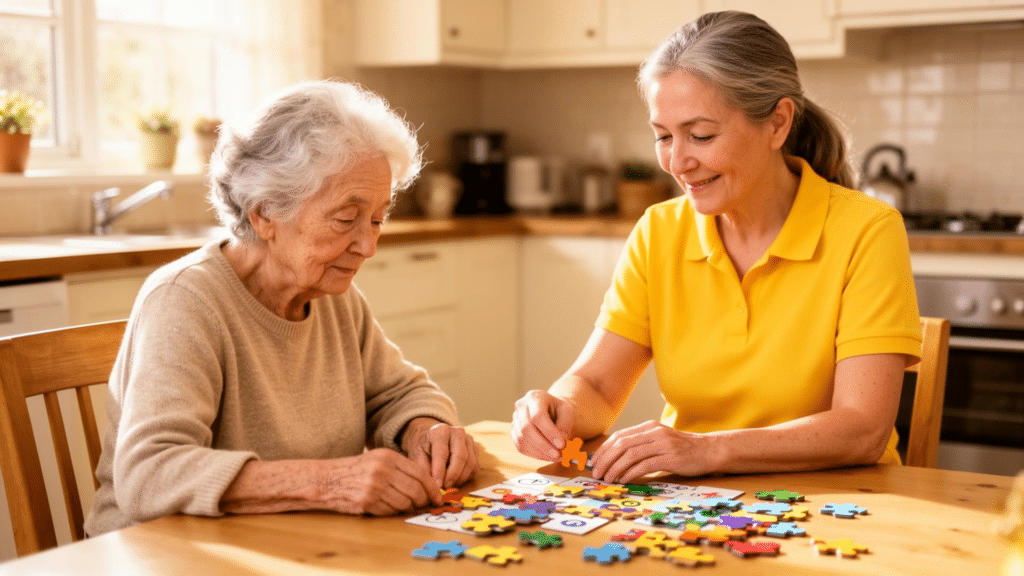
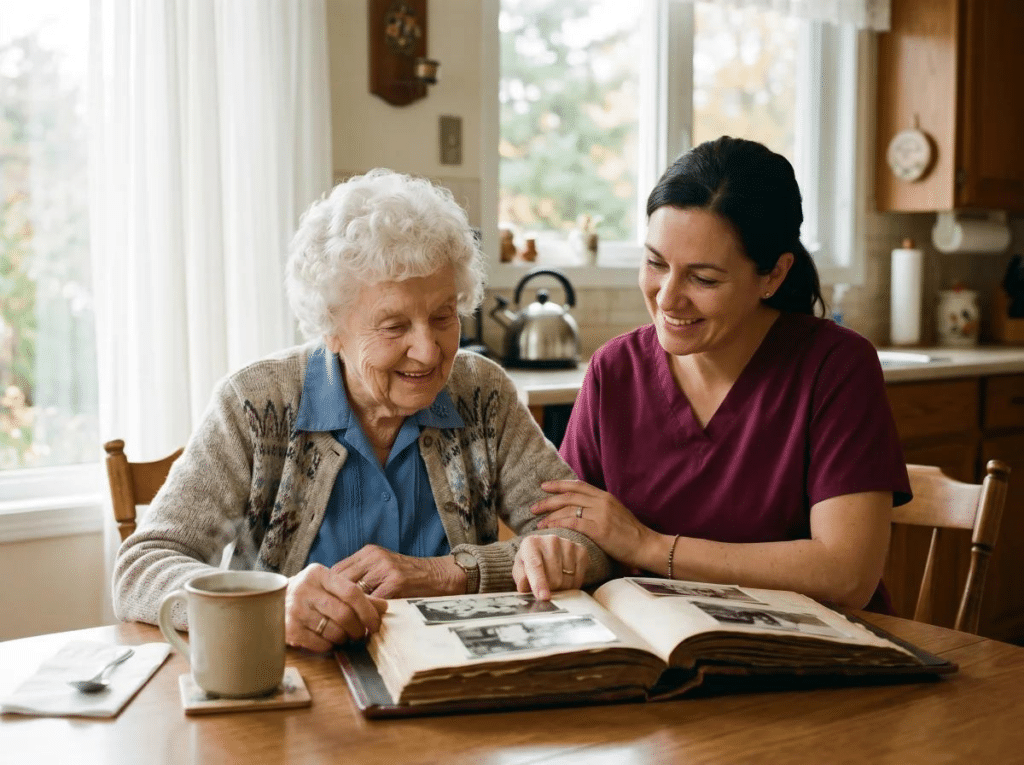
- Dementia companionship: Meaningful conversations, hobbies, reading, puzzles, music, and social engagement.
- Personal care assistance: Support with bathing, grooming, dressing, and toileting.
- Meal preparation: Help preparing meals and encouraging regular hydration.
- Medication reminders: Assistance remembering scheduled, self-administered medications.
- Mobility and fall-prevention support: Assistance with safe movement and everyday activities within the established care plan.
- Light housekeeping: Laundry, linens, household tidying, and routine tasks.
- Transportation and errands: Help with grocery shopping, appointments, and approved community activities.
- Family caregiver respite: Scheduled support so spouses and family members can rest or attend to other responsibilities.
- Safety supervision: Support tailored to the individual’s needs and assessed level of risk.
The Seniors Helping Seniors® Difference
Our approach to senior care emphasizes the importance of personal connections.
We thoughtfully match seniors with compassionate, mature caregivers who bring life experience, patience, and understanding.
For someone living with dementia, maintaining routines and sharing meaningful activities with a compatible caregiver can be an important part of daily life.
We aim to provide more than assistance with tasks. Our focus is on helping seniors feel respected, engaged, and supported.
When Should Families Consider Dementia Home Care?
Families often begin exploring additional care after noticing changes such as:
- Increased confusion or forgetfulness
- Difficulty preparing meals or maintaining household routines
- Falls or growing mobility concerns
- Problems managing everyday activities
- Social isolation or withdrawal
- A spouse or family caregiver becoming overwhelmed
- Increased safety concerns when the senior is home alone
You do not necessarily need to wait for a crisis before exploring care.
Starting with companionship or assistance with routine activities can help families assess what works best while preserving as much independence as possible.
Frequently Asked Questions About Dementia Care
What are the first signs of dementia in elderly adults?
Early signs can include memory loss affecting daily activities, repeating questions, confusion, difficulty completing familiar tasks, problems finding words, or changes in judgment and behavior.
Is dementia the same as Alzheimer’s disease?
No. Dementia describes a collection of cognitive symptoms. Alzheimer’s disease is the most common underlying cause.
At what age does dementia usually begin?
Dementia becomes more common after age 65, but some forms can develop at younger ages. Dementia is not an inevitable part of growing older.
Can dementia be treated?
Treatment depends on the underlying cause. Some medications and other interventions can help manage symptoms or slow progression in certain people. Some conditions that resemble dementia may be treatable or reversible. A medical professional should evaluate symptoms and discuss available options.
How can I help a parent with dementia at home?
Maintain predictable routines, communicate calmly, encourage familiar activities, reduce household hazards, and seek appropriate medical advice. Consider in-home care when assistance or supervision becomes necessary.
Does Seniors Helping Seniors® in-home care provide dementia care in Bellevue and Redmond?
Yes. Seniors Helping Seniors® East King offers individualized, non-medical dementia support and senior home care in Bellevue, Redmond, Kirkland, Bothell, Woodinville, Issaquah, and surrounding East King County communities.
How do I arrange in-home dementia care?
Contact Seniors Helping Seniors® East King to discuss your loved one’s needs and arrange an in-home assessment. Our team can review the assistance requested, learn about routines and preferences, and explore an appropriate care plan.
Finding Dementia Care Near You in East King County
Seniors Helping Seniors® East King supports families across:
Bellevue, Redmond, Kirkland, Bothell, Kenmore, Woodinville, Sammamish, Issaquah, Mercer Island, Newcastle, Medina, Duvall, and surrounding East King County communities.
Whether your loved one needs companionship a few hours each week, assistance with personal care, or more extensive daily support, we can discuss care options based on an individualized assessment.
Compassionate Dementia Care Starts With a Conversation
Watching someone you love experience memory loss can bring uncertainty for the entire family.
You don’t have to navigate every decision alone.
At Seniors Helping Seniors® East King, we believe that personalized care, meaningful relationships, and respect for independence can make everyday life more manageable for seniors and their loved ones.
Looking for dementia care in Bellevue, Redmond, Kirkland, or East King County?
Call (425) 648-6362 to speak with our local care team and request an in-home care assessment.
Website: SHSEastKing.com
Like getting a little help from your friends®.
Medical References and Additional Resources
- National Institute on Aging — What Is Dementia?
- National Institute on Aging — Memory, Forgetfulness, and Aging
- Alzheimer’s Association — 10 Early Signs and Symptoms
- Alzheimer’s Association — Why Get Checked
Medical disclaimer: This article is for educational purposes and does not replace professional medical advice, diagnosis, or treatment. Seniors Helping Seniors® East King provides non-medical home care services.