




Bradenton and Manatee County have a significant number of older adults living independently, which means there are also a significant number of adult children quietly carrying the weight of family caregiving. Many of them started helping with small things and found themselves, months or years later, managing far more than they ever anticipated.
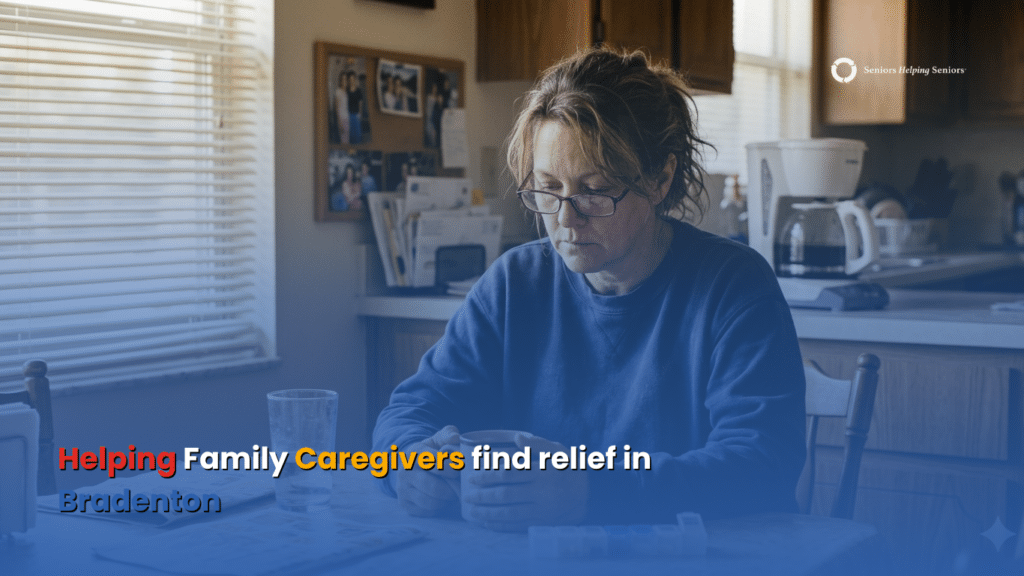
By the time most family caregivers recognize what has happened, they are already depleted. This guide covers what caregiver burnout actually looks like, what drives it, and what families in Bradenton can do to get real, sustainable relief.
Watch: Caregiver Burnout
What is caregiver burnout?
Caregiver burnout is a state of physical, emotional, and mental exhaustion that develops when someone provides ongoing care for an aging, ill, or disabled family member without enough support or relief.
Burnout is not a personal failing. It often occurs when one person carries too many responsibilities for too long without help.
Caregiver burnout differs from ordinary tiredness. While rest usually relieves fatigue, burnout continues to build over time. It can affect your health, relationships, and ability to provide quality care.
What are the signs of caregiver burnout?
Caregiver burnout often develops so gradually that the person experiencing it is among the last to recognize it. The signs tend to appear in clusters rather than all at once.
There are ten signs family caregivers in Bradenton most commonly report:
- Persistent exhaustion that does not improve with sleep or rest
- Feeling resentful, irritable, or angry more often than usual, including toward the loved one you care for
- Withdrawing from friends, family, and activities that used to provide enjoyment
- Neglecting your own health, medical appointments, or basic self-care
- Feeling hopeless or trapped, as if the situation will never improve
- Difficulty concentrating or making decisions that were previously straightforward
- Increased reliance on alcohol, sleep aids, or other substances to cope
- Feeling like caregiving has become your entire identity with nothing left for yourself
- Frequent physical symptoms such as headaches, digestive issues, or getting sick more often
- Beginning to feel that your loved one would be better off without you as their caregiver
If several of these sound familiar, that is not a sign of weakness. It is a sign that you have been doing too much for too long without enough support.
What causes caregiver burnout?
A single factor rarely causes burnout. In most cases, several pressures build over time and eventually overwhelm the caregiver.
There are five common causes of caregiver burnout among family caregivers in Bradenton:
- Role confusion: many family caregivers take on the role gradually without clearly defining what they are responsible for, which means the boundaries keep expanding without anyone explicitly agreeing to them
- Lack of support: caregiving is often a solo undertaking, with other family members either uninvolved or living too far away to contribute consistently
- No time off: unlike paid caregivers who work shifts, family caregivers often remain on call around the clock and rarely receive structured relief.
- Emotional weight: caring for a parent with dementia, a progressive illness, or significant physical decline involves a kind of ongoing grief that is rarely acknowledged or processed
- Neglected personal needs: sleep, exercise, medical care, and social connection are often the first things sacrificed when caregiving demands increase, which accelerates the depletion
What Families Should Know
Caregiver burnout does not just affect the caregiver. Research consistently shows that burned-out caregivers provide lower quality care, are more likely to make errors, and are at significantly higher risk of health crises themselves. Getting help is not a luxury. It is a necessary condition for sustainable caregiving.
What is the difference between caregiver stress and caregiver burnout?
Caregiver stress and caregiver burnout exist on a continuum, but they are meaningfully different in terms of how they respond to intervention.
Caregiver stress is the tension and strain that comes with managing a demanding role. It is uncomfortable but manageable. Rest, support, and temporary relief can reduce it meaningfully.
Caregiver burnout is what happens when stress is sustained long enough without adequate relief. At that point, rest alone is not enough. The person has depleted their physical and emotional reserves to the point where recovery requires more than a weekend off. It often requires structural changes to how care is organized and delivered.
The practical distinction matters because caregivers experiencing stress can often benefit from short-term respite. Caregivers experiencing full burnout typically need more consistent ongoing support built into the care arrangement.
How can family caregivers in Bradenton get real relief?
Relief from caregiver burnout requires two things: honestly assessing your needs and accepting help instead of continuing to manage everything alone.
There are four practical steps family caregivers in Bradenton can take:
- Name what is happening: first, recognize that you are experiencing burnout rather than a temporary rough patch.
- Identify what you need most: some caregivers need time off. Others need help with specific tasks. Others need someone else to take over entirely for a period. When you identify exactly what you need, you can find the right solution more easily.
- Bring in professional support: home care provides trained, consistent caregivers who can take over specific responsibilities on a scheduled basis, giving family caregivers reliable and predictable time off
- Reconnect with your own life: the goal of getting help is not just to reduce caregiving hours. It is to restore the parts of your life that sustained you before caregiving consumed everything
What Families Should Know
Many family caregivers feel guilty about needing help, as if accepting support means they have failed the loved one they care for. The opposite is true. A caregiver who is depleted, resentful, or unwell cannot provide good care. Getting help is one of the most responsible decisions a family caregiver can make.
How does Seniors Helping Seniors® in-home care support family caregivers in Bradenton?
Seniors Helping Seniors® Sarasota provides non-medical home care throughout Bradenton and Manatee County that is specifically designed to give family caregivers reliable relief. Families can schedule services regularly so caregivers have consistent, predictable time to rest, work, attend to their own health, or simply step away from the caregiving role for a few hours.
Most caregivers are mature adults between the ages of 50 and 70 who bring patience, reliability, and life experience to every visit. We assign the same caregiver to each client whenever possible, creating consistency and trust for both the client and family, which builds trust and reduces the transition burden for both the client and the family.
Services include companionship, homemaker services, personal care, transportation, and dementia support services. We serve private-pay families, VA-funded families, and people who use Medicare Advantage or PACE program benefits.
Home Care Services in Bradenton and Manatee County
Seniors Helping Seniors® Sarasota provides home care throughout Bradenton and Manatee County, including Lakewood Ranch, Palmetto, Ellenton, Parrish, and West Bradenton. If you are unsure whether we serve your area, call us and we will confirm it quickly.
Ready to Talk? Here Is the Next Step.
If you are a family caregiver in Bradenton who is running low, we are a good first call. We can talk through what your situation looks like, what level of support would actually make a difference, and what it would take to get started.
Call Seniors Helping Seniors® Sarasota. You do not have to have it all figured out before you call.
Seniors Helping Seniors® Sarasota
6901 Professional Pky E, Suite 266
Sarasota, FL 34240
941-877-1000