




A significant number of families who call Seniors Helping Seniors® in-home care do not live in Bradenton. Many live in the Northeast, Midwest, or other parts of the country. Meanwhile, their parent lives independently in Manatee County.
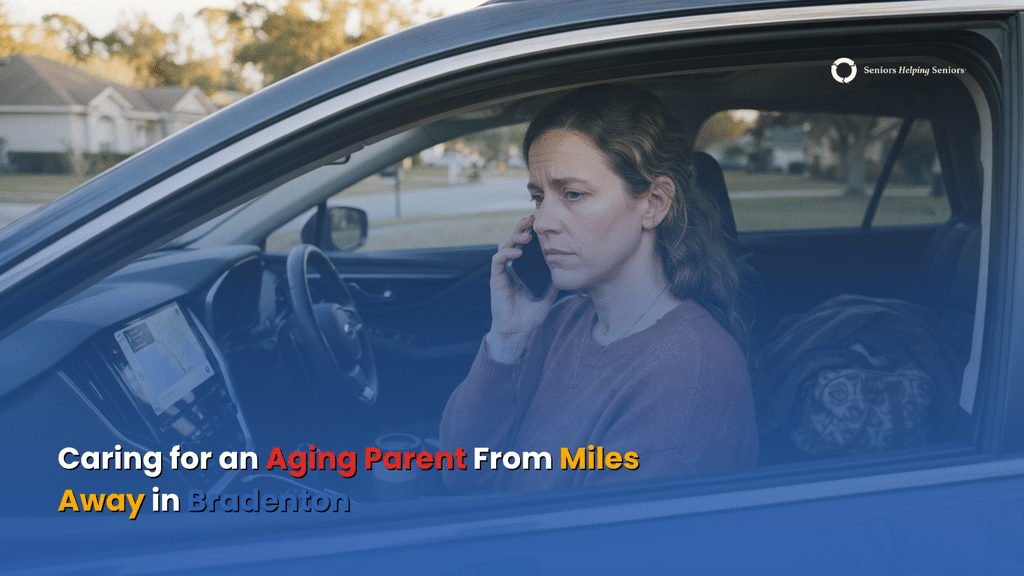
For these families, distance creates a difficult question. How can they make sure their parent is safe and doing well from hundreds or thousands of miles away?
If that sounds familiar, this guide is for you. It explains what long-distance caregiving looks like and the challenges families often face. It also covers common risks and how professional home care can provide reliable local support.
Watch: Long-Distance Caregiving: How to Help a Parent From Far Away
What makes long-distance caregiving so difficult?
Four common challenges make long-distance caregiving especially difficult:
- You cannot see what is actually happening: A phone call may not show the full picture. Your parent may say everything is fine while struggling with expired food, missed medications, or mobility problems. Some parents avoid mentioning these issues because they do not want their family to worry.
- You cannot respond quickly: A local family member may be able to arrive within twenty minutes when something changes. From another state, responding can take much longer. You may need to arrange transportation, book a flight, and take time off work.
- You depend on your parent’s self-report: Older adults who value their independence may not always mention difficulties. They might leave out a fall, missed meal, or concerning symptom. Some worry that speaking up could lead to conversations about moving or getting more help.
- The responsibility may fall on one person: One family member may travel to Bradenton periodically and try to handle everything during each visit. Managing appointments, checking the home, and solving problems in a short period can quickly become exhausting.
What Families Should Know
Long-distance families often tell us they wish they had called sooner. A crisis had not necessarily happened. Instead, having a consistent local presence gave them greater visibility and peace of mind.
What are the biggest risks when there is no local support in place?
Several concerns can increase when an older adult lives alone without regular local support.
Five common risks include:
- Undetected health changes: Changes in cognition, mobility, or physical condition may develop gradually. Without regular visits, family members may not notice these changes for weeks or months.
- Medication errors: Managing several prescriptions requires attention and consistency. An older adult may miss a dose or become confused about the schedule without reminders or support.
- Nutritional decline: Some older adults who live alone begin eating less or preparing fewer balanced meals. Grocery shopping may become harder. Appetite can also decrease without social mealtime.
- Falls: Falls can cause serious injuries for older adults. Living alone creates an added concern because someone may not be nearby to respond quickly.
- Isolation: Social circles often become smaller with age. When family contact is limited to occasional visits and phone calls, loneliness can become a greater concern.
What do long-distance families actually need?
When we talk with long-distance families, their needs are often similar. They want someone local who knows their parent, visits reliably, and communicates when something changes.
A consistent home caregiver can provide that local presence.
Regular visits allow the caregiver to learn the parent’s normal routine. Over time, the caregiver may notice when something seems different or concerning. These observations can give the family valuable information between visits.
Professional home care also helps with everyday tasks. For many long-distance families, however, the consistent local connection matters just as much.
What Families Should Know
A caregiver who visits regularly and knows your parent well is a fundamentally different resource than a neighbor who checks in occasionally or a family member who flies in every few months. The relationship and consistency are what create real visibility into how your parent is actually doing.
How should long-distance families think about getting started?
There are four things long-distance families should do to get started:
- Schedule an in-home assessment: an experienced coordinator, often a nurse, visits the home, meets your parent, and gives you an honest picture of what they observe. This assessment alone often reveals things families did not know were happening
- Start with a realistic scope: many families start with a few visits per week focused on companionship and light homemaker support, then adjust as needs become clearer
- Establish a communication rhythm with the caregiver and agency: regular updates from a consistent caregiver give long-distance families the ongoing visibility they need without requiring constant phone calls to their parent
- Plan your next visit around the care relationship: coming to meet the caregiver in person during a scheduled visit establishes trust on both sides and gives you a direct read on how the relationship is working
How does Seniors Helping Seniors® in-home care support long-distance families in Bradenton?
Seniors Helping Seniors® Sarasota works with long-distance families regularly throughout Bradenton and Manatee County. The setup process is designed to work for families who are not local. The in-home assessment can be arranged by phone. Care can begin within approximately one week of the initial call. The family does not need to be present in Bradenton to get things started.
Most caregivers are experienced mature adults, typically between the ages of 50 and 70, who build genuine relationships with their clients over time. The same caregiver is assigned on a consistent schedule, which is what creates the local presence and accumulated knowledge of your parent that long-distance families are looking for.
Services include companionship, homemaker services, personal care, transportation, and dementia support services. Care is available to private pay families, VA-funded families, and those using Medicare Advantage or PACE program benefits.
Home Care Services in Bradenton and Manatee County
Seniors Helping Seniors® Sarasota provides home care throughout Bradenton and Manatee County, including Lakewood Ranch, Palmetto, Ellenton, Parrish, and West Bradenton. If you are unsure whether your parent’s address is within our service area, call and we will confirm quickly.
Ready to Talk? Here Is the Next Step.
If your parent is in Bradenton and you are managing their care from a distance, give us a call. We can walk you through what an assessment looks like, what care typically starts with for long-distance families, and what you can expect from us in terms of communication and updates.
Seniors Helping Seniors® Sarasota
6901 Professional Pky E, Suite 266
Sarasota, FL 34240
941-877-1000