




His daughter called him every Sunday night.
“How was your week, Dad?”
“Good.”
“Do anything fun?”
“Oh, you know. Stayed busy.”
“Need anything?”
“Nope. I’m just fine.”
And technically, he was.
His house was taken care of. He still drove. The refrigerator had food in it. He kept up with his doctor’s appointments.
There wasn’t a crisis.
But there wasn’t much of a week either.
The Tuesday morning breakfast he’d gone to for years had slowly faded away as friends moved, got sick, or died.
He hadn’t played golf since spring.
His wife had always been the one who made plans with other couples. Since she passed away, those invitations had become less frequent.
He still went to church most Sundays. But afterward, he usually went straight home.
When his daughter asked if he was lonely, he almost seemed offended.
“Lonely? No. I’m fine.”
And I think that’s something families often miss, especially with older men.
Loneliness doesn’t always sound like:
“I’m lonely.”
Sometimes it sounds exactly like: “I’m fine.”
Men Don’t Always Have a Word for What They’re Missing
I’ve had enough conversations with older adults and their families across Middle Tennessee to notice something.
Many older men won’t describe themselves as lonely.
They’ll tell you they’re bored. They’ll say there’s “not much going on.” They’ll complain that television isn’t very good anymore. They’ll mention that everybody is busy. They may tell you they don’t need anything.
What they don’t always say is: “I miss having somewhere to be.”
“I miss having people who expect me to show up.”
“I miss feeling useful.”
And maybe most importantly:
“I miss being needed.”
That’s a very different conversation than loneliness.
Retirement Doesn’t Just End a Job
We talk about retirement as though the only thing someone leaves behind is work.
But think about everything that came with that job.
There was somewhere to go every morning.
People expected you.
Someone called when they needed an answer.
There were problems you knew how to solve.
People asked your opinion.
Maybe you complained about work for thirty years.
But you mattered there.
Then one Friday there’s a retirement cake.
And Monday morning, nobody needs you at 8:00.
For some people, that’s freedom.
For others, it creates a hole they didn’t expect.
Sometimes Mom Was the Social Calendar
This is another pattern families don’t always recognize until something changes.
In many couples, one spouse quietly manages much of the couple’s social life.
She remembers the dinner invitation.
She calls friends.
She signs them up for the church event.
She plans the trip.
She knows whose birthday is coming.
Dad shows up and enjoys himself.
Then illness or the loss of a spouse changes everything.
Suddenly the person who spent decades surrounded by people doesn’t quite know how to recreate that community on his own.
The invitations become less frequent.
The calendar gets emptier.
And nobody consciously decided for that to happen.
It just did.
Isolation Doesn’t Always Look Sad
This may be the most important thing for adult children to understand.
Your dad can laugh with you on Sunday and still be isolated Monday through Saturday.
He can enjoy seeing the grandchildren and still spend most evenings alone.
He can tell you he’s fine and mean it.
Isolation isn’t always depression.
It isn’t always visible sadness.
Sometimes it’s simply a life that has gradually lost its points of connection.
The question isn’t only:
“Is Dad lonely?”
Try asking:
“Where does Dad feel needed right now?”
That question can tell you much more.
Look at What’s Disappeared
When families worry about aging parents, we tend to look for things that have gone wrong.
A fall.
A car accident.
A missed medication.
An unpaid bill.
But sometimes we should look for what’s gone missing.
When did he last meet a friend for breakfast?
Is he still going to the activities he used to enjoy?
Who calls him besides family?
What does he have on the calendar next week that he’s genuinely looking forward to?
When was the last time someone outside the family asked for his help?
None of these questions diagnose anything.
They simply help us notice whether someone’s world is becoming smaller.
Don’t Just Give Dad Something to Do
This is where I think families sometimes mean well but miss the mark.
We try to fill the calendar.
“There’s a senior center activity Tuesday.”
“You could take a class.”
“Why don’t you join this group?”
Those may be wonderful ideas.
But there’s a difference between being occupied and being needed.
For a man who spent forty years building things, fixing problems, leading people, raising children, serving at church, coaching teams, or caring for a spouse, another activity isn’t always the answer.
Purpose might be.
Maybe the church needs someone who can fix things.
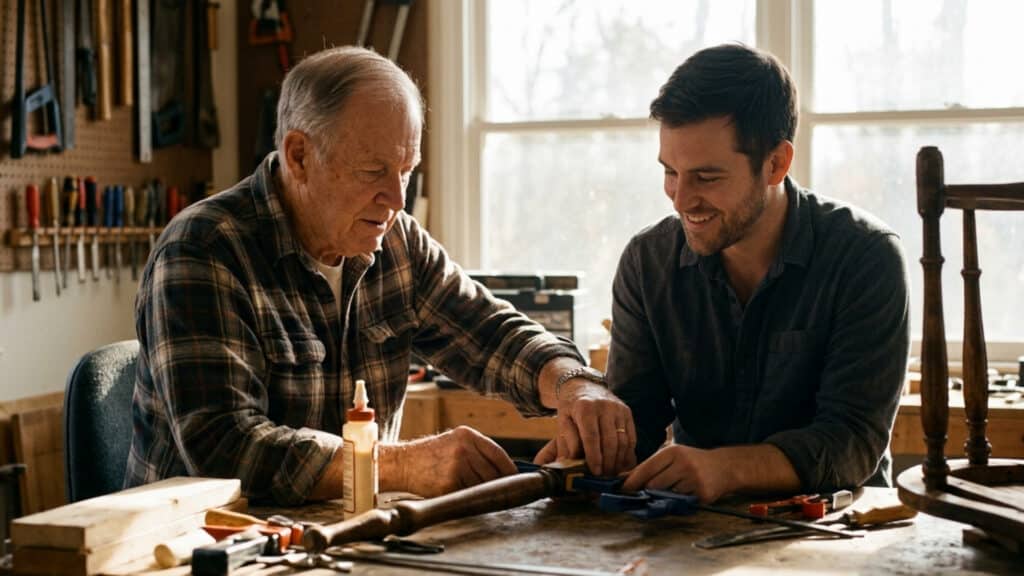
Maybe a grandson wants to learn how to change his oil.
Maybe a neighbor could use help with a project.
Maybe someone would genuinely value hearing the stories he has accumulated over seventy-five years.
Connection is strongest when it isn’t charity.
It’s relationship.
Companionship Shouldn’t Feel Like Babysitting
This matters when families begin considering outside support too.
I’ve heard families worry:
“Dad will never agree to having a caregiver.”
I understand why.
If Dad hears:
“We’re sending someone over because you can’t take care of yourself anymore,”
he may reject the idea before you’ve finished the sentence.
But companionship can look very different.
It can be another older adult who enjoys the same things he does.
Someone to grab lunch with.
Someone who will go to the hardware store with him.
Someone to attend a Sounds game with.
Someone to drive to church and sit beside him.
Someone who talks with him rather than watches over him.
That’s one of the things I love about the Seniors Helping Seniors® model.
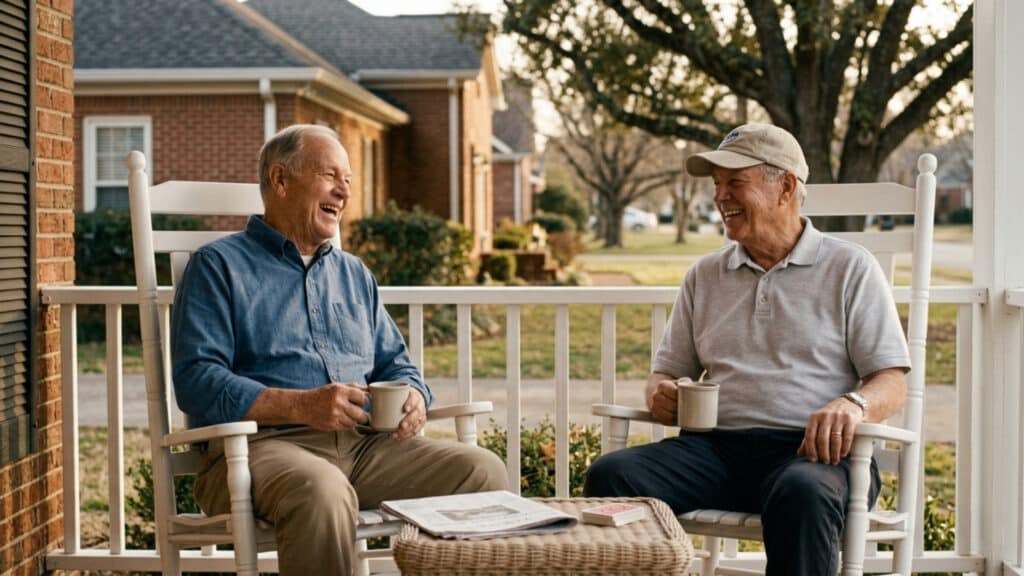
The relationship matters.
Help doesn’t always have to feel like help.
Ask Better Questions
Instead of: “Are you lonely?”
Try: “Who have you had lunch with lately?”
Instead of: “Why don’t you get out more?”
Try: “What do you miss doing?”
Instead of: “Do you need help?”
Try: “What would make your week more enjoyable?”
And maybe ask the question we don’t ask nearly enough:
“Where do you still feel useful?”
Then listen.
The answer might surprise you.
“Fine” Isn’t the Goal
I don’t want the older adults in our community to simply be fine.
I want them to have people who notice when they don’t show up.
Places where someone knows their name.
Things they’re looking forward to.
People who ask their advice.
Reasons to put something on the calendar.
Aging shouldn’t mean slowly becoming less visible.
And independence shouldn’t mean spending every day alone simply because you’re capable of doing so.
Sometimes Dad doesn’t need another activity.
Sometimes he needs another relationship.
And sometimes he doesn’t need somewhere to go.
He needs somewhere to matter.
Companionship That Means More
If there’s an older man in your life who always tells you he’s “just fine,” but you’ve noticed his world getting a little smaller, we’d be happy to talk through what you’re seeing.
At Seniors Helping Seniors® Nashville, companionship is about much more than having someone in the house. It’s about finding the right person to share conversation, errands, meals, hobbies, outings, and ordinary life with.
Sometimes the best support doesn’t feel like care at all.
It feels like connection.