




It happened after church on a Sunday morning.
A son watched his dad pull into the parking lot the way he had hundreds of times before. Only this time, something felt different. The car drifted a little wider than usual. It took two attempts to straighten into the parking space. When he stepped out, his father laughed it off.
“I guess these parking spots are getting smaller.”
Everyone smiled, but no one really believed that was the reason.
On the drive home, the son couldn’t stop thinking about it.
Not because of the parking job.
Because he knew a conversation was coming that neither of them wanted to have.
It Usually Doesn’t Start with an Accident
Families often imagine that driving ends after a major crash or a frightening emergency.
Most of the time, that’s not how it happens. Instead, it’s a collection of little moments. Mom no longer wants to drive after dark. Dad avoids Briley Parkway because it feels too busy. Trips to Mt. Juliet become stressful. Left turns seem harder. A favorite restaurant across town suddenly feels “too far away.”
None of these moments seem significant on their own. Together, they tell a story that families slowly begin to recognize.
The Keys Represent Much More Than Transportation
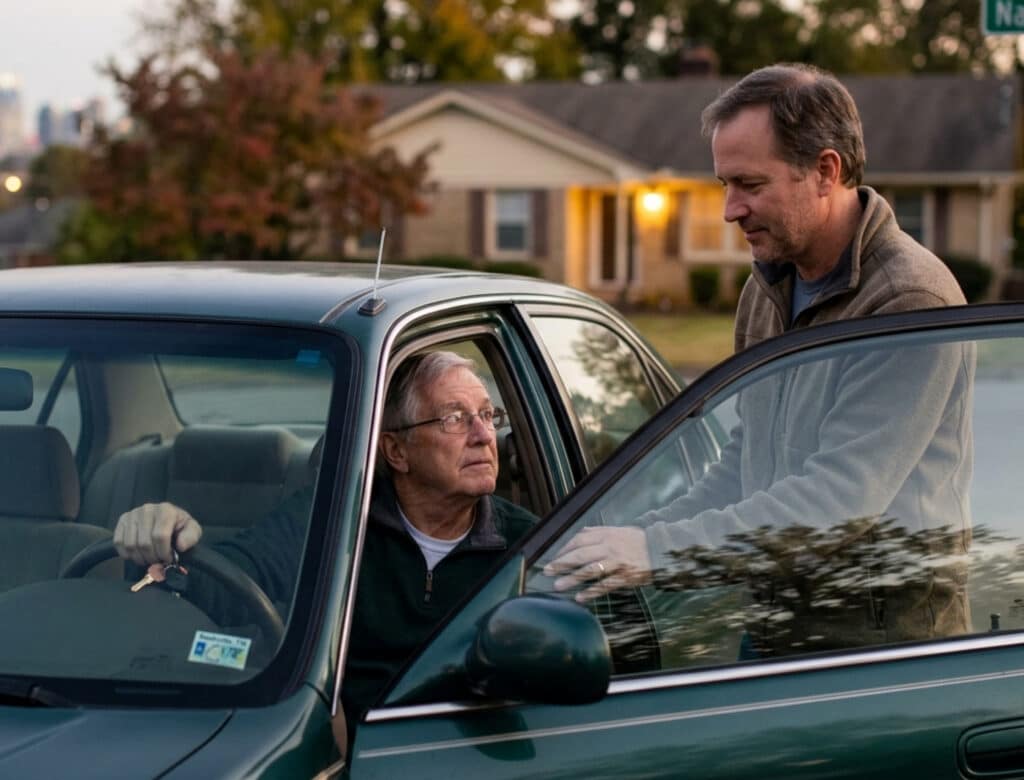
When adult children say, “We’re worried about your driving,” parents often hear something very different.
They hear:
“You don’t trust me anymore.”
“I’m becoming a burden.”
“My world is getting smaller.”
For someone who has spent decades driving to work, taking children to school, serving at church, visiting friends, or cheering at grandchildren’s ballgames, the car isn’t just a vehicle.
It’s freedom. It’s a routine. It serves a purpose. It’s independence.
Taking away the keys can feel like taking away a piece of who they are.
That’s why these conversations are so emotional.
They’re rarely about driving alone.
Every Family Wants to Protect Someone
Adult children are usually carrying two competing emotions.
They want to keep their parents safe.
They also want to preserve their dignity.
Those goals can feel impossible to balance.
We’ve talked with many families across Mt. Juliet who delayed the conversation because they were afraid of damaging the relationship.
Others started too abruptly, turning what could have been a conversation into an argument.
Neither reaction comes from a lack of love.
Both come from fear.
Listen Before You Solve
One of the most powerful questions you can ask is surprisingly simple.
“What worries you most about driving these days?”
The answer may surprise you.
Some parents already know they’re struggling.
Others admit they only drive familiar routes.
Some confess they avoid rain, nighttime, or busy intersections.
When we begin by listening instead of convincing, the conversation changes.
Instead of debating whether they should stop driving, you’re learning what they’re experiencing.
That creates room for partnership instead of conflict.
The Real Fear Is Isolation
Imagine giving up your car tomorrow.
How would you get to the grocery store? Church? Lunch with friends? Doctor appointments? Coffee with your neighbor?
Many older adults aren’t afraid of losing the ability to drive.
They’re afraid of losing the life that driving makes possible.
That’s why transportation plans should never begin with what someone is losing.
They should begin with what we’re helping them keep.
Independence Can Look Different
One of the biggest misconceptions about aging is that independence means doing everything alone.
Real independence often means having reliable support that allows someone to continue living the life they love.
That may look like having someone drive to a doctor’s appointment while they remain in charge of every medical decision.
It may mean enjoying lunch with friends in Mt. Juliet without worrying about traffic.
It may mean attending church every Sunday instead of staying home because driving feels overwhelming.
The destination hasn’t changed.
Only the way they get there has.
A Better Conversation
Instead of saying:
“You shouldn’t be driving anymore.”
Try asking:
“What do you want life to look like over the next few years?”
“Which places matter most to you?”
“What would you hate to give up?”
Those questions focus on preserving quality of life instead of taking something away.
They invite collaboration instead of resistance.
Small Changes Can Prevent Bigger Losses
We’ve seen families wait until an emergency forces a decision.
We’ve also seen families begin planning early enough that the transition feels gradual instead of sudden.
Maybe Dad chooses not to drive downtown anymore.
Perhaps Mom lets someone else handle evening appointments.
Maybe grocery trips become a chance to spend time together instead of another chore.
These small adjustments often make the larger transition feel far less overwhelming.
It’s About Staying Connected
One of the hardest parts of giving up driving isn’t staying home.
It’s feeling forgotten.
When transportation disappears, invitations often disappear too.
Friends stop asking.
Family visits become less frequent.
The calendar grows quieter.
That’s why staying connected matters just as much as staying safe.
Whether it’s a ride to church, lunch with friends, a haircut, a doctor’s appointment, or simply getting out to enjoy a beautiful Middle Tennessee afternoon, those moments continue to give life meaning.
The Conversation Is Really About Love
Eventually, most families will have this conversation.
There probably won’t be perfect words.
Tears might pour.
There may even be frustration.
That’s okay.
The goal isn’t to win an argument.
The goal is to protect a relationship while helping someone continue living a full, meaningful life.
Because the car keys were never the real issue.
The real question has always been this:
“How do we help the people we love stay connected to the life they love?”
At Seniors Helping Seniors® Nashville, we’ve learned that the best solutions don’t replace independence. They support it. Sometimes the greatest gift isn’t taking something away. It’s helping someone keep everything that matters most.