




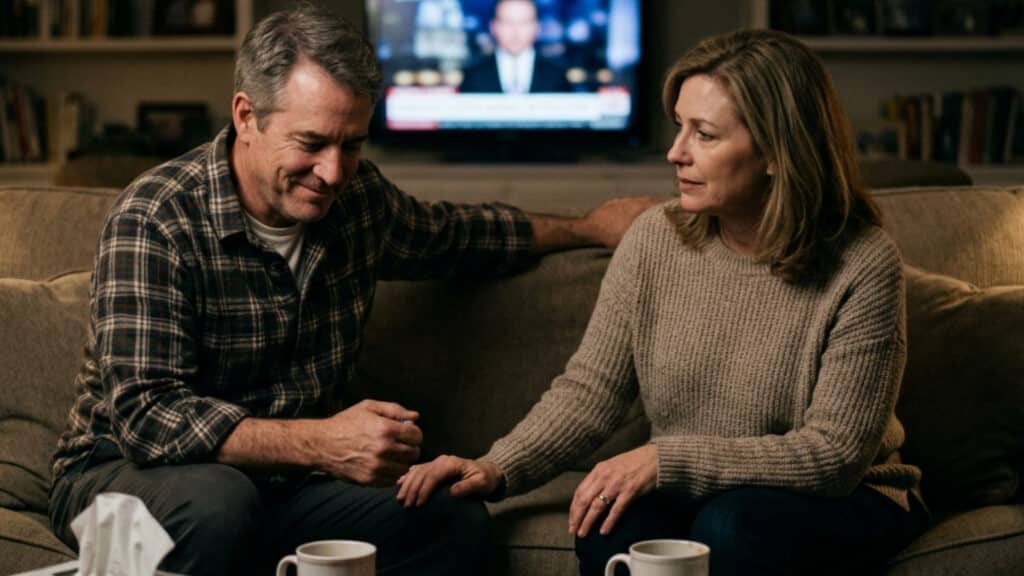
It wasn’t a fight. It was something much quieter.
After the kids were finally asleep, they sat together on the couch.
The television was on, but neither of them was really watching.
She looked over and said, “Do you realize we haven’t talked about anything except my mom for almost two weeks?”
He smiled a little. Not because it was funny. Because he knew she was right.
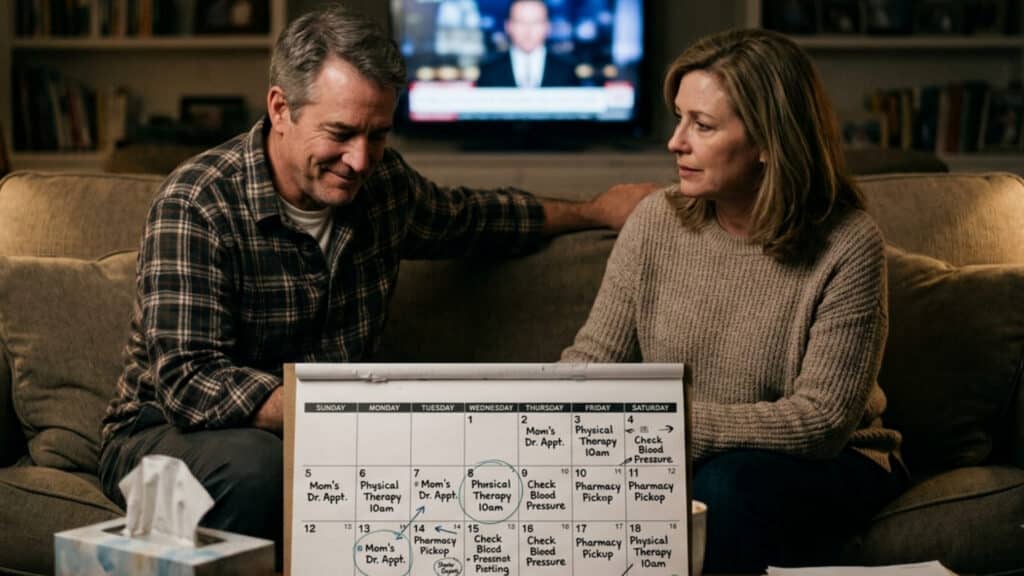
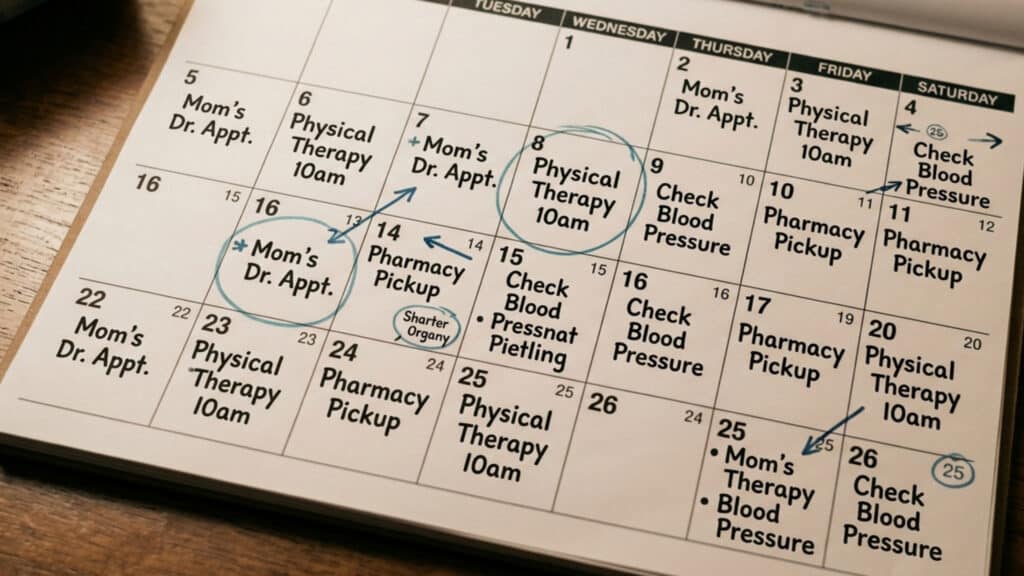
Their evenings had become medication reminders.
Doctor appointments.
Insurance paperwork.
Coordinating rides.
Checking in.
Running errands.
Planning the next crisis before the current one was over.
Neither of them had noticed when caring for her mother slowly became the center of their marriage.
Caregiving Doesn’t Just Change One Life
One thing I’ve learned from talking with families across Nashville, Belle Meade, Bellevue, Green Hills, Old Hickory, Mt. Juliet, Hermitage, Brentwood, Franklin, and Gallatin is this:
Caregiving is rarely carried by just one person.
Even when only one spouse is providing hands-on care, the entire household begins adapting around it.
Weekends change. Vacations change. Conversations change. Date nights disappear. Schedules become unpredictable. The emotional weight settles over everyone, often without anyone realizing it.
The Guilt Goes Both Ways
Many caregivers tell me they feel guilty when they’re with their spouse because they think they should be checking on Mom or Dad.
Then, when they’re with their parent, they feel guilty for not being home with their family.
It’s a cycle with no obvious winner.
One woman told me, “I feel like I’m disappointing someone every single day.”
That sentence stays with me because I think so many caregivers quietly carry that feeling.
The Small Moments Matter
Marriages usually aren’t damaged by one big event.
They’re shaped by thousands of small moments.
The conversations that never happen.
The evenings that disappear.
The traditions that quietly fade away.
When caregiving takes over every conversation, it’s easy to lose sight of the relationship that has been walking beside you through all of it.
Protecting your marriage doesn’t mean loving your parent less.
It means recognizing that your spouse is carrying this journey too.
You Weren’t Meant to Do This Alone
Many adult children assume asking for help means they’re failing.
I see it differently.
The strongest caregiving families usually have something in common.
They build a team.
Family.
Friends.
Neighbors.
Church members.
Professional caregivers.
Not because they don’t care.
Because they care enough to make caregiving sustainable.
Respite Isn’t About Taking a Vacation
Sometimes people hear “respite care” and picture a week at the beach.
More often, respite looks like something much simpler.
Dinner together.
Watching your child’s soccer game.
Taking a walk.
Going to church.
Celebrating an anniversary.
Having one evening where your relationship gets to be the priority again.
Those moments matter.
Not because they’re extravagant.
Because they help couples remember who they were before caregiving became part of everyday life.
Ask a Different Question
Instead of asking,
“How much more can I handle?”
Try asking,
“What support would help us keep being ourselves?”
That answer may be:
- A companion visiting once a week.
- Someone to provide transportation.
- A few hours of respite.
- Help with errands.
None of those things replace your role.
They simply make it possible to continue it.
Caring for Your Parent Shouldn’t Cost You Your Marriage
One of the things we believe at Seniors Helping Seniors® Nashville is that supporting an aging parent shouldn’t require sacrificing the people closest to you.
Your parent deserves compassionate care.
While your children deserve your presence.
Your spouse deserves your attention.
And you deserve support.
Those things can all exist together.
Sometimes it starts with simply admitting you don’t have to carry everything alone.
Protect Your Loved One and Your Marriage
If caring for an aging parent has started affecting your marriage, your family, or your own well-being, we’d love to have a conversation. Sometimes a few hours of support each week can create space for the relationships that matter most, while ensuring your loved one continues receiving the care and companionship they deserve.