




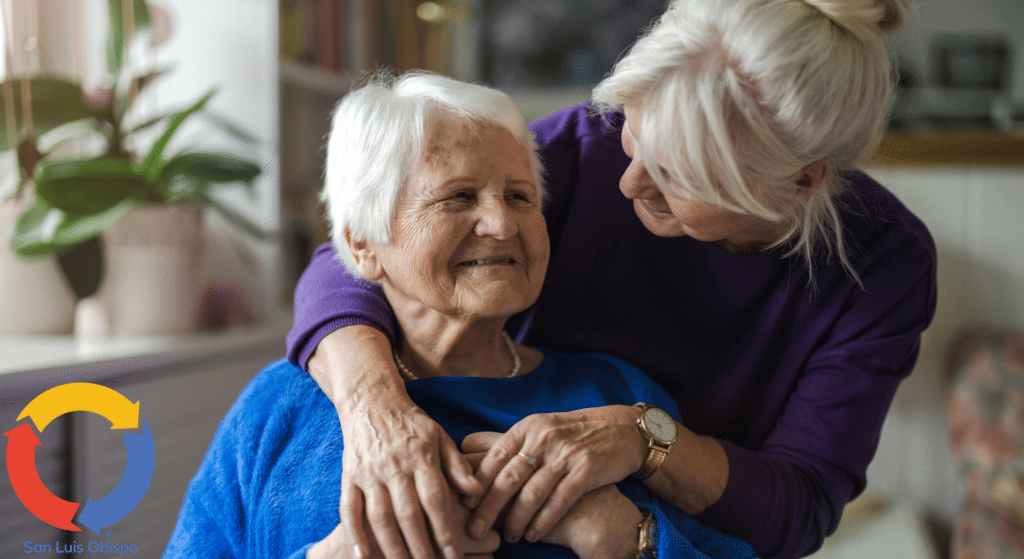
Why Peer-to-Peer Professional Spotlights Build Trust in Senior Home Care
When families in San Luis Obispo County begin searching for in-home care for an aging parent, they are not just Googling keywords. They are looking for proof. Proof that the people who will enter their loved one’s home are trustworthy, experienced, and genuinely qualified to help.
In today’s digital landscape, that proof has a name: E-E-A-T. One of the most underutilized strategies for building it is the peer-to-peer professional spotlight.
What Is E-E-A-T and Why Does It Matter for Senior Care?
E-E-A-T stands for Experience, Expertise, Authoritativeness, and Trustworthiness [1]. It is a framework Google uses to evaluate the quality and credibility of web content, and it is especially important for industries like senior care, which fall under what Google calls “Your Money or Your Life” topics [2]. These are subjects where inaccurate or low-quality information can have real consequences for people’s health, safety, and well-being.
Google originally introduced E-A-T in 2014, then added the first “E” for Experience in December 2022 [3]. That addition was significant: it acknowledged that credible information can come from many sources, and that peer-to-peer or crowd-sourced information is often trusted over information coming through other channels [4]. In other words, Google now rewards content that reflects real, lived experience, not just formal credentials.
For senior care providers, this is a game-changer.
The Four Pillars of E-E-A-T Applied to Senior Home Care
Experience refers to the content creator’s first-hand or life experience with the subject matter [5]. In senior care, this means showcasing caregivers who have personally navigated the challenges of aging, whether as a caregiver themselves or as someone who has lived through the experience of needing care. It means sharing real stories, not polished marketing copy.
Expertise involves demonstrating a high level of knowledge and skill in a particular subject area [6]. For a home care provider, this includes highlighting caregiver training, years of experience, and the depth of understanding that comes from working closely with seniors day after day.
Authoritativeness is about how others recognize and trust your expertise in your field [7]. It is built through consistent, high-quality content, mentions from reputable sources, and the kind of reputation that makes families feel confident before they ever pick up the phone.
Trustworthiness is the most important pillar of all. According to Google, trust is the most crucial ingredient in E-E-A-T. Untrustworthy pages score low regardless of how expert, experienced, or authoritative they appear [8]. In senior care, trust is built through transparency, clear communication, and the kind of consistent, reliable service that families can count on.
Enter the Peer-to-Peer Professional Spotlight
So what exactly is a peer-to-peer professional spotlight? It is a content format, typically a blog post, video, or social media feature, that puts a real caregiver, client, or family member at the center of the story. Instead of a company talking about itself, a peer speaks directly to other peers.
This approach is powerful for a simple reason: people trust recommendations from those who have walked the same path [9]. Research confirms that word-of-mouth and peer-sourced information carry significant weight, especially when the stakes are high [10]. When a family is deciding who will care for their aging mother, they do not just want a brochure. They want to hear from someone who has been in their shoes.
For senior care providers, a peer-to-peer spotlight might look like:
- A caregiver profile that shares their personal journey, why they chose this work, and what they have learned from the seniors they serve
- A client or family testimonial that goes beyond a star rating to tell a real story about how care changed daily life
- A day-in-the-life feature that shows, not just tells, what compassionate, consistent care looks like in practice
- A Q&A with a caregiver that highlights their specific expertise, personality, and approach to building trust with clients
Each of these formats directly signals E-E-A-T to both Google and to the families reading your content.
Why This Strategy Is Especially Powerful Right Now
Families choosing senior care are increasingly sophisticated in how they evaluate providers. Research shows that before a family ever calls an agency, they have already made a significant screening decision based almost entirely on trust signals found online [11]. Online reputation acts as the first gate, and providers with thin or generic content simply do not make it to the next stage [12].
What makes families choose one provider over another? According to recent research, it comes down to recommendations from family and healthcare professionals, positive stories and testimonials, and certified, credentialed staff members [13]. Generic marketing language does not move the needle. Real stories from real people do.
This aligns perfectly with what Google is rewarding. When you publish a caregiver spotlight that includes their background, their personal motivation for doing this work, and specific examples of how they have helped clients, you are demonstrating Experience, Expertise, and Trustworthiness all at once [14]. You are also creating the kind of content that families are actively searching for.
Furthermore, research in the field of senior care confirms that trust between older persons and their care providers is important for continuity of care, patient satisfaction, and overall well-being [15]. When your content reflects that trust through real voices and real stories, it resonates with families on a deeply human level.
How to Build a Peer-to-Peer Spotlight Strategy
Building an effective spotlight strategy does not require a big budget. It requires consistency, authenticity, and a genuine commitment to letting your people tell their own stories. Here is how to get started:
1. Start with your caregivers.
Your caregivers are your most powerful E-E-A-T asset. Create detailed profiles that highlight their qualifications, years of experience, and personal connection to the work [16]. Include a professional photo and, where possible, a short video introduction.
2. Collect and feature real testimonials.
Do not settle for generic five-star reviews. Reach out to families who have had meaningful experiences and ask them to share their story in their own words. Specific testimonials, ones that mention real interactions, real moments, and real outcomes, are far more credible than vague praise [17].
3. Publish consistently.
E-E-A-T is not a one-time task. It is an ongoing process that requires dedication and consistency [18]. Aim to publish a new spotlight or story regularly, monthly at minimum, so that your content library grows over time and signals sustained authority to search engines.
4. Be transparent about who you are.
Display clear information about your organization, your team, and your approach to care [19]. Families are increasingly looking for ownership transparency and local accountability as trust signals [20].
5. Let peers speak to peers.
The most effective peer-to-peer content is genuine because the person sharing it is not paid to advocate; they are sharing because they believe in what they experienced [21]. Encourage organic storytelling, and resist the urge to over-polish or sanitize the message.
Why Seniors Helping Seniors® in-home care San Luis Obispo Is Built for This
As your team from Seniors Helping Seniors® in-home care San Luis Obispo, the peer-to-peer spotlight is not just a content strategy. It is the foundation of who we are. Our model is unique: our caregivers are seniors themselves. That means every caregiver we send into a client’s home brings something no credential can fully capture: the lived experience of aging.
When a caregiver on our team sits down with a client in Paso Robles or Atascadero, they are not just providing assistance. They are connecting as peers, two people who understand what it means to navigate the later chapters of life with dignity and purpose. That kind of connection is exactly what Google’s E-E-A-T framework is designed to recognize and reward: real experience, genuine expertise, and the kind of trustworthiness that can only come from authentic human relationships.
For families across San Luis Obispo County, whether in Arroyo Grande, Santa Maria, or right in the city of San Luis Obispo, choosing in-home care is one of the most important decisions they will make. We believe they deserve to hear from real caregivers, real families, and real stories. That is why we are committed to sharing the voices of the people who make our care what it is, not just as a marketing strategy, but as a reflection of our values: compassion, trust, dignity, and community.
If you are exploring in-home care options for a loved one on the Central Coast, we invite you to get to know our team. Read our caregiver stories. Hear from the families we serve. And when you are ready to talk, we are here, not as a faceless agency, but as neighbors who understand what you are going through.
The Bottom Line
In an era where families are more discerning than ever, and where Google is actively rewarding content that reflects real human experience, the peer-to-peer professional spotlight is one of the most strategic investments a senior care provider can make. It builds E-E-A-T from the inside out, not through technical tricks, but through the kind of authentic storytelling that has always been at the heart of great care.
The families you want to reach are already looking for proof. Give it to them in the voices of the people who live and breathe this work every day.
Citations
[1] https://yoast.com/what-is-e-e-a-t/
[2] https://www.searchenginejournal.com/google-e-e-a-t-how-to-demonstrate-first-hand-experience/474446/
[3] https://www.lucidadvertising.com/eat-seo-content-marketing/
[4] https://97thfloor.com/articles/glossary/e-e-a-t/
[5] https://mailchimp.com/resources/google-eeat/
[6] https://www.davidhodder.com/e-e-a-t-experience-expertise-authoritativeness-and-trustworthiness/
[7] https://www.intelegencia.com/blog/content-marketing/eeat-and-content-strategy-for-building-trust-and-authority
[8] https://yoast.com/what-is-e-e-a-t/
[9] https://peertopeermarketing.co/peer-to-peer-marketing-guide/
[10] https://referralrock.com/blog/peer-to-peer-marketing/
[11] https://www.caremarketing.com/families-choose-care-facilities-trust-signals/
[12] https://www.caremarketing.com/families-choose-care-facilities-trust-signals/
[13] https://www.mcknightsseniorliving.com/news/senior-living-digital-marketing-strategy-optimization/
[14] https://www.searchenginejournal.com/google-e-e-a-t-how-to-demonstrate-first-hand-experience/474446/
[15] https://pmc.ncbi.nlm.nih.gov/articles/PMC6852099/
[16] https://www.straightnorth.com/blog/how-e-e-a-t-is-guiding-authorship-expertise-and-seo/
[17] https://www.healthcarebusinesstoday.com/why-best-of-senior-care-lists-losing-trust/
[18] https://www.davidhodder.com/e-e-a-t-experience-expertise-authoritativeness-and-trustworthiness/
[19] https://foundationinc.co/learn/what-is-eeat-experience-expertise-authority-trust/
[20] https://www.caremarketing.com/families-choose-care-facilities-trust-signals/
[21] https://peertopeermarketing.co/peer-to-peer-marketing-guide/