




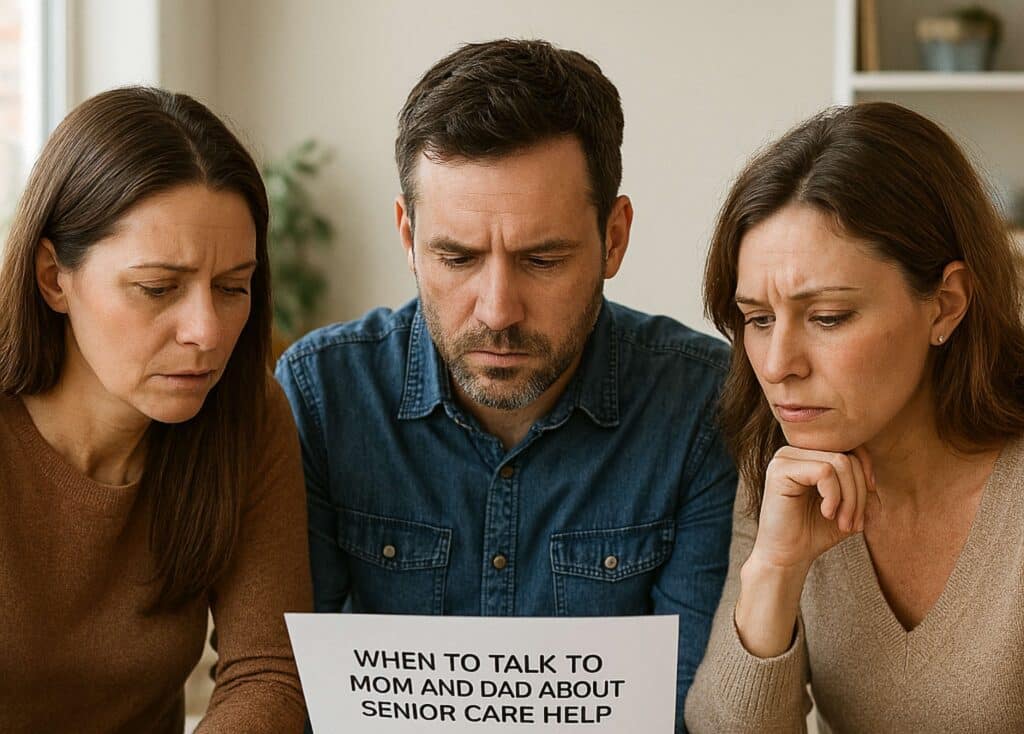
How to recognize the signs early, avoid a crisis, and keep Mom or Dad safe at home
Who This Is For?
This guide is for:
- Adult children in their 50s and 60s
- Balancing careers, kids, and aging parents
- Feeling worried, overwhelmed, or unsure what to do next
- Trying to avoid a fall, hospitalization, or emergency decision
Why This Checklist Matters
You’re not alone, and you’re not overreacting. Most families don’t plan to start in-home care during a crisis, but that’s exactly when it happens.
This checklist helps you:
- Spot early warning signs
- Decide if support is needed now or soon
- Reduce stress, guilt, and second-guessing
- Make proactive choices instead of emergency ones
If you’re asking, “Is it time?”, it usually means something has already changed.
The Checklist
In-Home Care Readiness Checklist
Check any statements that apply to your parent or loved one:
Mobility & Safety
☐ Has had a fall or near-fall
☐ Uses furniture or walls for balance
☐ Struggles with stairs, bathing, or getting up from chairs
☐ Avoids activities due to fear of falling
Memory & Cognitive Changes
☐ Misses medications or takes them incorrectly
☐ Repeats questions or stories
☐ Forgets appointments
☐ Leaves the stove on or the doors unlocked
Nutrition & Health
☐ Skips meals or eats poorly
☐ Loses weight or seems fatigued
☐ Dehydration or frequent UTIs
☐ Multiple ER visits or hospitalizations in the last year
Home & Personal Care
☐ Laundry or dishes piling up
☐ Home looks cluttered or unsafe
☐ Decline in hygiene or grooming
☐ Wearing the same clothes repeatedly
Social & Emotional Well-Being
☐ Rarely leaves the house
☐ Stopped hobbies, church, or social activities
☐ Appears lonely, anxious, or depressed
☐ Limited interaction with friends or family
Family Caregiver Stress
☐ You feel overwhelmed or exhausted
☐ You miss work or sleep due to caregiving
☐ You worry constantly when you’re not there
☐ Tension or disagreement with siblings
Scoring Guide (Simple + Powerful)
- 0–2 checks: Monitor closely. Changes may be starting
- 3–5 checks: Time to explore in-home care options
- 6+ checks: Support is likely needed now
One major issue, like a fall or recurring UTIs, can be enough to justify help.
What Early In-Home Care Can Look Like
Many families are surprised to learn that in-home care doesn’t mean “full-time” or “forever.”
Early care often starts with:
- A few hours per week
- Companionship and check-ins
- Meal prep and light housekeeping
- Transportation and errands
- Medication reminders
- Fall-risk monitoring
The goal: keep your parent safe, confident, and independent at home.
How to Start the Conversation
Language matters. Partnership builds trust.
What to say:
- “I want to help you stay in your home.”
- “This is about making things easier.”
- “Let’s try it for a short time and see how it feels.”
- “You get to help choose the caregiver.”
What to avoid:
- “You can’t do this anymore.”
- “You’re not safe alone.”
- “We have no choice.”
Call To Action
You Don’t Have to Figure This Out Alone
If this checklist raised concerns or even questions, we’re here to help.
Seniors Helping Seniors® Warren Clermont offers:
- Free, no-pressure in-home assessments
- Flexible care plans
- Compassionate, trained caregivers
- Support for both seniors and family caregivers
📍 Serving Milford, Loveland, Lebanon, Springboro, Batavia, Amelia, Wilmington, and surrounding areas.
Schedule a Free In-Home Assessment
Exploring options doesn’t commit you to anything. Waiting for a crisis removes choice.