




When families in Woodland Hills, Thousand Oaks, and the surrounding West Valley communities begin searching online for in-home senior care, they’re not just looking for a list of services. They’re looking for someone they can trust — someone who genuinely understands what their aging parent is experiencing. In the world of digital content and search rankings, Google has a name for that kind of credibility: E-E-A-T. And in the world of senior care, there’s a model that embodies it perfectly: peer-to-peer caregiving.
What Is E-E-A-T, and Why Does It Matter for Senior Care?
E-E-A-T stands for Experience, Expertise, Authoritativeness, and Trustworthiness. [1] It’s a framework derived from Google’s Search Quality Rater Guidelines that helps determine whether online content — and the organizations behind it — are genuinely credible and helpful to users. [2]
Google introduced the original E-A-T concept years ago, but in December 2022, it added a critical new dimension: Experience. [3] This addition was deliberate. Google recognized that first-hand, real-world experience is critical to credibility, especially for topics that can significantly impact a person’s health, safety, or well-being — what Google calls “Your Money or Your Life” (YMYL) topics. [4] Senior care is squarely in that category.
Here’s how each pillar breaks down:
- Experience: You’ve actually done it — you’ve lived it, worked in it, navigated it firsthand. [5]
- Expertise: You have demonstrable knowledge through credentials, education, or a proven track record. [6]
- Authoritativeness: Others recognize you as a credible, go-to source in your field. [7]
- Trustworthiness: Your content and your organization are accurate, transparent, and honest. [8]
According to Google’s own guidelines, trustworthiness is the most important of the four: “untrustworthy pages have low E-E-A-T no matter how Experienced, Expert, or Authoritative they may seem.” [9] For families choosing a senior care provider, this rings especially true.
The Peer-to-Peer Model: E-E-A-T in Human Form
Now consider what makes the peer-to-peer caregiving model so distinctive — and so powerful.
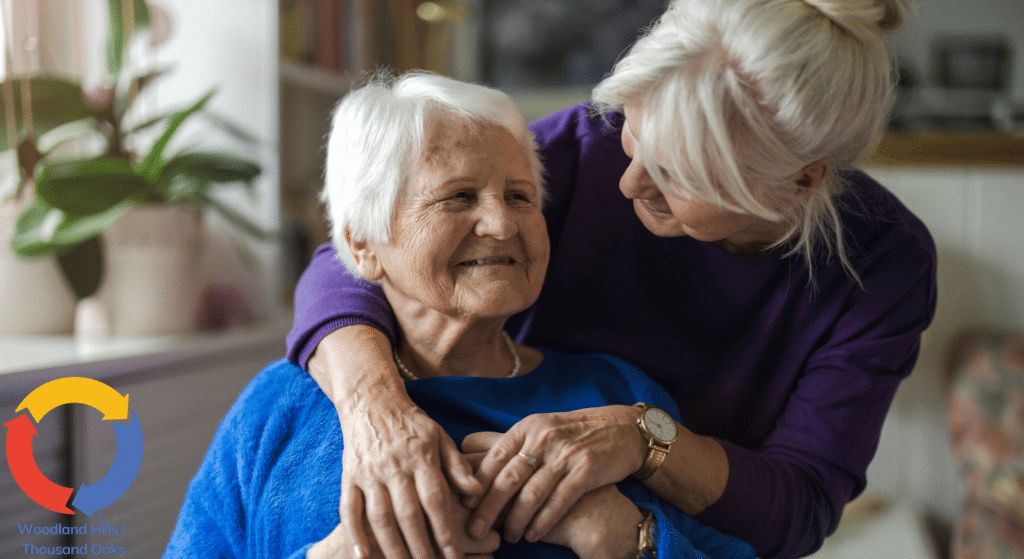
At its core, peer-to-peer senior care connects active, capable older adults with seniors who need assistance. [10] The caregiver isn’t a young professional reading from a training manual. They’re someone who has navigated similar life challenges, understands the importance of maintaining routines and independence, and approaches care with the respect and dignity they would want for themselves. [11]
This is the “Experience” pillar of E-E-A-T made human.
Research published in peer-reviewed literature supports this idea. Studies have found that shared lived experiences are key elements in building trust and rapport — and that these shared experiences are significant contributors to positive outcomes in care relationships. [12] When peer supporters and older adults share common physical health issues, age-related experiences, or life roles such as being a parent or grandparent, it creates a foundation for relatable, open communication. [13] These commonalities make it easier for older adults to open up, share their struggles, and develop supportive alliances. [14]
In other words, a caregiver who has personally experienced the challenges of aging doesn’t just bring empathy — they bring lived expertise. That’s not something you can manufacture. It’s earned through life itself.
Why Families Are Searching for This Kind of Trust
The demand for in-home senior care is growing rapidly. According to AARP’s 2024 Home and Community Preferences Survey, 75% of adults aged 50 and older wish to remain in their current homes as they age. [15] A separate survey found that 95% of adults aged 55 and older consider aging in place an important goal — up from 92% just a year prior. [16]
Yet despite this strong preference, many families struggle to find care that feels genuinely personal. The National Institute on Aging notes that many older adults and their families have real concerns about safety, daily activities, and the quality of support available at home. [17] What they’re looking for — whether they articulate it this way or not — is a caregiver who demonstrates E-E-A-T: someone with real experience, proven reliability, recognized trustworthiness, and a genuine connection to the person they’re caring for.
For adult children balancing demanding careers and family responsibilities, the search for a trusted local caregiver often begins online. And when they search, Google’s algorithms are increasingly designed to surface providers who demonstrate authentic, experience-backed credibility — not just keyword-stuffed pages. [18] According to a 2024 SEMrush study, pages with strong E-E-A-T signals had a 30% higher chance of ranking in the top 3 search positions compared to those with weak signals. [19]
This means that for senior care providers, demonstrating real-world experience isn’t just good caregiving — it’s good digital strategy.
The “Professional Spotlight” Approach: Putting Real Voices Front and Center
One of the most effective ways to build E-E-A-T for a senior care organization is through what we call the “Peer-to-Peer Professional Spotlight” — a content strategy that puts the real voices, real stories, and real experiences of caregivers at the center of your online presence.
Here’s what this looks like in practice:
1. Caregiver Profiles with Lived Experience
Instead of generic staff bios, feature caregivers who share their personal journeys — what led them to caregiving, what they’ve experienced as they’ve aged, and what they understand about the seniors they serve. This directly demonstrates the “Experience” pillar of E-E-A-T. [20]
2. Client and Family Testimonials
Authentic reviews and testimonials from families are among the most powerful trust signals available. Google quality raters assess authoritativeness in part by looking at positive reviews and testimonials from those with direct experience. [21] Real stories from real families in Woodland Hills, Thousand Oaks, Calabasas, and Encino carry enormous weight — both for search rankings and for prospective clients.
3. Content That Reflects Real Situations
Blog posts, guides, and resources that address the actual questions families are asking — “How do I know if my parent needs help at home?” or “What should I look for in a local caregiver?” — demonstrate expertise and build authority over time. [22] Consistently publishing high-quality, experience-backed content is one of the core strategies for building authoritativeness in Google’s eyes. [23]
4. Transparency About Who You Are
Trustworthy organizations are transparent about who is behind their content and their care. Clear contact information, honest descriptions of services, and visible community roots all contribute to the trust signals that Google — and families — look for. [24]
Peer-to-Peer Care and the Science of Connection
Beyond SEO, the peer-to-peer model has real, documented benefits for seniors’ well-being. Research has found that peer support — rooted in shared lived experiences — offers a strengths-based approach that fosters connection, hope, and empowerment among older adults. [25] One-on-one peer support, where individuals receive guidance from others with similar experiences, shows evidence of being particularly beneficial when delivered in a flexible, personalized format. [26]
For seniors who may feel isolated or uncertain about accepting help, having a caregiver who truly understands their life stage can make all the difference. As one perspective on peer-to-peer care puts it, “when seniors spend time with someone who understands their life stage, it creates comfort, trust, and real connection.” [27] This balance preserves independence while still providing meaningful support — which is exactly what most seniors and their families are hoping for. [28]
And the need for that connection is real. One in three adults aged 50 to 80 reports feeling isolated at least some of the time. [29] A caregiver who is also a peer doesn’t just provide practical assistance — they provide the kind of companionship that can genuinely improve quality of life.
How Seniors Helping Seniors® in-home care Woodland Hills / Thousand Oaks Embodies This Standard
As your team from Seniors Helping Seniors® in-home care Woodland Hills / Thousand Oaks, the peer-to-peer model isn’t a marketing concept — it’s the foundation of everything we do. Our approach connects active seniors with those who need assistance, creating meaningful relationships that go far beyond traditional caregiving. [30] We match clients with caregivers who share similar backgrounds, interests, and life perspectives, fostering genuine companionship alongside practical support. [31]
Our caregivers don’t just show up to complete a checklist. They’ve navigated the same life stage. They understand what it means to value independence, to want to stay in a familiar home, and to appreciate being treated with dignity. That lived experience — that authentic, first-hand understanding — is what makes the care we provide feel personal rather than transactional.
For families throughout Woodland Hills, Thousand Oaks, Calabasas, Tarzana, Encino, Agoura Hills, and surrounding communities, this means you’re not choosing between quality care and genuine connection. You’re getting both.
We serve families who are navigating one of the most important decisions they’ll ever make. We understand that trust isn’t given — it’s earned through consistency, transparency, and the kind of relationship-driven care that only comes from truly knowing your client. That’s the E-E-A-T standard. And it’s the Seniors Helping Seniors® in-home care standard.
If you’re beginning to explore in-home senior care options in the West Valley or Conejo Valley, we invite you to reach out. Let’s talk about what your family needs — and how our caregivers’ lived experience can make a real difference in your loved one’s daily life.
Citations
[1] https://www.searchenginejournal.com/google-e-e-a-t-how-to-demonstrate-first-hand-experience/474446/
[2] https://www.boostability.com/resources/google-e-e-a-t-guide/
[3] https://developers.google.com/search/blog/2022/12/google-raters-guidelines-e-e-a-t
[4] https://www.searchenginejournal.com/google-e-e-a-t-how-to-demonstrate-first-hand-experience/474446/
[5] https://blog.clickpointsoftware.com/google-e-e-a-t
[6] https://blog.clickpointsoftware.com/google-e-e-a-t
[7] https://blog.clickpointsoftware.com/google-e-e-a-t
[8] https://blog.clickpointsoftware.com/google-e-e-a-t
[9] https://blog.clickpointsoftware.com/google-e-e-a-t
[10] https://spotlightseniorservices.com/provider/seniors-helping-seniors/
[11] https://spotlightseniorservices.com/provider/seniors-helping-seniors/
[12] https://pmc.ncbi.nlm.nih.gov/articles/PMC9121547/
[13] https://www.thesupportivecare.com/blog/the-role-of-peer-support-in-behavioral-health-for-seniors
[14] https://www.thesupportivecare.com/blog/the-role-of-peer-support-in-behavioral-health-for-seniors
[15] https://press.aarp.org/2024-12-10-New-AARP-Report-Majority-Adults-50-plus-Age-Place-Policies-Communities-Catch-Up
[16] https://www.retirementliving.com/aging-in-place/aging-in-place-statistics
[17] https://www.nia.nih.gov/health/aging-place/aging-place-growing-older-home
[18] https://mailchimp.com/resources/google-eeat/
[19] https://www.singlegrain.com/seo/e-e-a-t-strategies-that-guarantee-googles-trust-in-2025/
[20] https://www.boostability.com/resources/google-e-e-a-t-guide/
[21] https://mailchimp.com/resources/google-eeat/
[22] https://yoast.com/what-is-e-e-a-t/
[23] https://www.searchenginejournal.com/google-e-e-a-t-how-to-demonstrate-first-hand-experience/474446/
[24] https://blog.clickpointsoftware.com/google-e-e-a-t
[25] https://www.thesupportivecare.com/blog/the-role-of-peer-support-in-behavioral-health-for-seniors
[26] https://pmc.ncbi.nlm.nih.gov/articles/PMC11811647/
[27] https://seniorsbluebook.com/articles/why-seniors-caring-for-seniors-creates-trust-comfort-and-companionship
[28] https://seniorsbluebook.com/articles/why-seniors-caring-for-seniors-creates-trust-comfort-and-companionship
[29] https://www.premierhcinc.com/blog/home-care-statistics/
[30] https://spotlightseniorservices.com/provider/seniors-helping-seniors/
[31] https://spotlightseniorservices.com/provider/seniors-helping-seniors/