




When families in Greater Sacramento search online for in-home care for an aging loved one, they’re not just looking for a list of services — they’re looking for someone they can trust. In today’s digital landscape, that trust is shaped by a framework called E-E-A-T: Experience, Expertise, Authoritativeness, and Trustworthiness. [1] Originally developed by Google to evaluate the quality of web content, E-E-A-T has become a powerful lens for understanding why some care providers resonate deeply with families — and why others fall flat.
But here’s what’s fascinating: the principles of E-E-A-T don’t just apply to websites and blog posts. They apply to the very people who show up at a senior’s door every morning. And no care model demonstrates this more naturally than the peer-to-peer approach — where seniors care for fellow seniors.
What Is E-E-A-T, and Why Does It Matter?
E-E-A-T stands for Experience, Expertise, Authoritativeness, and Trustworthiness — signals Google uses to evaluate content and businesses. [2] The framework was originally introduced as E-A-T in 2014, and in December 2022, Google added the first “E” for Experience, emphasizing the importance of first-hand knowledge in content creation. [3] This update acknowledged that personal experience can provide valuable insights, especially in topics where direct involvement enhances credibility. [3]
According to Google’s own guidelines, trust is the most important member of the E-E-A-T family — without it, the other three pillars cannot sustain credibility. [4] For families navigating the deeply personal decision of in-home care for a loved one, this rings especially true.
E-E-A-T is particularly critical for topics that can significantly impact a person’s life, health, financial stability, or safety — what Google calls “Your Money or Your Life” (YMYL) content. [5] Senior home care falls squarely in this category. When a family is choosing who will spend time in their parent’s home, help them with daily tasks, prepare their meals, and keep them company, the stakes couldn’t be higher.
The Four Pillars of E-E-A-T — and How Peer-to-Peer Care Embodies Each One
1. Experience: The Power of Living It
The first “E” in E-E-A-T refers to first-hand experience — the kind of knowledge that only comes from having actually lived through something. [6] With the addition of Experience, Google acknowledges that credible information can come from many sources, and that peer-to-peer information is often trusted over information coming through other channels. [7]
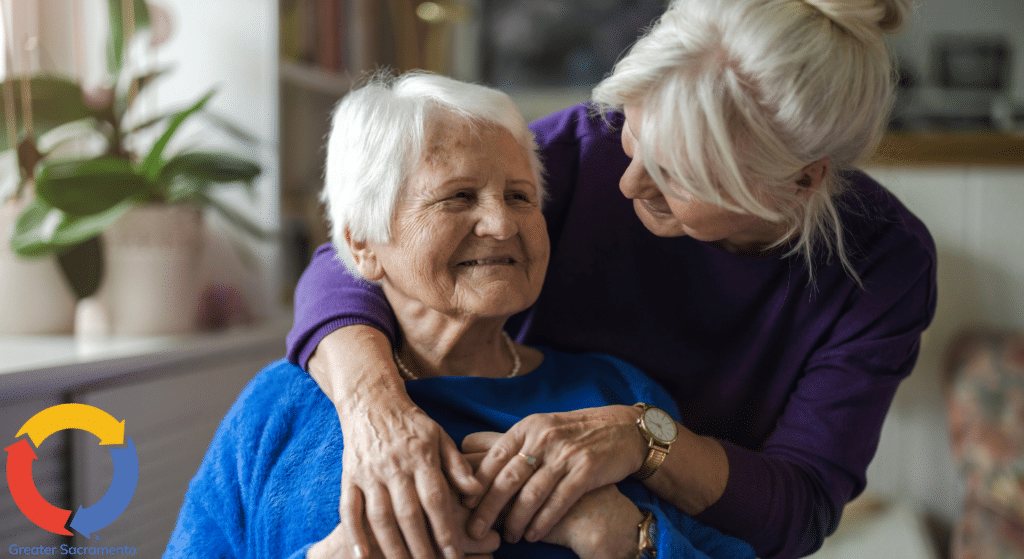
This is where the peer-to-peer care model shines brightest. When a senior caregiver sits down with a client who is navigating the challenges of aging — the loss of mobility, the fear of losing independence, the longing for meaningful conversation — they bring something no training manual can replicate: they’ve been there. They understand what it feels like to need help with daily tasks while still wanting to feel capable and respected. [8]
As one description of the Seniors Helping Seniors® in-home care model puts it, senior caregivers “relate to our receivers of care as peers, not clients.” [9] They’ve navigated similar life challenges, understand the importance of maintaining routines and independence, and approach care with the respect and dignity they would want for themselves. [9] This peer-to-peer model creates natural conversations, shared experiences, and often lifelong friendships that enrich both the caregiver’s and care receiver’s lives. [9]
2. Expertise: Wisdom Earned Over a Lifetime
Expertise refers to having a high level of knowledge and skill in a particular subject area — being recognized as a knowledgeable and skilled authority in your field. [10] In the context of senior care, expertise isn’t just about certifications. It’s about the depth of understanding that comes from decades of life experience.
Many senior caregivers are retired teachers, nurses, and other professionals who have spent their lives in the service of others. [11] They bring professional backgrounds, emotional intelligence, and practical wisdom that make them uniquely equipped to support aging adults. Demonstrating expertise through the depth and accuracy of care — and through the credentials and lived experience of caregivers — is a cornerstone of E-E-A-T. [12]
The transfer of experiential knowledge is an important benefit of peer support, as a peer supporter who has navigated similar challenges can provide educational insights, such as navigating healthcare systems or learning how to coordinate in-home services. [13] When a caregiver has personally managed a parent’s medications, coordinated doctor’s appointments, or helped a spouse through a health scare, that knowledge becomes a living resource for the client they serve.
3. Authoritativeness: Reputation Built on Real Relationships
Authoritativeness is about how others recognize and trust your expertise in your field — it reflects the reputation built through consistent and credible contributions. [14] In the world of senior care, authoritativeness is built one relationship at a time: through consistent, dependable visits, through families who refer friends, and through the kind of word-of-mouth that no advertising budget can buy.
Peer-to-peer marketing — where satisfied clients and their families become advocates — is one of the most powerful forms of authority-building available. [15] Consumers trust recommendations from those closest to them, and this kind of organic, personal endorsement carries enormous weight. [16] When a family in Sacramento tells their neighbor, “You have to call Seniors Helping Seniors® in-home care — they changed everything for us,” that’s authoritativeness in action.
The Seniors Helping Seniors® in-home care model has resonated deeply with families who prefer that their loved ones receive assistance from someone who truly understands the challenges of aging, creating a competitive advantage rooted in genuine human connection. [17]
4. Trustworthiness: The Foundation of Everything
Trustworthiness is the system’s main pillar. According to Google, trust is the most crucial ingredient in E-E-A-T — untrustworthy providers score low regardless of how expert or authoritative they appear. [18] For families choosing in-home care, trust is built through transparency, consistency, and clear communication. It’s built when a caregiver shows up on time, every time. It’s built when a family member can call and get a real answer. It’s built when a senior feels safe, respected, and genuinely cared for — not just managed.
Clear and honest communication is essential for any organization that wants to gain the trust of users and search engines alike. [19] In senior care, this means keeping families informed, honoring care plans, and treating every client as an individual — not a case number. When care reflects empathy and integrity, your audience feels valued and continues to choose your brand. [20] The same is true for caregiving: when seniors feel genuinely seen and respected, they thrive.
Why the Peer-to-Peer Spotlight Matters Now More Than Ever
In an age of generative AI, automated content, and impersonal digital experiences, the hunger for authentic human connection has never been greater. [21] Families searching for senior care are not looking for a faceless service — they’re looking for a person they can trust with someone they love.
The peer-to-peer care model is a direct answer to that hunger. It’s not just a business strategy — it’s a philosophy. It says: the best person to care for a senior is someone who understands what it means to be a senior. Someone who has walked the same road, faced the same fears, and found the same joys.
This is why the growing recognition of loneliness and social isolation as significant health risks for older adults further validates the peer-to-peer model, which addresses not just physical care needs but the equally important emotional and social well-being of both clients and caregivers. [22]
Peer support is broadly defined as social-emotional support, frequently coupled with instrumental support, that is mutually offered or provided by persons who share similar experiences — aiming to bring about a desired social or personal change through “support, companionship, empathy, sharing, and assistance.” [23] In other words, it’s exactly what great senior care looks like.
Seniors Helping Seniors® in-home care Greater Sacramento: E-E-A-T in Action
As your team from Seniors Helping Seniors® in-home care Greater Sacramento CA, the E-E-A-T framework isn’t a marketing strategy — it’s the foundation of every care relationship. Our caregivers are seniors themselves, bringing the lived experience, professional wisdom, and genuine empathy that make them not just helpers, but true peers.
We thoughtfully match each caregiver to each client, building relationships rooted in trust, consistency, and shared understanding. Our care plans are personalized to support daily routines while preserving dignity and independence — because we believe that care should enhance daily life, not disrupt it. For families in Sacramento City, North Sacramento, South Sacramento, and the greater region, we offer something that goes beyond a checklist of services: we offer the peace of mind that comes from knowing your loved one is in the company of someone who truly gets it.
If you’re looking for in-home care that embodies experience, expertise, authoritativeness, and trustworthiness — not just on paper, but in every single visit — we invite you to learn more about Seniors Helping Seniors® in-home care Greater Sacramento CA. Because when it comes to caring for the people you love most, peer-to-peer isn’t just a model. It’s a difference you can feel.
Citations
[1] https://yoast.com/what-is-e-e-a-t/
[2] https://yoast.com/what-is-e-e-a-t/
[3] https://foundationinc.co/learn/what-is-eeat-experience-expertise-authority-trust/
[4] https://www.intelegencia.com/blog/content-marketing/eeat-and-content-strategy-for-building-trust-and-authority
[5] https://mailchimp.com/resources/google-eeat/
[6] https://mailchimp.com/resources/google-eeat/
[7] https://97thfloor.com/articles/glossary/e-e-a-t/
[8] https://seniorsbluebook.com/articles/why-seniors-caring-for-seniors-creates-trust-comfort-and-companionship
[9] https://spotlightseniorservices.com/provider/seniors-helping-seniors/
[10] https://www.davidhodder.com/e-e-a-t-experience-expertise-authoritativeness-and-trustworthiness/
[11] https://www.candgnews.com/news/seniors-helping-seniors-brings-compassionate-peerbased-care-to-oakland-county-10480
[12] https://www.searchenginejournal.com/google-e-e-a-t-how-to-demonstrate-first-hand-experience/474446/
[13] https://pmc.ncbi.nlm.nih.gov/articles/PMC11811647/
[14] https://www.intelegencia.com/blog/content-marketing/eeat-and-content-strategy-for-building-trust-and-authority
[15] https://referralrock.com/blog/peer-to-peer-marketing/
[16] https://peertopeermarketing.co/peer-to-peer-marketing-guide/
[17] https://peersense.com/franchise/seniors-helping-seniors-llc
[18] https://yoast.com/what-is-e-e-a-t/
[19] https://www.lucidadvertising.com/eat-seo-content-marketing/
[20] https://www.intelegencia.com/blog/content-marketing/eeat-and-content-strategy-for-building-trust-and-authority
[21] https://yoast.com/what-is-e-e-a-t/
[22] https://peersense.com/franchise/seniors-helping-seniors-llc
[23] https://pmc.ncbi.nlm.nih.gov/articles/PMC11811647/