




In the world of senior care, trust isn’t just a nice-to-have — it’s everything. Families searching for in-home care for an aging loved one are making one of the most emotionally charged decisions of their lives. They’re not just comparing prices or service lists. They’re asking: Who can I trust with the person I love most?
For senior care providers, that question has a direct parallel in the digital world — and it’s called E-E-A-T.
Google’s E-E-A-T framework (Experience, Expertise, Authoritativeness, and Trustworthiness) is the quality standard that determines whether your website earns visibility in search results or gets buried beneath competitors. And for senior care providers, there’s one content strategy that addresses all four pillars at once: the peer-to-peer professional spotlight.
In this post, we’ll break down what E-E-A-T means, why it matters so much for senior care, and how featuring real caregiver stories — especially in a peer-to-peer model — is one of the most powerful E-E-A-T overhauls you can make.
What Is E-E-A-T, and Why Does It Matter for Senior Care?
E-E-A-T stands for Experience, Expertise, Authoritativeness, and Trustworthiness — a set of signals Google uses to evaluate the quality and credibility of web content. [1] It’s a core concept in Google’s Search Quality Rater Guidelines, and it helps Google determine whether a piece of content is accurate, reliable, and genuinely helpful to users. [2]
Here’s what each letter means in practice:
- Experience: Has the content creator actually done the thing they’re writing about? Do they have first-hand, real-world involvement with the subject? [3]
- Expertise: Does the author demonstrate deep, credible knowledge of the topic? [4]
- Authoritativeness: Are other reputable sources citing, linking to, or recognizing this content or organization? [5]
- Trustworthiness: Is the content accurate, transparent, and honest? Is the organization behind it clearly identified and verifiable? [6]
According to Google’s own guidelines, trustworthiness is the most important member of the E-E-A-T family — because untrustworthy pages score low on E-E-A-T no matter how experienced, expert, or authoritative they may seem. [7]
Now here’s why this matters so much for senior care specifically: in-home care is what Google classifies as a “Your Money or Your Life” (YMYL) topic — content that can significantly impact a person’s health, financial stability, or safety. [8] For YMYL topics, Google applies E-E-A-T principles most stringently. [9] In other words, if your senior care website doesn’t demonstrate genuine experience, expertise, authority, and trust, Google may simply not show it to the families who need you most.
And here’s the good news: the peer-to-peer model of senior care is a natural E-E-A-T goldmine — if you know how to surface it.
The Peer-to-Peer Advantage: Why It’s Perfect for E-E-A-T
Most senior care content online is written from a clinical or administrative perspective. It talks about seniors rather than with them. It describes services in general terms rather than sharing the lived reality of what care actually looks and feels like.
The peer-to-peer model flips this entirely.
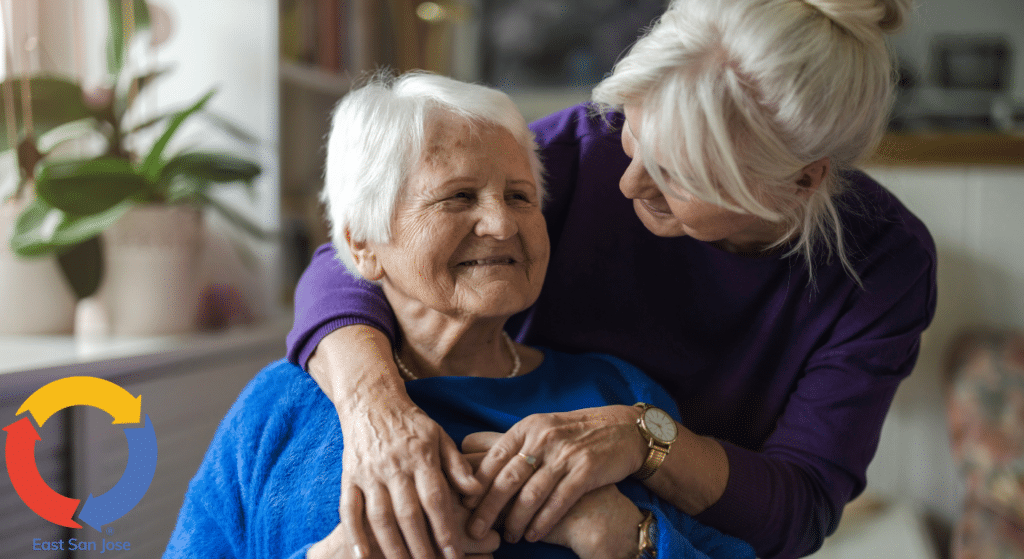
When senior caregivers — people who are themselves navigating the journey of aging — provide care to other seniors, something remarkable happens. The experience becomes mutual. The caregiver doesn’t just perform tasks; they understand the emotional landscape of the person they’re helping. They’ve navigated similar life challenges, understand the importance of maintaining routines and independence, and approach care with the respect and dignity they would want for themselves. [10]
This peer-to-peer dynamic creates natural conversations, shared experiences, and often lifelong friendships that enrich both the caregiver’s and care receiver’s lives. [11]
From an E-E-A-T standpoint, this is extraordinarily powerful. Here’s why:
1. It Demonstrates Authentic First-Hand Experience
Google added the first “E” for Experience to its framework specifically because it recognized that first-hand experience is critical to expertise and credibility for many topics. [12] There are some situations where what you value most is content produced by someone who has first-hand, life experience on the topic at hand. [13]
A senior caregiver who has personally experienced the challenges of aging — managing medications, navigating doctor’s appointments, dealing with loneliness — brings a depth of authentic experience that no amount of clinical training can replicate. When that caregiver shares their story in a professional spotlight, it signals genuine, lived experience to both readers and search engines.
2. It Builds Trustworthiness Through Real People
Trust is built fastest when people feel understood. [14] Families searching for senior care are not just looking for a list of services — they’re looking for certainty and trust. [15] When they read a real story from a real caregiver who lives in their community, speaks their language, and shares their values, that trust is established far more quickly than any marketing copy could achieve.
Research shows that 96% of Americans read reviews when considering local services, including for senior living and in-home care, and 74% are looking at multiple review websites. [16] Peer feedback doesn’t just shape trust — it drives inquiries and decisions. [17]
3. It Establishes Authoritativeness in Your Local Community
Authoritativeness comes from external recognition — other credible sources citing you, linking to you, or mentioning you as a go-to source. [18] When your caregivers are featured in spotlights that get shared, referenced, and discussed in the community, you build local authority organically. Sharing stories about your team fosters a sense of trust and familiarity that positions your organization as the local expert. [19]
4. It Showcases Expertise Through Lived Knowledge
Expertise in senior care isn’t just about credentials — it’s about understanding the nuanced, day-to-day realities of aging. A caregiver who has helped dozens of seniors maintain their independence, navigate family dynamics, and preserve their dignity has a form of expertise that is deeply credible. Featuring that expertise in a professional spotlight — with specific examples, real insights, and genuine reflections — demonstrates the kind of depth that Google’s quality raters are looking for.
What Is a “Peer-to-Peer Professional Spotlight”?
A peer-to-peer professional spotlight is a content format that features a real caregiver — in their own words — sharing their experience, perspective, and wisdom. It’s not a generic staff bio. It’s a story.
A strong caregiver spotlight might include:
- Their personal journey: What led them to caregiving? What life experiences do they bring?
- Their connection to the community: Do they live in the same neighborhood? Do they share cultural traditions or languages with the people they serve?
- A specific moment of impact: A time when their care made a real difference in someone’s life.
- Their philosophy of care: What does dignity, independence, and compassion mean to them personally?
- Their own experience of aging: What have they learned from their own life stage that makes them a better caregiver?
This format works because it’s authentic. It’s not a press release or a marketing pitch — it’s a human story. And human stories are exactly what Google’s E-E-A-T framework is designed to reward. [20]
According to a 2024 SEMrush study, pages with strong E-E-A-T signals saw a 30% higher chance of ranking in the top 3 positions compared to those with weak signals. [21] In 2025, with AI-generated content flooding the internet, Google has doubled down on identifying content that demonstrates genuine human experience and expertise. [22] A peer-to-peer professional spotlight is one of the clearest signals of genuine human experience you can publish.
How to Execute a Peer-to-Peer Professional Spotlight Strategy
Here’s a practical framework for turning your caregivers’ stories into an E-E-A-T powerhouse:
Step 1: Interview Your Caregivers
Sit down with your caregivers — in person or over the phone — and ask open-ended questions. Let them tell their story in their own words. Record the conversation, with permission, and use their authentic language in the final piece.
Step 2: Include Verifiable Details
E-E-A-T rewards transparency. Include the caregiver’s name, the neighborhoods they serve, the languages they speak, and any relevant background. This specificity signals authenticity to both readers and search engines. Comprehensive author attribution with verifiable details is a key trust signal. [23]
Step 3: Connect Their Story to Your Community
For local E-E-A-T, specificity matters. A caregiver who mentions serving families in Evergreen, Alum Rock, or Berryessa — and who understands the cultural fabric of East San Jose — is demonstrating local expertise that a national referral platform simply cannot replicate.
Step 4: Add Author Attribution to Your Blog
When publishing a spotlight, include a clear author bio or contributor profile. Link to any relevant professional profiles where appropriate. This transparency is one of the most direct ways to build trustworthiness in Google’s eyes. [24]
Step 5: Encourage Reviews and Community Mentions
After publishing a spotlight, share it with the caregiver’s network and encourage families to leave reviews that reference their experience. Positive reviews and community mentions build the authoritativeness layer of E-E-A-T over time. [25]
Step 6: Update Spotlights Regularly
Content can quickly become outdated. [26] Refreshing caregiver spotlights with new stories, updated details, and recent experiences signals to Google that your content is current and actively maintained.
Why This Strategy Is Especially Powerful for East San Jose Families
East San Jose is one of Silicon Valley’s most culturally rich and family-oriented communities. Neighborhoods like Evergreen, Alum Rock, Berryessa, and Silver Creek are home to multigenerational families who deeply value trust, cultural understanding, and personal connection in the care they choose for their loved ones.
For these families, a peer-to-peer professional spotlight isn’t just good SEO — it’s the right way to communicate. When a caregiver who shares your family’s background, speaks your language, and understands your traditions tells their story on a local care provider’s blog, it resonates in a way that no generic service description ever could.
This is the intersection where great content marketing and genuine community care meet.
How Seniors Helping Seniors® in-home care® East San Jose Embodies This Model
For us, the peer-to-peer professional spotlight isn’t just a content strategy — it’s a reflection of who we are.
Our unique approach matches clients with caregivers who are seniors themselves. [27] We believe the best care comes from those who truly understand the journey of aging — and we match clients with caregivers who share similar backgrounds, interests, and life perspectives, fostering genuine companionship alongside professional care. [28]
Our caregivers don’t just show up to complete tasks. They relate to the people they serve as peers, not clients. [29] They’ve navigated similar life challenges, and they approach care with the respect and dignity they would want for themselves. [30] This creates a dynamic where trust is built quickly, naturally, and deeply — exactly the kind of trust that families in East San Jose are looking for, and exactly the kind of trust that Google’s E-E-A-T framework is designed to recognize and reward.
When we feature our caregivers in professional spotlights — sharing their stories, their community roots, their cultural connections, and their personal philosophies of care — we’re not just building our online presence. We’re honoring the real people who make our care possible, and we’re giving families in Evergreen, Alum Rock, Berryessa, and Silver Creek the authentic information they need to make a confident, informed decision.
If you’re an adult child searching for in-home care for a parent in East San Jose, or a senior looking for a trusted companion who truly understands your life stage, we invite you to get to know our caregivers — not just our services. Reach out to Seniors Helping Seniors® in-home care® East San Jose today to learn how our peer-to-peer model can bring love, dignity, and genuine connection into your home.
Final Thoughts
The peer-to-peer professional spotlight is one of the most underutilized and most powerful content strategies available to senior care providers. It addresses every dimension of Google’s E-E-A-T framework — experience, expertise, authoritativeness, and trustworthiness — while also doing something that no algorithm can fully measure: it tells the truth about what great care actually looks like.
In a world increasingly flooded with AI-generated content and impersonal referral platforms, the human story of a senior caregiver who chose to serve their community is a signal that stands out. It’s authentic. It’s local. It’s trustworthy.
And in East San Jose, it’s exactly what families are looking for.
References
[1] https://mailchimp.com/resources/google-eeat/
[2] https://mailchimp.com/resources/google-eeat/
[3] https://blog.clickpointsoftware.com/google-e-e-a-t
[4] https://blog.clickpointsoftware.com/google-e-e-a-t
[5] https://blog.clickpointsoftware.com/google-e-e-a-t
[6] https://blog.clickpointsoftware.com/google-e-e-a-t
[7] https://blog.clickpointsoftware.com/google-e-e-a-t
[8] https://www.boostability.com/resources/google-e-e-a-t-guide/
[9] https://www.boostability.com/resources/google-e-e-a-t-guide/
[10] https://spotlightseniorservices.com/provider/seniors-helping-seniors/
[11] https://spotlightseniorservices.com/provider/seniors-helping-seniors/
[12] https://developers.google.com/search/blog/2022/12/google-raters-guidelines-e-e-a-t
[13] https://developers.google.com/search/blog/2022/12/google-raters-guidelines-e-e-a-t
[14] https://seniorsbluebook.com/articles/why-seniors-caring-for-seniors-creates-trust-comfort-and-companionship
[15] https://seniorcareclicks.com/content-marketing-for-elder-care-agencies/
[16] https://partners.caring.com/
[17] https://partners.caring.com/
[18] https://blog.clickpointsoftware.com/google-e-e-a-t
[19] https://www.mediajunction.com/blog/digital-marketing-for-senior-living-guide
[20] https://mailchimp.com/resources/google-eeat/
[21] https://www.singlegrain.com/seo/e-e-a-t-strategies-that-guarantee-googles-trust-in-2025/
[22] https://www.singlegrain.com/seo/e-e-a-t-strategies-that-guarantee-googles-trust-in-2025/
[23] https://blog.clickpointsoftware.com/google-e-e-a-t
[24] https://blog.clickpointsoftware.com/google-e-e-a-t
[25] https://www.boostability.com/resources/google-e-e-a-t-guide/
[26] https://www.boostability.com/resources/google-e-e-a-t-guide/
[27] https://locations.seniorshelpingseniors.com/ca/sanjose/
[28] https://spotlightseniorservices.com/provider/seniors-helping-seniors/
[29] https://spotlightseniorservices.com/provider/seniors-helping-seniors/
[30] https://spotlightseniorservices.com/provider/seniors-helping-seniors/