




None of us really wants to think about a time when we might not be able to manage our own affairs.
But what happens if you suddenly become incapacitated? Who would pay your bills? Where would they find your important documents? What if something happened to you unexpectedly—would your family know what you own, what bills need to be paid, or even how to access your accounts?
These are not necessarily questions we want to think about—but they are incredibly important ones to answer before there is an emergency.
At a recent Aging Connections meeting, we had the opportunity to hear from Nancy Bean, owner of Premier Lifestyle Services and the only Certified Daily Money Manager in our area. Nancy is passionate about helping seniors and families navigate the often-overwhelming financial and organizational details of everyday life.
While Nancy shared information about her Daily Money Manager services, what really stood out to us were several simple but important things she encouraged everyone to think about—at any age.
1. Have a Power of Attorney in place
Many people assume a Power of Attorney (POA) is something to worry about when you get older. Nancy reminded us that it is important for any adult who is no longer a dependent to consider having one in place.
A POA can designate someone you trust to handle certain financial or legal matters if you are unable to do so yourself.
The important part is making the decision while you are able to make it. Talk with an attorney about what type of POA is appropriate for your situation and who you would trust to step in if needed.
2. If you own property, understand a Transfer on Death Deed
Nancy also discussed Transfer on Death (TOD) Deeds, which can be an important estate-planning tool for homeowners.
A TOD deed can allow an owner to designate who will receive their real property when they die, without the property necessarily having to go through the same probate process as it otherwise might.
The rules surrounding TOD deeds can vary, so this is another topic worth discussing with an estate-planning attorney. The important thing is simply to know your options and make a plan.
3. Use a password manager
How many passwords do you have?
And how many of them are variations of the same password you’ve been using for years? 😉
Nancy recommended using a secure password manager, such as LastPass, to help keep track of passwords and protect important online accounts.
A password manager can make it easier to use strong, unique passwords without having to remember every single one. It can also become incredibly helpful to a trusted person who may someday need to help manage your affairs.
Of course, choose a password manager that you are comfortable with and learn how its security and emergency-access features work.
And don’t just create passwords—keep them updated.
Nancy also reminded us that changing passwords periodically is an important part of protecting your information. Yes, we know…changing passwords is nobody’s favorite chore! But taking the time to update important passwords—and making sure you’re not using the same password across multiple accounts—can help protect your personal and financial information.
And don’t forget about your Wi-Fi password. Your home network connects phones, computers, TVs, cameras and other devices to the internet. Use a strong, unique password for your Wi-Fi network, and change it if you’ve shared it widely, suspect someone has unauthorized access, or as part of your own regular security review.
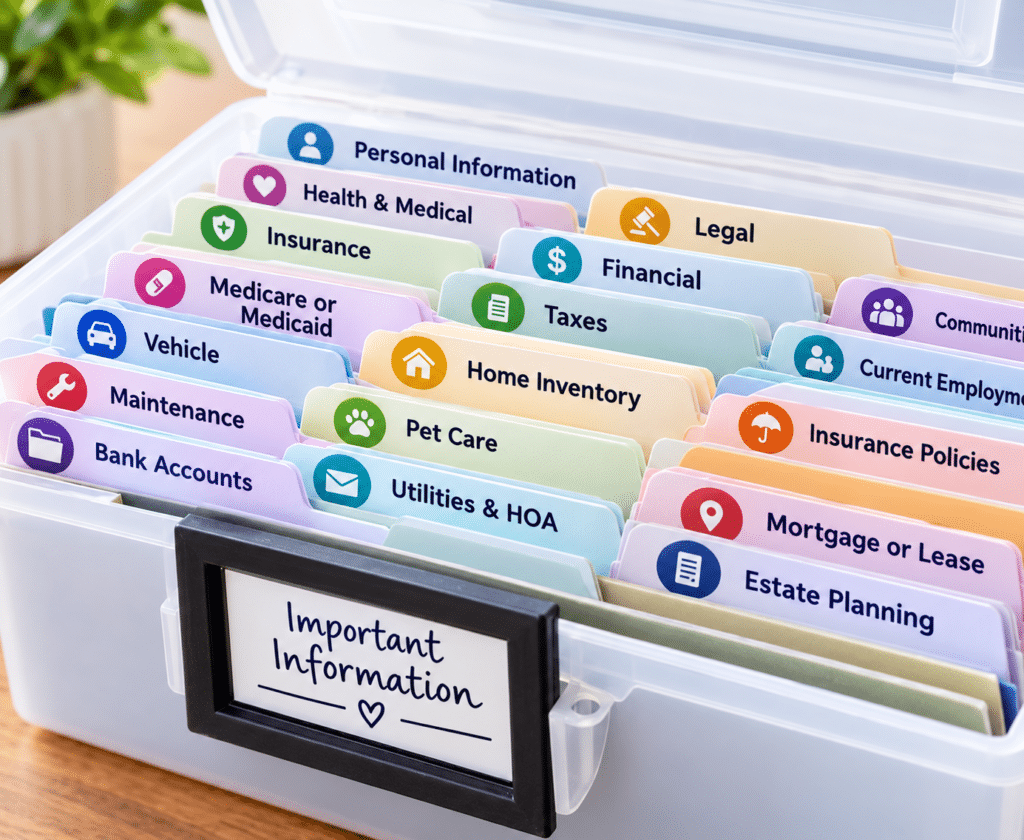
4. Create a “one-stop” place for important information
This one really got our attention.
Nancy introduced us to NOK Box, short for Next of Kin Box. It is essentially a centralized place to organize the information your family or trusted person might need if you become incapacitated or pass away.
Think about all the things someone might need to find:
- Important documents
- Insurance information
- Financial information
- Account and contact information
- Medical information
- Funeral or end-of-life wishes
- Information about your home, vehicles or other property
- Important people to contact
- Even practical details that only you know
The goal isn’t to put everything in one box and forget about it. It’s to create one clear starting point so that the person helping you isn’t forced to search through drawers, filing cabinets, computers and paperwork trying to piece your life together during an already difficult time.
You can learn more about NOK Box at NOKBox.com.
Don’t wait until you need a plan
Perhaps the biggest takeaway from Nancy’s presentation was that these aren’t things we should wait to think about until we’re “old.”
Life doesn’t always give us a warning.
Taking a little time now to put the right documents, information and instructions in place can make an enormous difference later—for you and for the people who may someday have to step in and help you.
And if you’re not sure where to start, start small.
Choose one thing from this list. Talk to an attorney about a POA. Find out whether a Transfer on Death Deed is appropriate for your property. Set up a password manager. Or begin gathering the information that would go into your own “next of kin” file.
A little preparation today can save your family a lot of confusion and stress tomorrow.
A special thank-you to Nancy Bean of Premier Lifestyle Services for joining us at Aging Connections and sharing her knowledge and practical advice. We are grateful to have professionals like Nancy in our community who are passionate about helping seniors and their families navigate the many details that come with aging and planning ahead.