




If you’ve been searching for senior care in the Tri-Valley — whether in Dublin, Pleasanton, or Livermore — you’ve probably noticed that not all care providers feel the same online. Some websites feel cold and corporate. Others feel warm, credible, and trustworthy. That difference isn’t accidental. It’s the result of a deliberate content strategy rooted in something Google calls E-E-A-T — and the most powerful way to build it is through what we call the Peer-to-Peer Professional Spotlight.
In this post, we’ll break down what E-E-A-T means, why it matters enormously for senior care, and how featuring real caregiver voices and family stories can completely transform how families find and trust a care provider online.
What Is E-E-A-T — And Why Should Senior Care Providers Care?
E-E-A-T stands for Experience, Expertise, Authoritativeness, and Trustworthiness. [1] It’s a framework Google uses to evaluate the quality of web content and decide how to rank it in search results. [2]
Here’s a quick breakdown of each pillar:
- Experience: Has the content creator personally encountered or lived through the topic? Google now prioritizes content that reflects real-world, first-hand knowledge. [3]
- Expertise: Does the content demonstrate deep knowledge, credentials, or skill in the subject area? Expertise builds credibility and positions you as a reliable source of information. [4]
- Authoritativeness: Is the website or author recognized as a go-to source in their field? This is often reflected in mentions, citations, and positive reviews from reputable sources. [5]
- Trustworthiness: Is the content accurate, honest, and transparent? According to Google, trust is the most crucial ingredient in E-E-A-T — untrustworthy pages score low regardless of how expert or authoritative they appear. [6]
While E-E-A-T is not a direct ranking factor in the traditional sense, it strongly influences how Google’s algorithms perceive and rank your content. [7] Think of it as the foundation upon which a successful online presence is built. [8]
Senior Care Is a YMYL Topic — The Stakes Are Higher
Here’s where things get especially important for senior care providers: Google applies E-E-A-T most rigorously to what it calls “Your Money or Your Life” (YMYL) topics — content that can significantly impact a person’s health, financial stability, safety, or well-being. [9]
Senior care is unquestionably a YMYL topic. Families searching for in-home care for an aging parent are making one of the most consequential decisions of their lives. They need to trust the information they find — and the provider behind it.
Google’s own guidelines make clear that for YMYL topics, content that is “highly inexpert” should be considered untrustworthy and rated lowest. [10] In practical terms, this means that a senior care website with thin, generic content — no author bios, no real stories, no demonstrated experience — is at a significant disadvantage in search rankings compared to one that showcases genuine, lived expertise.
For health and wellness brands, showcasing expertise, authority, and trust isn’t just good SEO practice — it’s the foundation of building an impactful brand. [11]
Enter the Peer-to-Peer Professional Spotlight
So how do you actually build E-E-A-T for a senior care brand? One of the most powerful and underutilized strategies is the Peer-to-Peer (P2P) Professional Spotlight — a content format that puts real caregivers, real families, and real experiences front and center.
What Is Peer-to-Peer Marketing?
Peer-to-peer marketing (P2P marketing) is a strategy that leverages the personal networks and relationships of real people — customers, employees, and community members — to spread awareness and build brand trust, rather than relying solely on a business’s direct marketing. [12]
At its core, P2P marketing is about connecting with people. [13] It flips traditional marketing by focusing on what polished ads and corporate messaging won’t deliver: trust and relatability. [14]
The numbers back this up: peer-to-peer marketing is highly trusted, with 84% of people finding word-of-mouth recommendations from friends and family the most trustworthy source. [15] And when it comes to senior care — a deeply personal, relationship-driven service — that trust factor is everything.
Why P2P Spotlights Are an E-E-A-T Goldmine
Here’s the connection that most senior care providers miss: a well-crafted Peer-to-Peer Professional Spotlight doesn’t just build community goodwill — it directly signals every pillar of E-E-A-T to Google and to prospective families.
Let’s break it down:
1. Experience — Lived, First-Hand Knowledge
When a caregiver shares their personal story — why they chose this work, what they’ve learned from years of caring for seniors, how they’ve navigated difficult moments — that content radiates first-hand experience. Google explicitly values content produced by someone who has “first-hand, life experience on the topic at hand.” [16]
A caregiver spotlight that says “I’ve been caring for seniors in the Tri-Valley for 12 years, and here’s what I’ve learned about helping someone maintain their independence” is infinitely more credible than a generic page that says “We provide compassionate care.”
2. Expertise — Demonstrated Knowledge in Action
Expertise is about demonstrating mastery of your craft and providing accurate, insightful information. [17] When caregivers speak to specific challenges — managing daily routines for seniors with mobility limitations, providing companionship for those experiencing isolation, or supporting families navigating the transition to in-home care — they demonstrate real subject matter expertise.
This is the kind of content that builds credibility and positions a brand as a reliable source of information. [18]
3. Authoritativeness — Community Recognition
Authoritativeness is often reflected in how widely your content is referenced or shared. [19] When a caregiver spotlight is shared by the caregiver’s own network, commented on by local families, and referenced in community conversations, it builds the kind of organic authority that no paid ad can replicate.
Engaging with the community, earning positive reviews, and creating content that resonates locally can all boost your authority. [20]
4. Trustworthiness — Real People, Real Stories
Trust is the foundation of E-E-A-T. [21] And nothing builds trust faster than real people telling real stories. Consumers are more likely to trust each other than a brand, even if they’ve never met. [22] By reading authentic caregiver profiles, family testimonials, and peer recommendations, prospective clients begin to trust a brand — which can lead to meaningful care decisions.
P2P marketing is ultimately a form of marketing that can feel increasingly trustworthy and authentic through real, genuine voices from people who have no incentive to promote services they don’t believe in. [23]
How to Build a Peer-to-Peer Professional Spotlight Strategy
Ready to put this into practice? Here’s a practical framework for senior care providers looking to overhaul their E-E-A-T through P2P spotlights:
Step 1: Feature Your Caregivers as the Experts They Are
Your caregivers are your greatest E-E-A-T asset. Create detailed caregiver profiles that highlight their experience, their personal motivations, and the specific ways they support seniors. Include professional photos and, where possible, short video introductions.
Developing detailed author bios that highlight experience, expertise, and qualifications is one of the most actionable steps toward improving E-E-A-T. [24] For a senior care brand, this means going beyond a name and a headshot — it means telling the story of who this person is and why families can trust them.
Step 2: Amplify Family Voices Through Testimonials and Stories
Family testimonials are among the most powerful forms of P2P content. Collecting reviews and testimonials is one of the most foundational forms of P2P marketing — and the result, visible to all, is known as social proof. [25]
But don’t just collect reviews — share them. Positive feedback from Google reviews and surveys needs to be shared on your website and social media channels. [26] A heartfelt quote from a family in Pleasanton or Dublin carries far more weight with a local audience than any marketing copy.
Step 3: Create Content That Reflects Real Community Experience
Content is most valuable when it’s created by people with relevant qualifications and real-world experience. [27] For a senior care provider in the Tri-Valley, this means creating blog posts, videos, and social content that reflect the actual experiences of caregivers and families in Dublin, Pleasanton, Livermore, and surrounding communities.
This isn’t just good for E-E-A-T — it’s good for local SEO. When your content reflects the specific community you serve, it signals relevance to both Google and to the families searching for care in your area.
Step 4: Build a Community of Advocates
The most sustainable P2P strategy turns satisfied families and dedicated caregivers into brand advocates. By focusing on genuine customer experiences, your existing clients become more likely to share their satisfaction with their friends and family — which is often more effective than advertising. [28]
This is especially true in the Tri-Valley, where community connections and word-of-mouth referrals carry significant weight. A recommendation from a neighbor in Dublin or a colleague in Livermore is worth more than any digital ad.
Step 5: Be Transparent About Who Is Behind Your Content
One of the most actionable E-E-A-T improvements any senior care provider can make is simply being transparent about who is behind their content and their care. Google’s guidelines emphasize that content should present information in a way that makes you want to trust it — with clear sourcing, evidence of expertise, and background about the author or organization. [29]
This means having a robust “About Us” page, clear team profiles, and content that is clearly attributed to real people with real experience.
Why This Matters More Than Ever in 2025
In an era of AI-generated content and information overload, the demand for authentic, human-centered content has never been higher. Google is now prioritizing content that reflects real-life experience — lived knowledge that goes beyond what any algorithm can generate. [30]
For senior care providers, this is both a challenge and an enormous opportunity. The brands that invest in showcasing real caregivers, real families, and real community connections will be the ones that rise to the top of search results — and, more importantly, earn the trust of the families who need them most.
Building E-E-A-T is not a one-time task. It’s an ongoing process that requires dedication, consistency, and a genuine commitment to providing high-quality content that benefits your audience. [31]
How Seniors Helping Seniors® in-home care Tri-Valley Embodies the P2P Spotlight Approach
At Seniors Helping Seniors® in-home care Tri-Valley, the Peer-to-Peer Professional Spotlight isn’t just a content strategy — it’s a reflection of who we are.
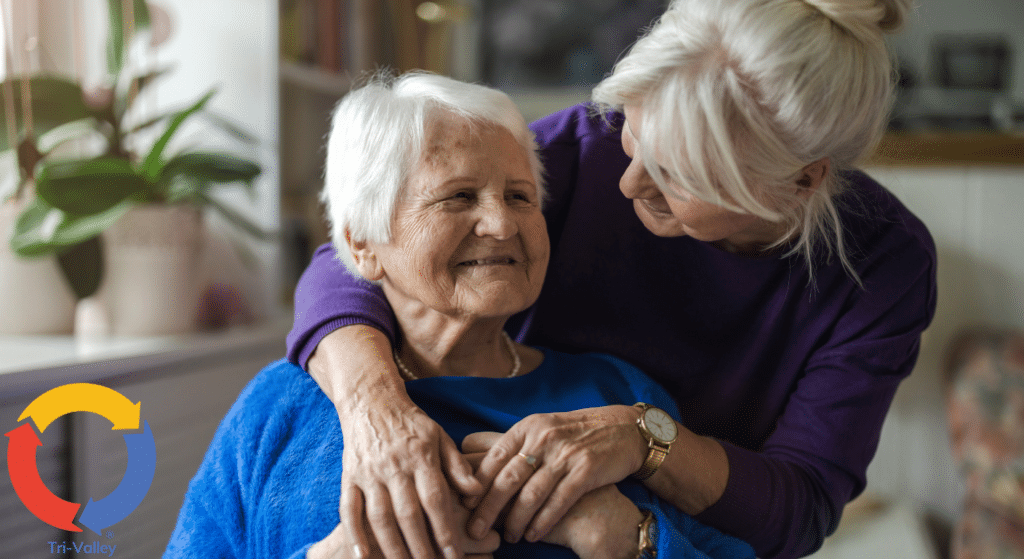
Our model is built on a simple but powerful idea: seniors caring for seniors. Our caregivers aren’t strangers assigned from a distant agency — they are members of the same community, often with their own lived experience of aging, caregiving, and the unique rhythms of life in the Tri-Valley. When a caregiver in Pleasanton shares their story, they’re not just creating content — they’re demonstrating the kind of first-hand experience and genuine expertise that Google values and that families trust.
We serve families across Dublin, Pleasanton, Livermore, and the broader East Bay who are navigating one of the most important decisions they’ll ever make: how to support an aging parent while honoring their independence and dignity. Our caregivers bring not just professional skill, but personal understanding — the kind that only comes from having walked a similar path.
For families searching for senior care in the Tri-Valley, we invite you to get to know our caregivers. Read their stories. Hear from the families we’ve served. Ask us questions. Because for us, trust isn’t built through marketing — it’s built through relationships, one conversation at a time.
If you’re ready to explore compassionate, relationship-driven in-home senior care for a loved one in Dublin, Pleasanton, Livermore, or the surrounding Tri-Valley communities, we’d love to connect. Reach out to our team today and experience the difference that peer-to-peer care truly makes.
Citations
[1] https://www.searchenginejournal.com/google-e-e-a-t-how-to-demonstrate-first-hand-experience/474446/
[2] https://mailchimp.com/resources/google-eeat/
[3] https://www.networksolutions.com/blog/google-eeat/
[4] https://www.davidhodder.com/e-e-a-t-experience-expertise-authoritativeness-and-trustworthiness/
[5] https://mailchimp.com/resources/google-eeat/
[6] https://yoast.com/what-is-e-e-a-t/
[7] https://www.davidhodder.com/e-e-a-t-experience-expertise-authoritativeness-and-trustworthiness/
[8] https://www.davidhodder.com/e-e-a-t-experience-expertise-authoritativeness-and-trustworthiness/
[9] https://www.searchenginejournal.com/google-e-e-a-t-how-to-demonstrate-first-hand-experience/474446/
[10] https://www.searchenginejournal.com/google-e-e-a-t-how-to-demonstrate-first-hand-experience/474446/
[11] https://bemoreyouonline.com/ymyl-for-health-and-wellness-brands/
[12] https://mailchimp.com/resources/p2p-marketing/
[13] https://blog.hubspot.com/sales/peer-to-peer-selling
[14] https://blog.hubspot.com/sales/peer-to-peer-selling
[15] https://referralrock.com/blog/peer-to-peer-marketing/
[16] https://developers.google.com/search/blog/2022/12/google-raters-guidelines-e-e-a-t
[17] https://www.davidhodder.com/e-e-a-t-experience-expertise-authoritativeness-and-trustworthiness/
[18] https://www.davidhodder.com/e-e-a-t-experience-expertise-authoritativeness-and-trustworthiness/
[19] https://www.whitepeakdigital.com/blog/what-is-eeat-and-ymyl/
[20] https://www.whitepeakdigital.com/blog/what-is-eeat-and-ymyl/
[21] https://www.seo.com/basics/glossary/e-e-a-t/
[22] https://mailchimp.com/resources/p2p-marketing/
[23] https://blog.hubspot.com/marketing/p2p-marketing
[24] https://www.davidhodder.com/e-e-a-t-experience-expertise-authoritativeness-and-trustworthiness/
[25] https://www.informaticsinc.com/blog/december-2021/ask-informatics-what-peer-peer-p2p-marketing
[26] https://www.informaticsinc.com/blog/december-2021/ask-informatics-what-peer-peer-p2p-marketing
[27] https://mailchimp.com/resources/google-eeat/
[28] https://mailchimp.com/resources/p2p-marketing/
[29] https://developers.google.com/search/docs/fundamentals/creating-helpful-content
[30] https://www.networksolutions.com/blog/google-eeat/
[31] https://www.davidhodder.com/e-e-a-t-experience-expertise-authoritativeness-and-trustworthiness/